


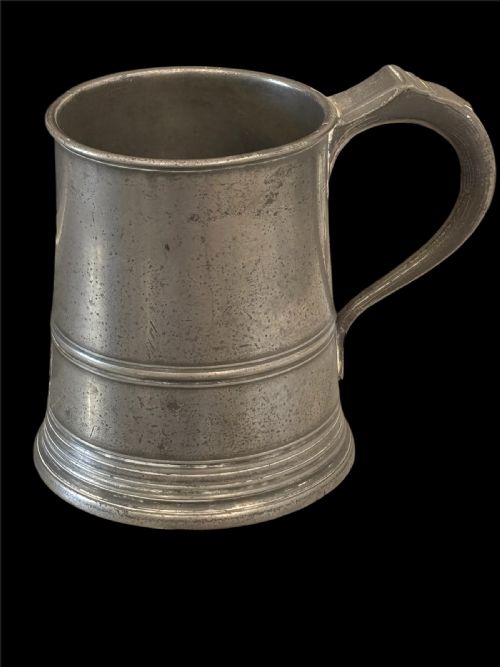
English Pewter Measure
These English pewter measure pieces bring centuries of tavern and household service into your home, offering tangible links to historical liquid capacity standards.
English Pewter Measure
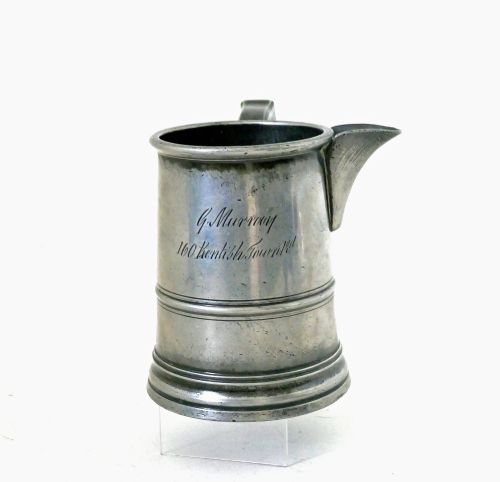
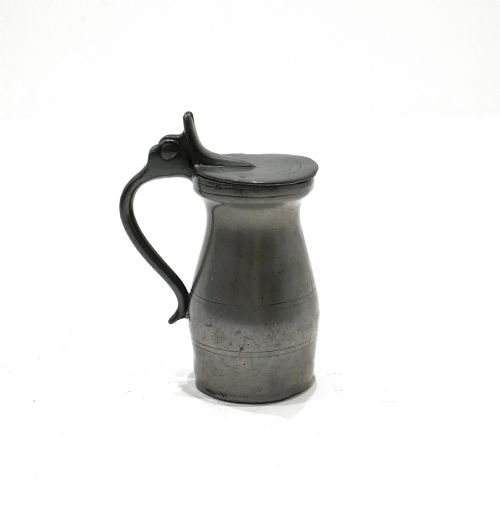
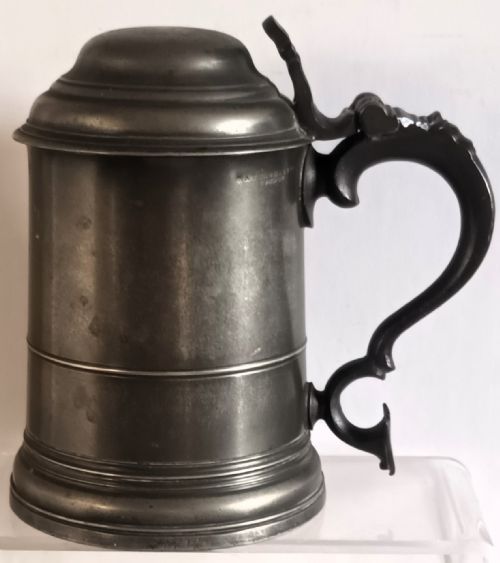
When searching for english pewter measure, collectors encounter functional vessels designed for liquid capacity standards in taverns, households, and commercial premises across the British Isles. The selection ranges widely in capacity, from diminutive half gills and gills up to pints, quarts, half gallons, and full gallon jugs.
The most common formats on this page include baluster measures, flat-lidded flagons, spouted measures, and public house tankards originating from the eighteenth and nineteenth centuries. These vessels often carry verification stamps, tavern names, or regional markings that record their working lives.
How they were made
These items are constructed primarily from pewter, an alloy composed predominantly of tin combined with lead, copper, or antimony to provide structural stability. Individual components such as bodies, handles, and lids were cast in moulds and subsequently soldered together by skilled metalworkers.
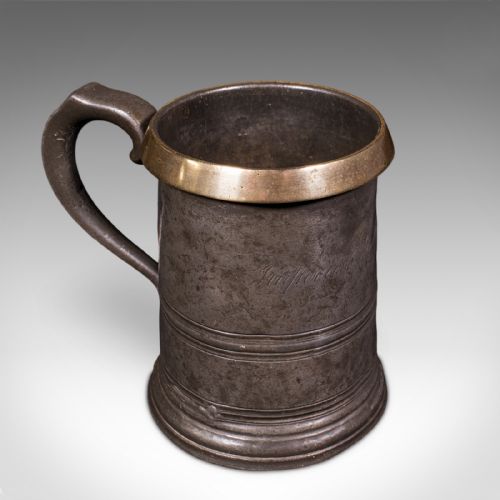
Details such as brass rims appear on specific variants to reinforce the lips of the vessels against heavy tavern usage. Engraving and verification stamps were applied by hand or punch to denote capacity and regulatory compliance.
Several measures bear names of specific inns and breweries, recording centuries of heavy tavern use.
What varies in quality
Quality in these vessels depends upon the clarity of maker marks, touchmarks, and verification stamps that identify the foundry and the jurisdiction of use. Crispness in cast baluster profiles and the original integrity of applied handles or flat lids separate standard utility pieces from workshop masterworks.
The survival of original surface patination, free from aggressive cleaning or modern structural repairs, dictates the desirability among serious collectors of early metalware.
Watts and Harton·Frederic Sanders·Thomas Phillips I·M Fothergill and Sons·John Foster·James Yates·Henry Fothergill·Thomas and Townsend Compton·W R Loftus·J Edwards II·James Grimes·George Grimes·J H Mortimer·W McKenzie·Yates and Birch·James Morgan·John Abbot·Samuel Cocks·Harton and Son·John Curruthers Crane
The English Pewter Measure Glossary
- Baluster measure
- A vessel featuring a curved, bulbous body tapering to a narrower neck and foot, commonly produced in graded sets for tavern use.
- Flat-lidded flagon
- A tall drinking or pouring vessel featuring a flat lid attached by a hinge, often associated with eighteenth-century tavern or ecclesiastical service.
- Verification stamp
- An official mark punched into the metal by local authorities to certify the accuracy of the vessel's liquid capacity.
- Spouted measure
- A vessel incorporating a pouring lip alongside the rim to facilitate the transfer of liquids into smaller containers.
- Pre-imperial
- Refers to capacity measurements utilised in Britain prior to the Weights and Measures Act of 1824 standardising imperial units.
English Pewter Measure: Frequently Asked Questions
What is an english pewter measure?
An english pewter measure is a historical vessel cast from a tin alloy, strictly calibrated to hold exact volumes of ale, wine, or spirits for commercial and domestic use.
These pieces served as legal standards in public houses and taverns, ensuring customers received the precise amount of liquid paid for under local or national regulations.
How do I identify maker marks?
Maker marks, often called touchmarks, are stamped directly into the pewter surface, usually near the rim or upon the base or inside lid.
These punches frequently display the initials or full name of the pewterer, sometimes accompanied by workshop symbols or London hallmarks denoting trade guilds.
What do verification marks mean?
Verification marks consist of royal ciphers, town names, or tax inspector stamps applied to certify that the vessel held the exact legal volume.
Finding multiple verification stamps from different towns or decades indicates that a single vessel remained in active service across successive generations.
How should I clean pewter?
Pewter requires minimal intervention, and old metal should generally be preserved with its natural dark grey oxidation and handling patination intact.
Avoid abrasive metal polishes or harsh chemical cleaners, as removing the historic surface layer diminishes the character and historical integrity of the piece.