


Antique Ale Jug
When you handle an antique ale jug, you hold a vessel shaped for tavern counters, public houses and domestic service across centuries.
Antique Ale Jug
An antique ale jug encompasses utilitarian vessels fashioned for measuring, pouring and serving malt liquor across the Georgian, Victorian and earlier periods. These pieces bridge the domestic interior and the public house, functioning as working tavern equipment or substantial household vessels.
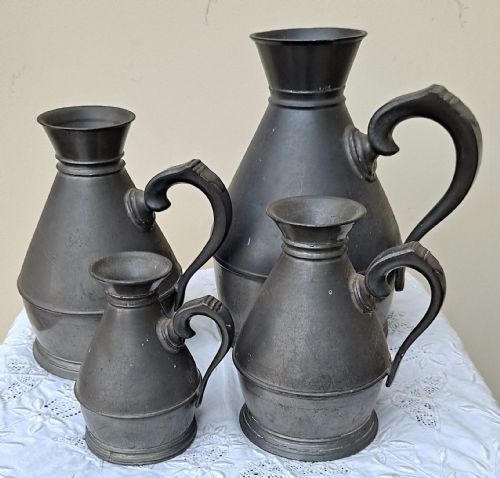
The versions most frequently met on this page are metal measures and ceramic jugs hailing from the eighteenth and nineteenth centuries. Copper, pewter and earthenware dominate the form, reflecting the sturdy materials required for daily hospitality.
How They Were Made
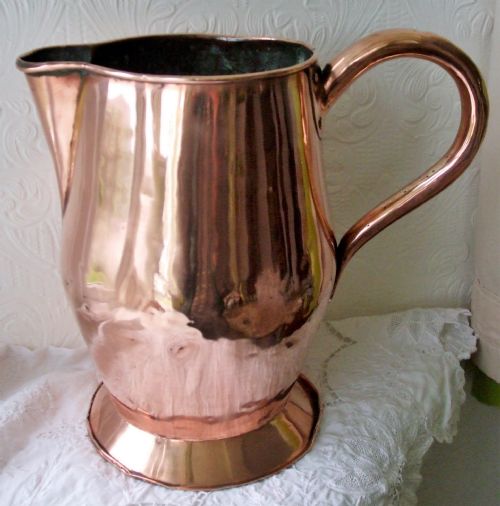
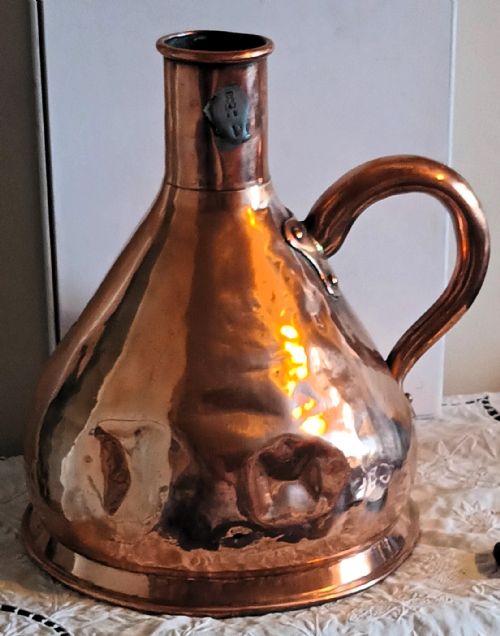
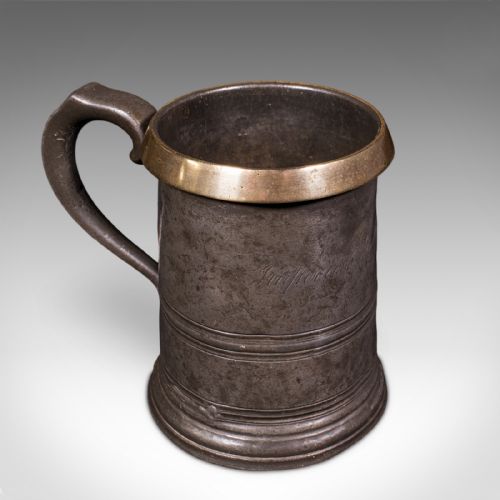
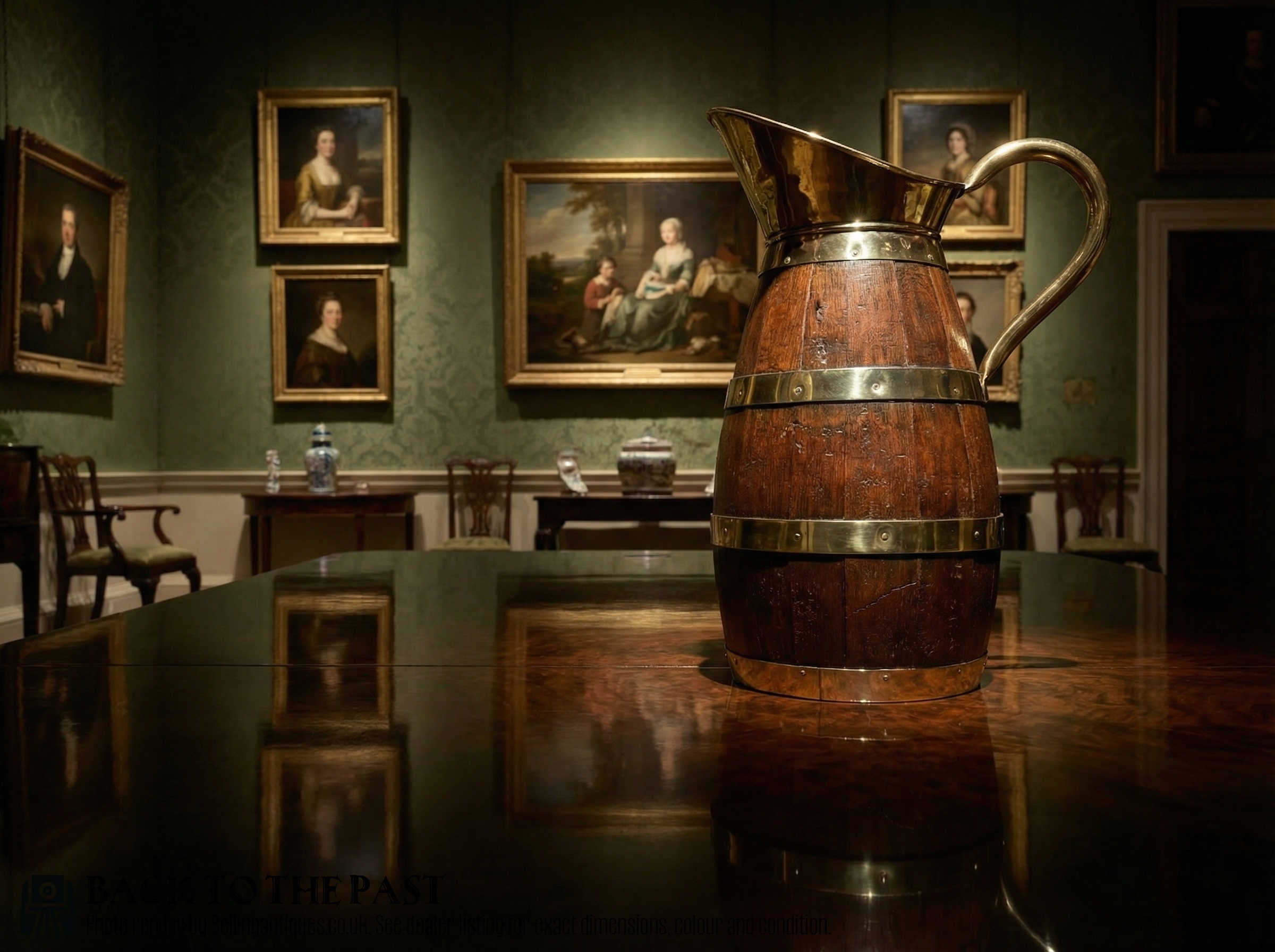
Metal vessels such as copper and brass measures rely on heavy sheet construction, often coopered with wood and bound with brass or shaped into distinctive haystack profiles. Pewter items utilise traditional casting and soldering techniques, frequently bearing touchmarks and capacity stamps.
Ceramic examples employ earthenware, stoneware and salt-glazed bodies, sometimes finished with silver-plated rims or moulded relief decoration. These materials demand high-heat firing and skilled throwing on a potter's wheel to achieve durable liquid capacity.
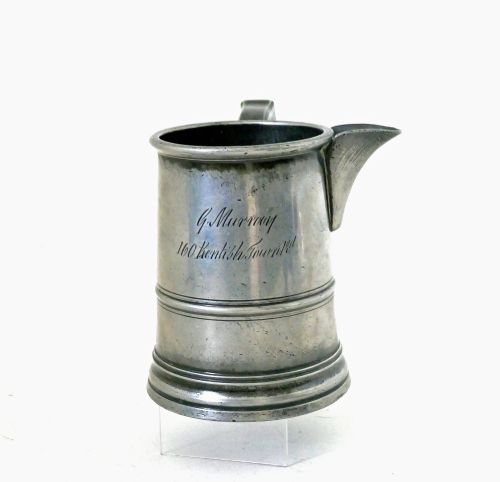
One early pewter jug bears the cheerful contemporary engraving '3 Pidgeons & Stout', recording a specific eighteenth-century establishment.
What Varies in Quality
Quality rests upon the crispness of form, the weight of the metal or ceramic body and the integrity of original construction. Substantial gauge copper, well-defined touchmarks on pewter and sharp relief moulding on earthenware separate standard utility items from superior examples.
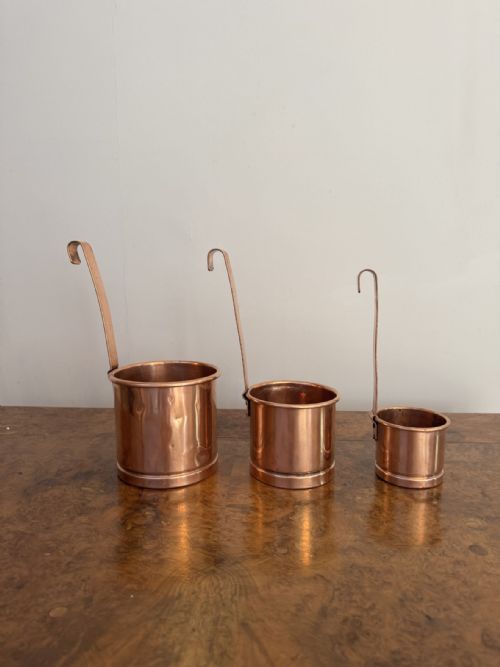
Original matching sets and graduated groupings command greater interest due to their survival as complete tavern outfits. Surviving ancillary elements, such as hinged lids, spouted spires and period engraving, elevate the standing of an individual vessel.
G. Murrouy·J. Bower·Loftus of Oxford Street London
The Antique Ale Jug Glossary
- Haystack measure
- A distinctive Irish or British pewter or brass measuring jug with a bulbous body and a tapered neck resembling a hayrick. These items often appear in graduated sets.
- Tappit hen
- A traditional Scottish pewter measuring vessel featuring a lid with a knob and a distinct slender neck. This form derives its name from a type of crested hen.
- Old Sheffield plate
- A composite material formed by fusing a thin sheet of silver to a thicker copper base under heat and pressure. It provides the appearance of solid silver on early beer jugs.
- Coopered
- Built from wooden staves bound together with metal bands, much like a barrel. This technique yields large-capacity oak and brass flagons.
- Slipware
- Pottery decorated with liquid clay applied to a contrasting clay body before firing. It creates bold rustic patterns on tavern vessels.
Antique Ale Jug: Frequently Asked Questions
What distinguishes an ale jug from a standard pitcher?
Ale jugs are specifically sized for malt beverages and often double as legal liquid measures stamped with capacity verification marks. Their construction prioritises durability in tavern and public house environments over delicate domestic use.
Many examples feature spouts, lids or sturdy handles designed to endure frequent pouring and heavy daily handling across the Georgian and Victorian eras.
How were these vessels used in historical taverns?
Publicans utilised these pieces to measure out exact quantities of ale, beer or cider for patrons sitting at tavern tables. Larger gallon and multi-pint vessels served as bulk storage or distribution jugs behind the bar.
Smaller capacities, such as noggins and pints, went directly to tables for individual consumption alongside meals or social gatherings.
How do I date an antique metal ale jug?
Dating relies upon manufacturing marks, touchmarks, capacity stamps such as VR for Victoria, and stylistic changes in handle and body shape. Earlier eighteenth-century pewter and brass pieces often display simpler, heavier casting without later verification stamps.
Changes in metal composition and construction techniques, such as the shift from hand-beaten copper to machine-rolled sheets, provide further chronological markers.
Can I use an antique ceramic jug for serving drinks today?
While sturdy, historic ceramic and metal vessels are generally treated as decorative or collectible display pieces rather than modern kitchenware. Older glazes and metal seams may react to modern acidic liquids or dishwashing.
Displaying them on shelves or sideboards highlights their craftsmanship while protecting fragile historic surfaces from accidental damage.