


Vintage Cider Pitcher
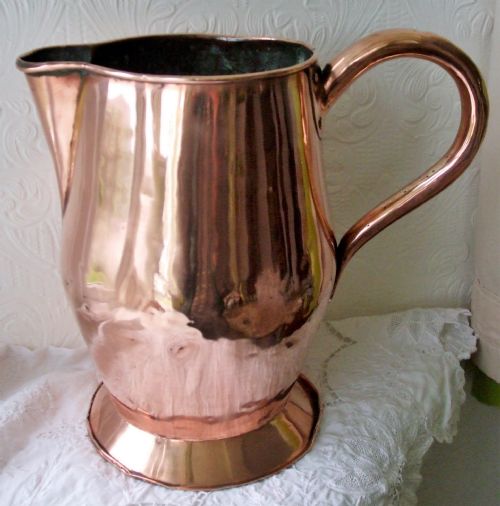
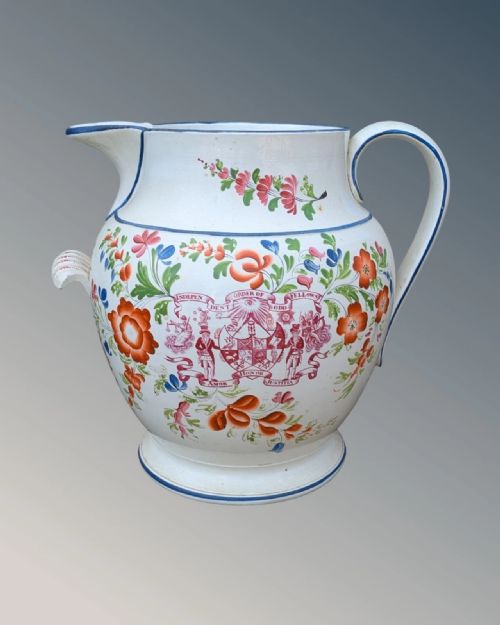
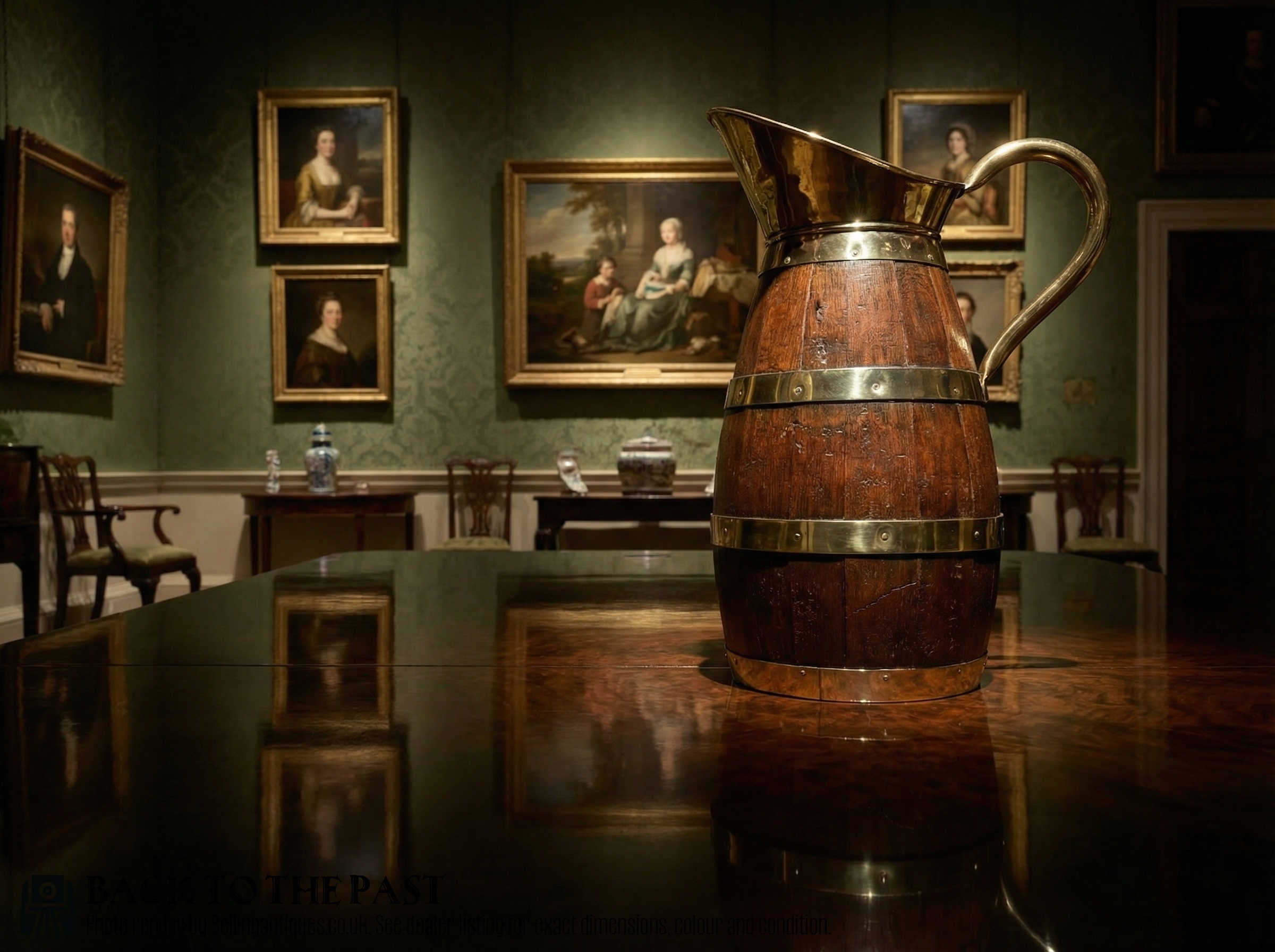
These vintage cider pitcher options bring heavy-gauge copper, coopered oak and salt-glazed stoneware into service for pouring country drinks.
Vintage Cider Pitcher
A vintage cider pitcher serves as a heavy utilitarian vessel designed for holding and pouring country drinks in domestic and tavern settings. When searching this phrase, a buyer meets substantial metal and ceramic forms that originate from the eighteenth, nineteenth and early twentieth centuries.
The selections on this page lean heavily toward nineteenth-century copper flagons and measuring jugs, alongside Victorian coopered oak vessels bound in brass. Earthenware, creamware and salt-glazed stoneware examples also appear, representing both rural tavern use and decorative exhibition pieces.
Origins span English, French and Guernsey workshops, showing styles from rustic country interpretations to Georgian and Victorian formalities. These pieces cross paths with ale jugs, beer tankards and large capacity flagons in daily utility.
Distinctions in quality and finish
Gauge thickness and weight separate ordinary vessels from top-tier examples, particularly in copper flagons and measuring jugs. Heavier metal content and clean dovetail or riveted construction indicate superior workshop standards.
Surface preservation defines value, with original patination and honest wear taking precedence over excessive modern polishing. The crispness of applied stoneware sprigging and the tightness of coopered oak staves further divide standard items from exhibition pieces.
Materials span copper, brass, stoneware, earthenware, oak, pewter and lead glaze across multiple centuries.
Doulton Lambeth·Loftus of Oxford Street London·S Hancock
The Vintage Cider Pitcher Glossary
- Flagon
- A large drinking vessel with a handle and often a lid, designed for serving ale, beer or cider.
- Coopered
- Built from wooden staves fitted together and bound with metal hoops, much like a small barrel.
- Sprigged
- Decorated with moulded clay reliefs applied to the unfired ceramic body before glazing and firing.
- Creamware
- A refined earthenware developed in the eighteenth century with a pale yellow or cream-coloured lead glaze.
- Salt glaze
- A hard ceramic glaze achieved by throwing common salt into the kiln during high-temperature firing.
Vintage Cider Pitcher: Frequently Asked Questions
What is a vintage cider pitcher used for?
These vessels were built primarily to hold, measure and serve large quantities of cider or ale at table or in public houses.
Today, they function effectively as decorative centrepieces, umbrella stands or flower vases in traditional interiors.
How do I clean a copper cider pitcher?
Wash the metal gently with warm soapy water and a soft cloth to remove surface dust without disturbing the aged surface.
Avoid harsh abrasive compounds that strip away the natural dark patination accumulated over centuries of use.
Are these pitchers safe for holding drinks?
Most antique metal and ceramic jugs are intended primarily for display and historic appreciation rather than daily beverage consumption.
Historic metal linings may contain lead or other materials unsuited to modern food safety standards.
How can I tell the age of a jug?
Examine the construction methods, such as hand-beaten copper seams, riveted handles and the style of the base or rim.
Ceramic pieces reveal age through their clay body, glaze texture and characteristic decorative motifs from specific periods.