


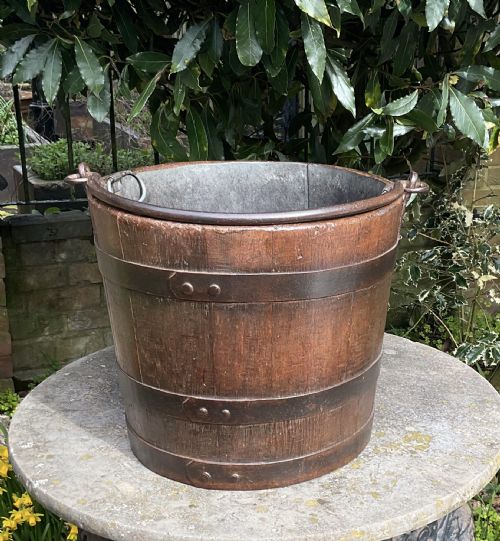


Brass Bound Oak Vessel
These brass bound oak vessel pieces are sturdy utilitarian containers brought indoors for display, and you want one for their robust joinery and warm metallic contrast.
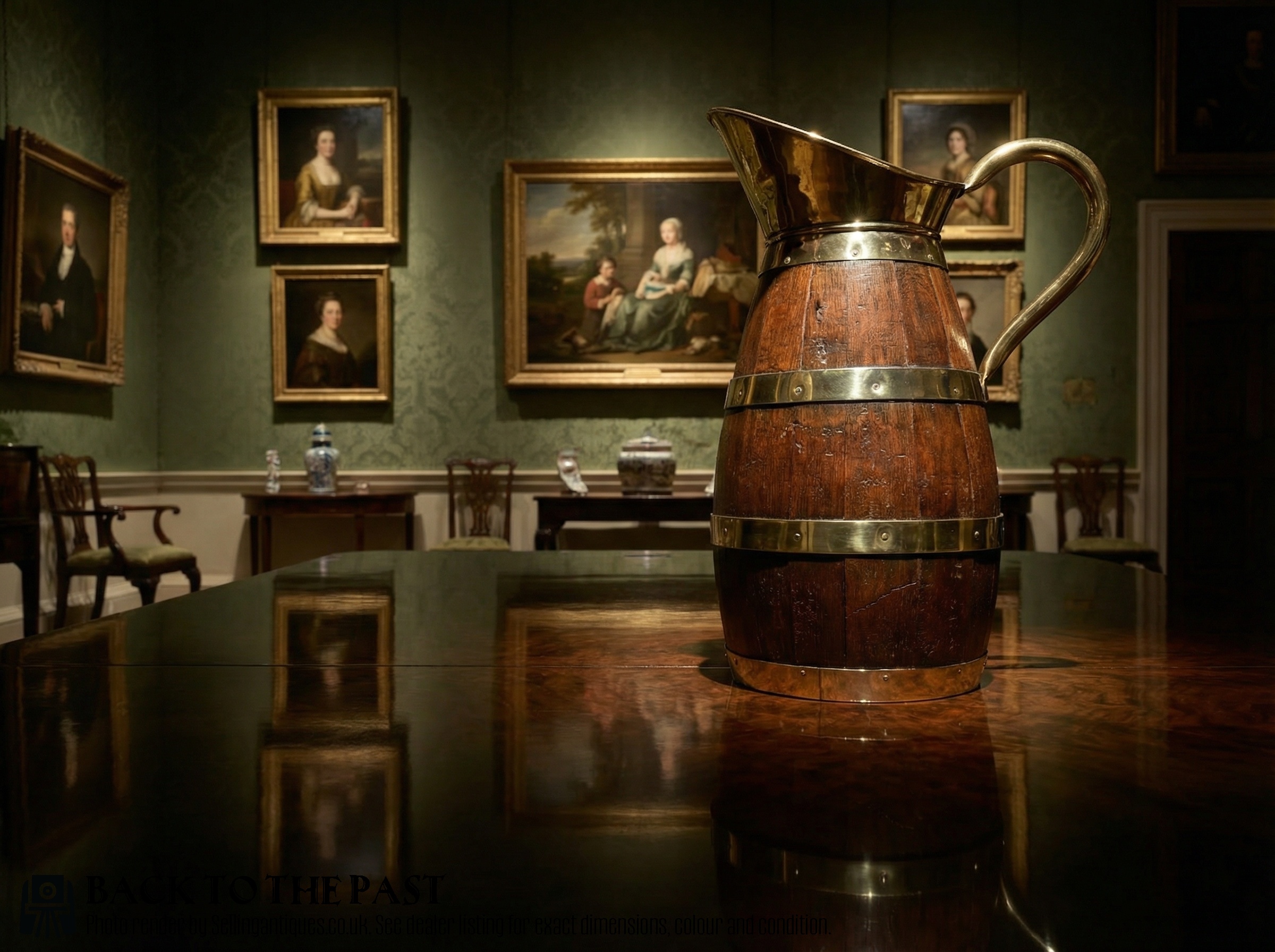
Brass Bound Oak Vessel
A brass bound oak vessel brings together stave construction and metal reinforcement, taking forms such as buckets, barrels, jugs, and umbrella stands. When you search for this phrase, you find items spanning the Victorian, Edwardian, and nineteenth-century periods, alongside Dutch country examples and Scottish peat buckets.
The most common versions on this page are coopered oak jugs and barrels secured with brass bands, alongside specific forms like log bins and stick stands. These items originate from British and Dutch workshops, showing domestic and rural uses translated into decorative interior objects.
How they were made
Maker workshops built these objects using traditional coopering techniques, shaping individual oak staves to fit tightly together into curved bodies. Metal bands in brass, and occasionally copper, iron, or zinc, were heated and fitted tightly around the wood so that cooling contraction locked the staves into place.
Internal liners appeared in specific vessels like buckets to hold liquids or peat safely without damaging the wood. Handles, swing bails, and mounts were fixed with rivets or screws, completing the assembly of hardwood and metal.
Brass Bound Oak Vessel Retail Price Guide 2026
Typical asking prices for brass bound oak vessel among the pieces listed under this phrase on Sellingantiques today, from the lower quarter to the upper quarter. They describe what is for sale here now, not the wider market.
The listings span the Victorian and Edwardian periods alongside the nineteenth century, utilising oak, mahogany, and hardwood alongside brass, copper, iron, and zinc.
What varies in quality
Quality rests in the precision of the cooper's stave joints and the thickness of the oak relative to the scale of the object. Heavier brass bands and well-fitted internal liners distinguish utilitarian items made for heavy work from lighter decorative pieces.
The integration of handles and the condition of the timber grain determine the visual success of the piece. Well-balanced proportions and clear evidence of period construction techniques separate standard examples from finer specimens.
The Brass Bound Oak Vessel Glossary
- Coopered
- Made by a cooper using curved wooden staves bound together with metal hoops. This technique ensures watertight or sturdy structural integrity for vessels.
- Stave
- One of the narrow vertical strips of oak that form the sides of a barrel, bucket, or jug. Staves are bevelled to fit tightly against each other.
- Bail
- A semicircular handle attached to the rim of a bucket or jug. It allows the vessel to be lifted or suspended.
- Peat bucket
- A deep container traditionally used in Scotland for holding dried peat fuel by the hearth. These often feature distinctive proportions and drop handles.
- Liner
- An internal vessel, often in zinc or copper, inserted into a wooden bucket to contain moisture. It protects the surrounding oak staves from dampness.
Brass Bound Oak Vessel: Frequently Asked Questions
What were brass bound oak vessels used for?
These vessels served practical domestic functions such as holding water, carrying peat, storing butter, or containing walking sticks in a hallway. Their robust construction handled heavy, daily use in nineteenth-century households.
Over time, many of these containers transitioned from utilitarian duties in kitchens and halls to decorative display pieces in domestic interiors.
How do I date a brass bound oak vessel?
Dating relies on observing the construction methods, the style of the brass mounts, and the specific form of the oak staves. Victorian and Edwardian examples often display characteristic turnings and handle attachments typical of those eras.
Nineteenth-century Dutch pieces and Scottish peat buckets carry regional design traits that help separate them from standard English domestic wares.
Are these vessels waterproof?
Many items feature internal metal liners specifically designed to hold liquids or damp materials without leaking through the wooden staves. However, older vessels with dry oak joints may no longer hold water reliably.
It is best to check for an intact liner if you intend to use the vessel for fresh floral arrangements or active moisture containment.
How should I care for oak and brass?
Maintain the oak by keeping it away from direct heat sources that can dry out the timber and cause staves to shrink. A light application of appropriate wax preserves the finish of the wood.
Clean the brass bands gently with a soft cloth to remove dust without stripping the aged patina from the metal.