



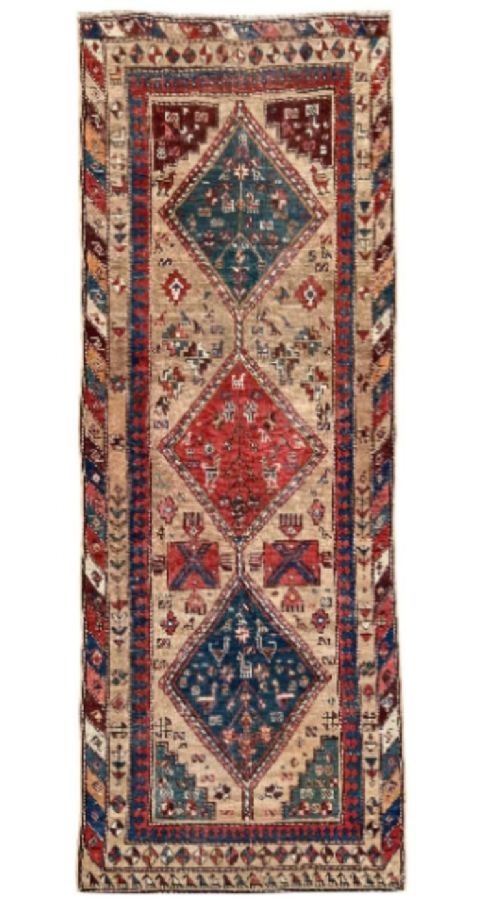
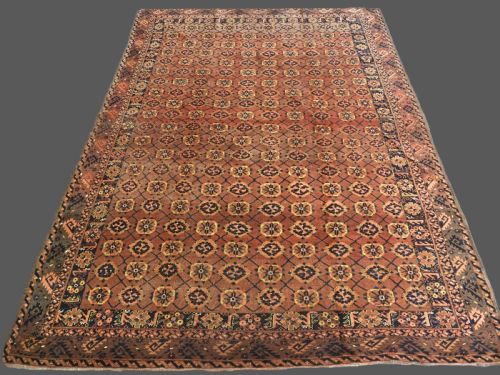
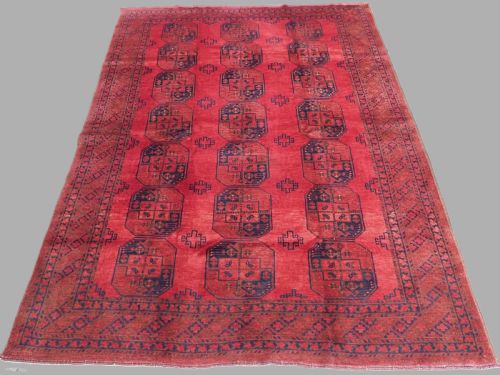
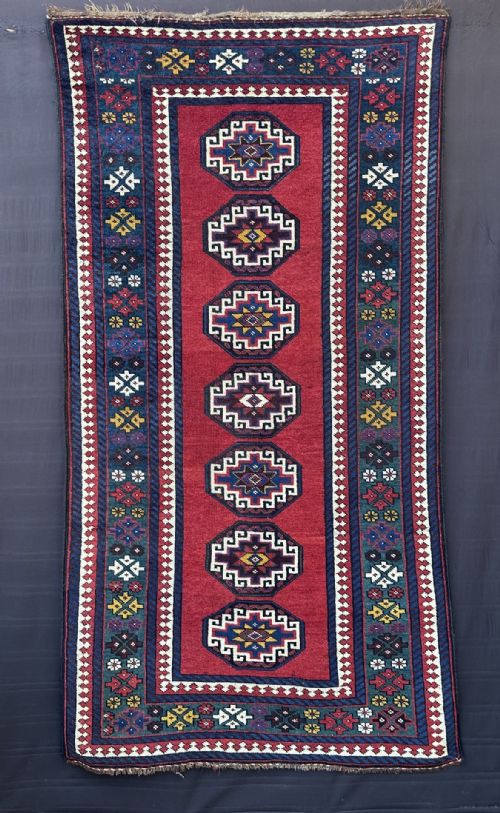




Persian Style Red Rug
A persian style red rug anchors a room with saturated warmth, bringing centuries of regional weaving traditions straight to the floor.
Persian Style Red Rug
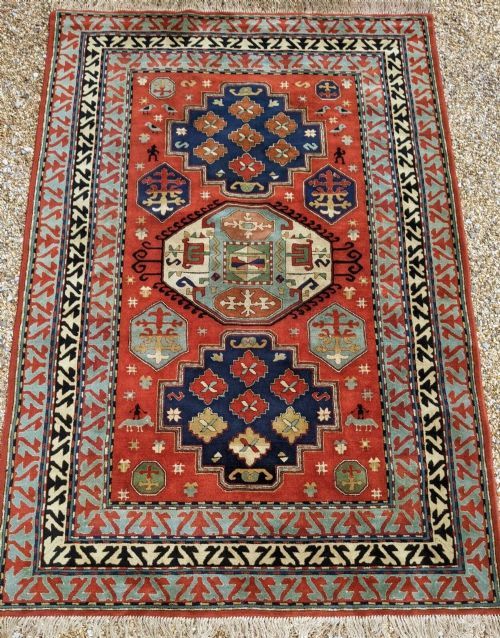
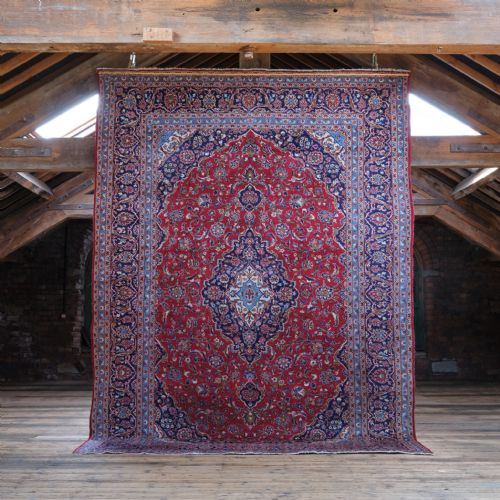
A persian style red rug encompasses hand-knotted floor coverings, runners and carpets originating from village workshops, tribal confederations and city looms across Persia, the Caucasus, Anatolia and Central Asia. These textiles span periods from the nineteenth century through the early twentieth century, carrying traditional geometric, medallion and all-over designs.
The inventory on this page leans heavily toward village and tribal output, particularly Heriz carpets, Karaja rugs and Afghan village pieces. Buyers encounter everything from compact bag faces and small scatter rugs to massive country house carpets and long narrow runners suitable for hallways.
Materials and construction
Makers constructed these rugs predominantly using wool, hand-spun wool and cotton foundations, relying on hand-knotting techniques passed down through generations. Natural dyestuffs provided the characteristic warm red tones that define these textiles, reacting organically to age and wear.
Weavers worked on upright looms, utilising sturdy wool piles tied tightly onto cotton or wool warp and weft threads. This traditional method produced dense, durable floor coverings capable of withstanding heavy daily use.
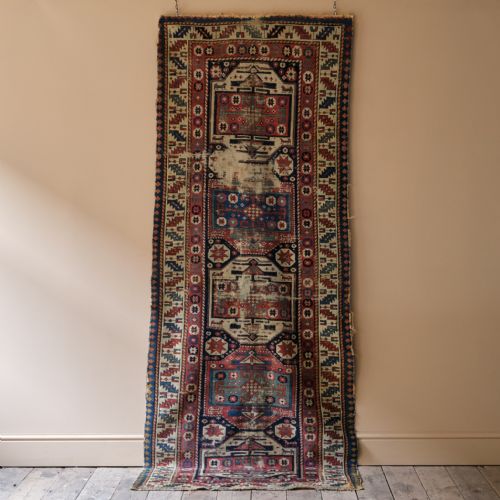
Some runners carry the charming irregularities of nomadic weavers who worked entirely from memory without drawn patterns.
Assessing quality
Quality in a persian style red rug rests on the integrity of the wool, the precision of the hand-knotting and the vitality of the natural dye palette. Tightly packed knots and supple, resilient wool indicate superior craftsmanship from skilled village or tribal weavers.
The clarity of the design and the harmonious balance of secondary colours against the red ground distinguish finer regional examples from simpler utilitarian pieces. Structural balance across the field and margins also marks the skill invested by the original maker.
The Persian Style Red Rug Glossary
- Runner
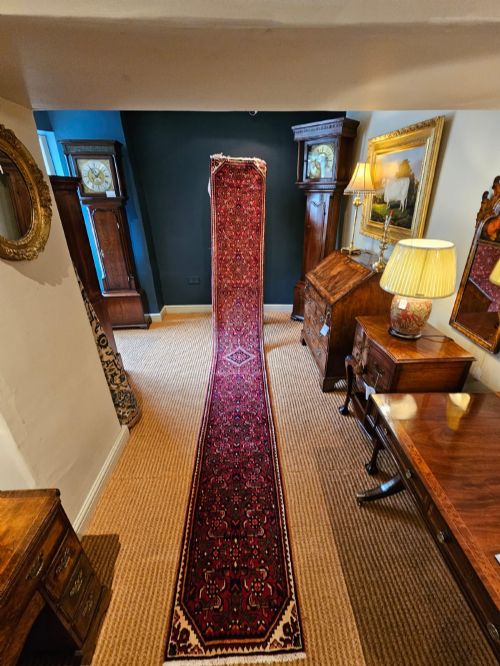
- A long, narrow carpet format specifically designed for hallways, corridors and staircases. These pieces measure significantly longer than they are wide.
- Warp
- The vertical threads stretched tightly on the loom before knotting begins. The fringe of a finished rug typically consists of these exposed extension threads.
- Weft
- The horizontal threads passed back and forth through the warp threads after each row of knots. They bind the structure together firmly.
- Medallion
- A central ornamental design motif placed in the middle of the rug field. Many traditional regional carpets feature this prominent focal point.
- Bag face
- The decorative front panel of a utilitarian storage sack produced by nomadic or tribal weavers. These panels were later preserved and used as small wall hangings or mats.
Persian Style Red Rug: Frequently Asked Questions
Where should I place a long runner rug?
These narrow formats suit hallways, corridors and entryways where floor traffic is steady but space is restricted. They protect wooden floorboards while adding warmth and colour to transitional spaces.
Ensure you measure the walkway carefully, leaving a uniform border of exposed floor around the edges of the rug for a balanced look.
How do I care for an antique wool carpet?
Regular gentle vacuuming without a rotating brush bar removes grit that damages the wool pile over time. Keep the piece out of direct, harsh sunlight to prevent the red dyes from fading unevenly.
Professional specialist cleaning is recommended every few years to lift embedded dirt safely without disturbing the delicate natural fibres.
What is a village rug?
Village rugs are produced by independent weavers working in domestic households rather than large urban manufactories. They often feature spontaneous geometric patterns and robust wool.
These pieces reflect the personal design choices and local folklore of specific tribal or regional communities rather than formal workshop cartoons.
How do I identify a Heriz carpet?
Heriz carpets typically display bold, geometric central medallions framed by strong corner spandrels and sturdy borders. The wool is famously durable and thick.
Originating from the Heris region in North-West Persia, these large format carpets use robust earthy tones dominated by deep reds and terracotta shades.