






Vintage Red Carpet
These vintage red carpet examples are hand-woven wool and silk floor coverings from Persia, Turkey, and Central Asia that bring rich crimson tones and tribal designs into a room.
Vintage Red Carpet
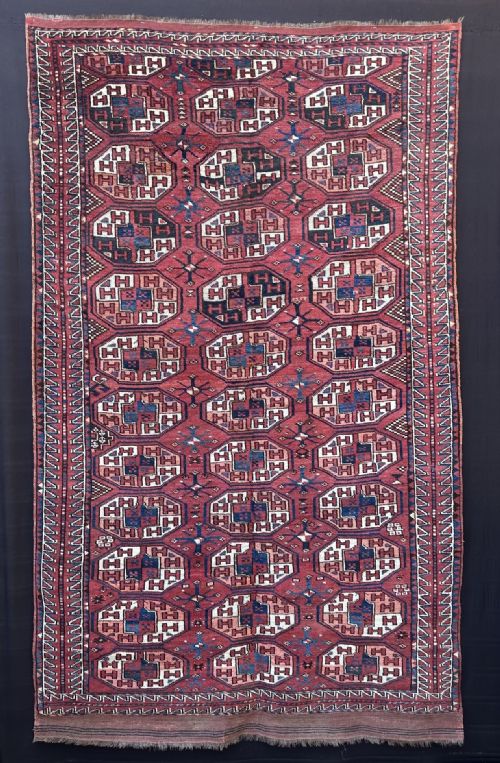
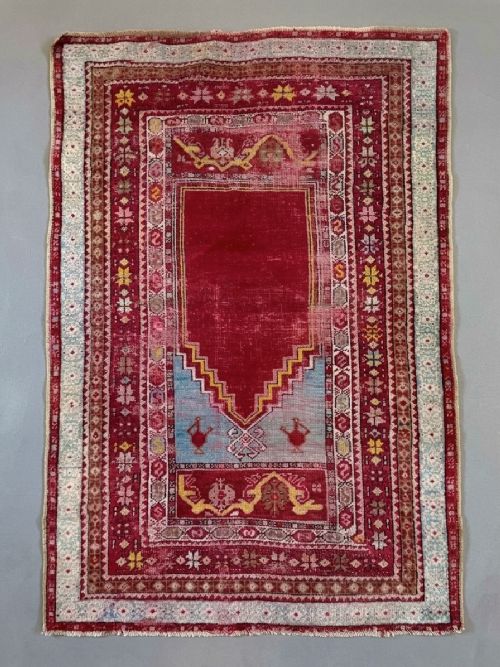
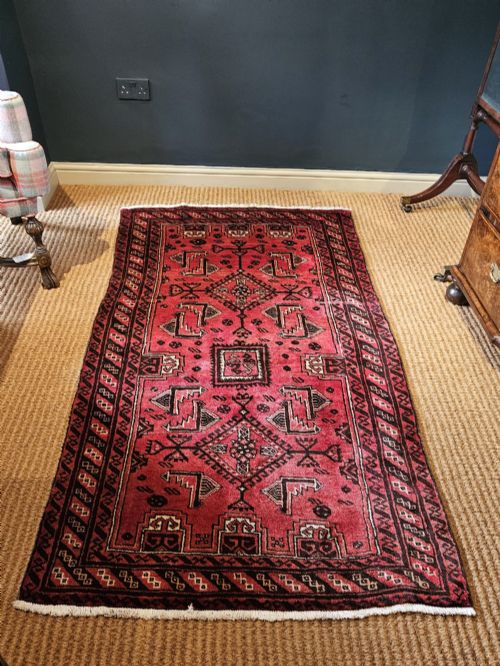
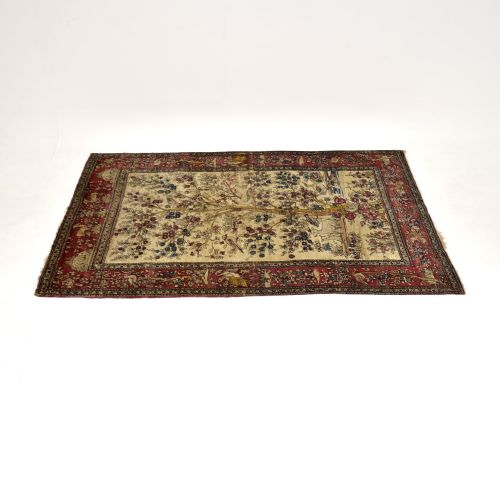
When searching for a vintage red carpet, buyers examine hand-knotted room-sized carpets, smaller area rugs, and long hallway runners created across Persia, Anatolia, and Turkmenistan. The pieces span from the late nineteenth century into the 1930s, displaying traditional tribal patterns alongside city workshop designs.
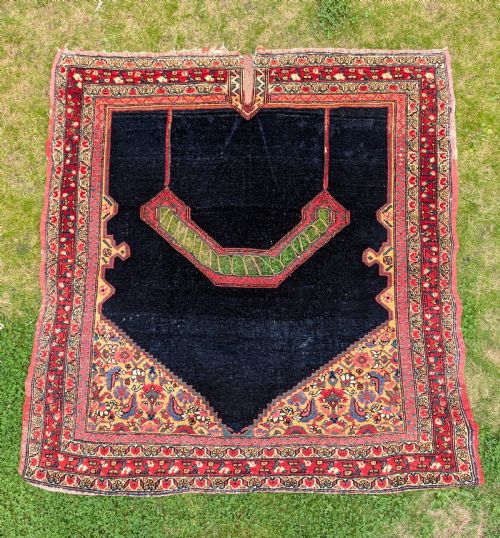
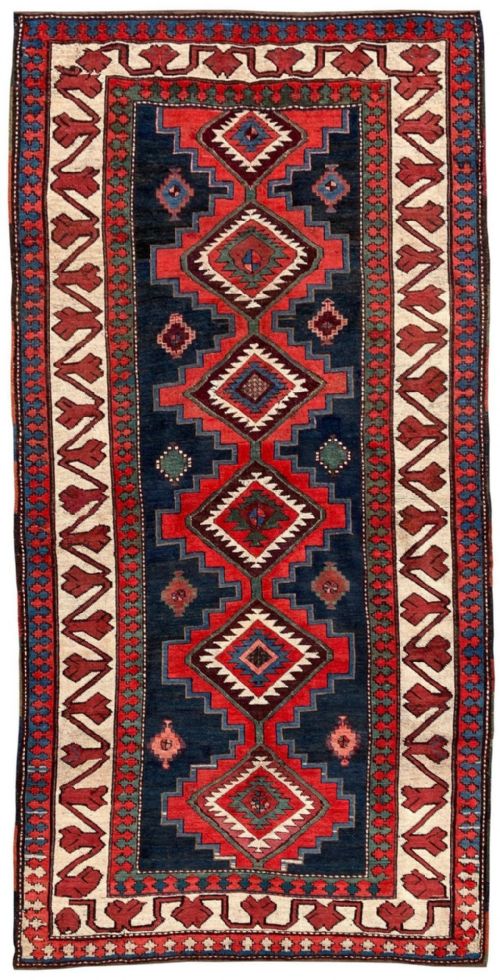
The assortment includes specific regional types such as Heriz, Saroukh, Kazak, and Ersari carpets. Formats range from large salon carpets down to saddle covers and ceremonial horse blankets.
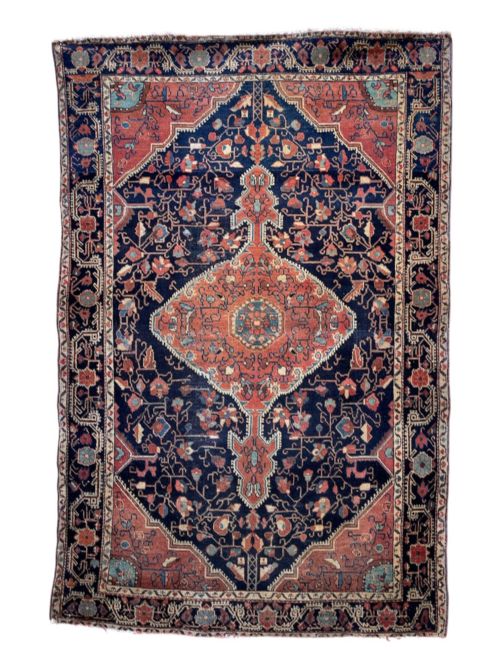
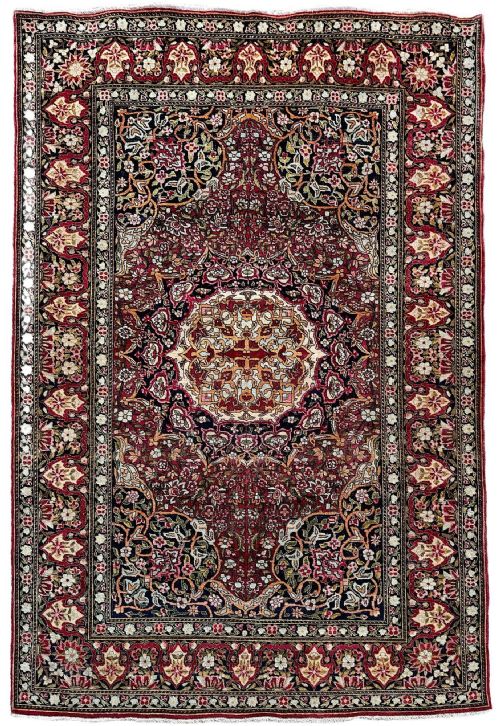
Most entries reflect wool construction dyed in deep madder and crimson tones, often accompanied by prayer niches, geometric medallions, or intricate floral motifs.
Materials and construction methods
Makers utilised wool, hand-spun wool, and pure wool for the pile, foundation threads, and fringes, frequently combining them with cotton and silk thread. Silk highlights appear in certain city pieces to catch the light across detailed floral fields.
Weavers knotted these materials by hand onto cotton or wool foundations, applying natural dyes that yielded deep crimson, rust, and madder backgrounds. Felted wool and embroidery techniques also surface in specific Turkmen ceremonial pieces.
A Yomut Turkmen entry steps away from floor use entirely as an embroidered ceremonial felt horse blanket.
Distinctions in quality
The finesse of the knotting and the density of the wool foundation set finer city weaves apart from coarser tribal work. Precision in the geometric or floral drawing indicates the skill of the original weaver.
Depth and saturation of the red dye, alongside the integrity of the original borders and ends, determine the visual impact of an individual piece.
Kizyl Ayak Tribe·Yomut Turkmen·Ersari Turkmen·Saroukh Mahal
The Vintage Red Carpet Glossary
- Prayer rug
- A textile featuring a mihrab or niche design intended for ritual use. These directional rugs were woven across Anatolia and Persia.
- Runner
- A long, narrow carpet format designed for hallways, corridors, or narrow spaces. They preserve repeating geometric or floral medallions along their length.
- Madder
- A natural red dye derived from plant roots, commonly utilised across traditional Persian and Turkish rugs to achieve deep crimson backgrounds.
- Knot
- The individual loops of wool or silk tied to the warp threads that form the pile of a handmade carpet.
- Foundation
- The underlying structure of warp and weft threads that supports the knotted pile of the rug.
Vintage Red Carpet: Frequently Asked Questions
How do I identify a tribal rug?
Tribal rugs typically display geometric motifs, bold primary colours, and asymmetrical designs rooted in nomadic traditions rather than formal city workshops.
These pieces rely on memory and local symbolism rather than drawn paper cartoons, resulting in charming irregularities across the weave.
Where were these carpets made?
The listings originate primarily from Persia, Anatolia, Turkmenistan, and the wider Caucasus region.
Each area developed distinct weaving techniques, colour palettes, and knotting styles passed down through generations of makers.
Are these runners suitable for hallways?
Long narrow formats, such as Heriz and Anatolian runners, fit naturally into corridors and transitional spaces.
Their elongated designs guide the eye and protect high-traffic wooden flooring beneath.
What is a prayer rug used for?
Prayer rugs feature a distinctive arched mihrab shape that indicated the direction of prayer for the user.
In domestic settings, collectors often place them on walls or smaller tables to showcase the symbolic design.