

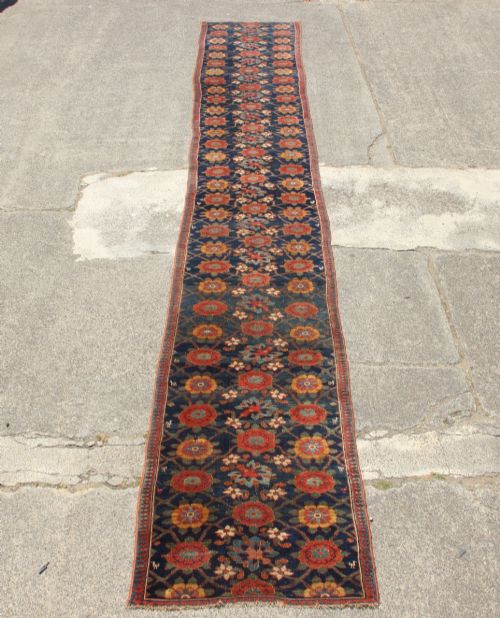
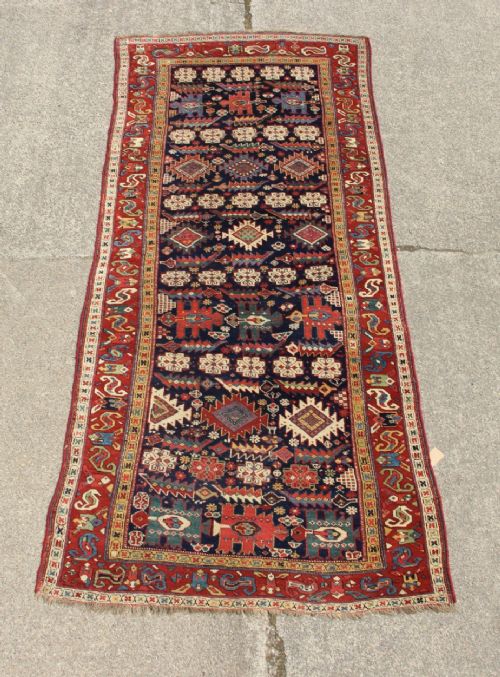
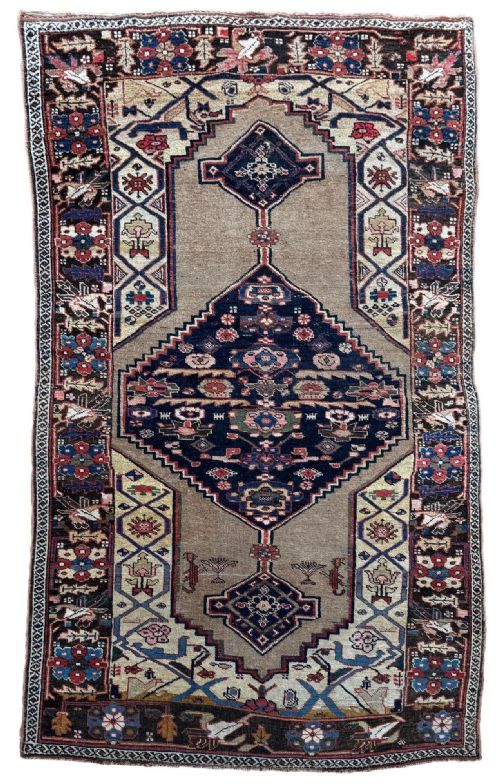
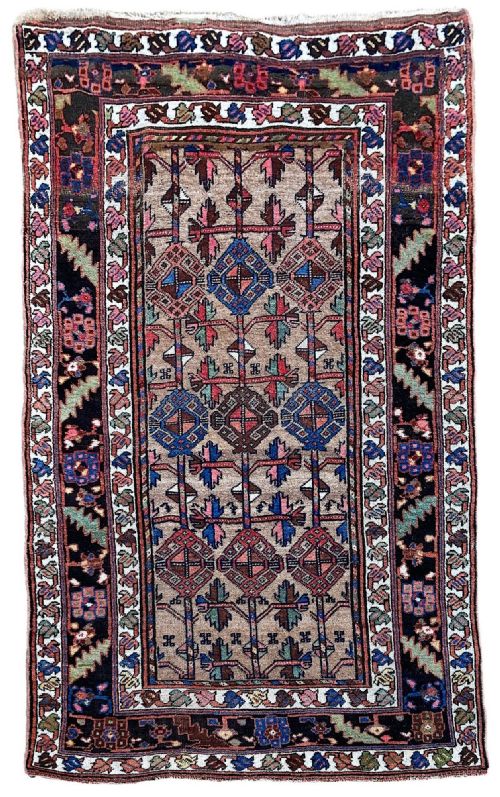
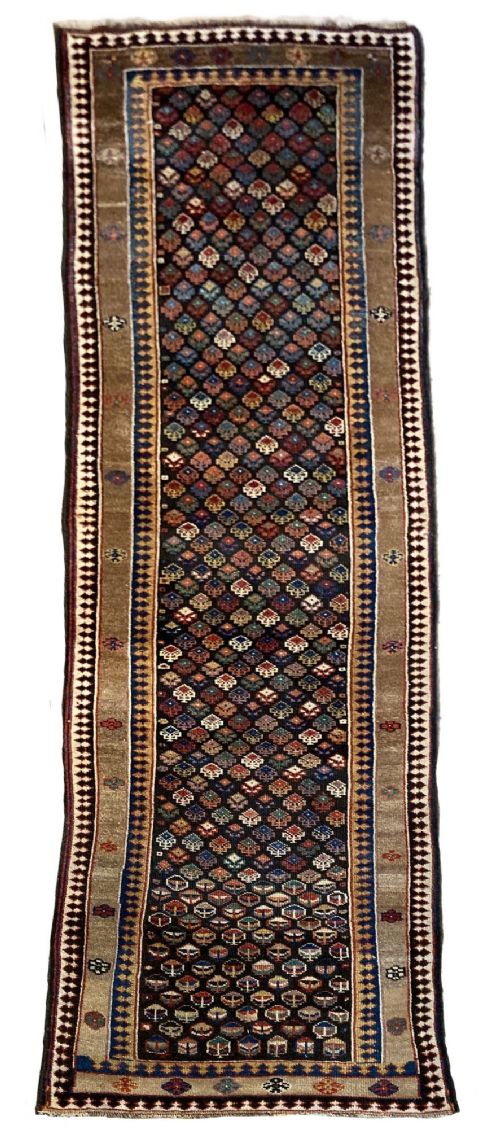
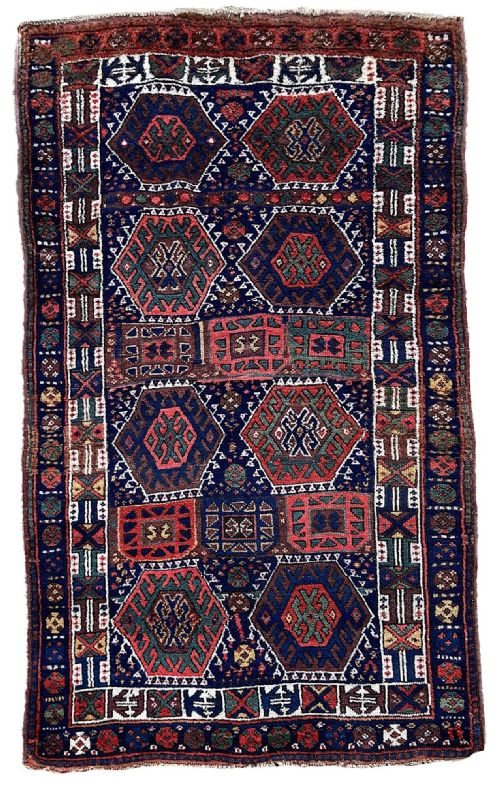


Persian Kurdish Runner Rug
A persian kurdish runner rug brings sturdy tribal geometry and rich wool into a hallway or narrow space.
Persian Kurdish Runner Rug
A persian kurdish runner rug spans the nineteenth and early twentieth centuries, emerging from weaving traditions across western Persia and Kurdistan. These elongated pieces serve narrow spaces such as hallways and landings, carrying distinct tribal motifs passed down through generations.
How they were made
Weavers utilise hand-spun wool and cotton foundations, building resilient structures designed to withstand decades of use. Natural dyes impart deep tones that mellow gradually across the surface.
The combination of tightly packed knots and sturdy material creates a heavy pile that maintains structural integrity in busy corridors.
The listings span from the mid-nineteenth century through the early twentieth century, utilising hand-spun wool and natural dyes.
What varies in quality
Knot density and structural tension separate everyday utility pieces from exceptionally fine village and regional weaving. Precision in drawing and consistency in natural dye saturation determine the visual depth of the field.
Preservation of the original outer borders and selvages alters the character of a runner, reflecting how carefully the textile was maintained over generations.
The Persian Kurdish Runner Rug Glossary
- Runner
- A long, narrow carpet format traditionally woven for hallways, corridors, and stairs. These pieces balance length with restricted width to fit transitional spaces.
- Kelleh
- A large format rug that is longer than a standard room size piece but broader than a typical narrow runner. It offers a substantial central field for larger rooms.
- Mina Khani
- A repeating floral lattice pattern composed of four-petalled flowers linked by delicate vines. It is frequently seen across classical Persian and Kurdish carpets.
- Gul
- A medallion or repeating octagonal motif used in tribal weaving to identify specific clans and regional groups. These symbols carry traditional tribal heritage.
- Bidjar
- A town and surrounding region in western Persia known for heavy, dense construction and robust wool foundations. Rugs from this area earn the moniker of the iron rugs of Persia.
Persian Kurdish Runner Rug: Frequently Asked Questions
Where should I place a runner rug?
These elongated floor coverings fit naturally in hallways, corridors, and narrow landings where foot traffic is frequent. Their proportions suit transitional spaces that require both warmth and floor protection.
The sturdy construction handles daily movement while adding distinct tribal pattern to otherwise plain architectural areas.
How do I care for antique wool runners?
Regular gentle vacuuming without a rotating brush roll keeps dust from settling into the dense wool pile. Professional cleaning suited for antique textiles preserves the natural lanolin and dyes.
Placing a breathable underlay beneath the piece prevents slipping and reduces friction against hard flooring.
What is a Kurdish Kelleh?
A Kelleh is a substantial format that sits between a standard room rug and a narrow hallway runner. It provides an expansive central field for open floors.
These larger tribal pieces display more complex medallion layouts and extended repeating border motifs.
How can I tell the age of these rugs?
Dating relies on material characteristics, colour palettes from natural dyes, and structural construction methods. Nineteenth-century examples often display subtle variations in tone resulting from hand-dyed wool batches.
Stylistic elements like specific tribal guls and structural stiffness point towards particular decades and weaving districts.