
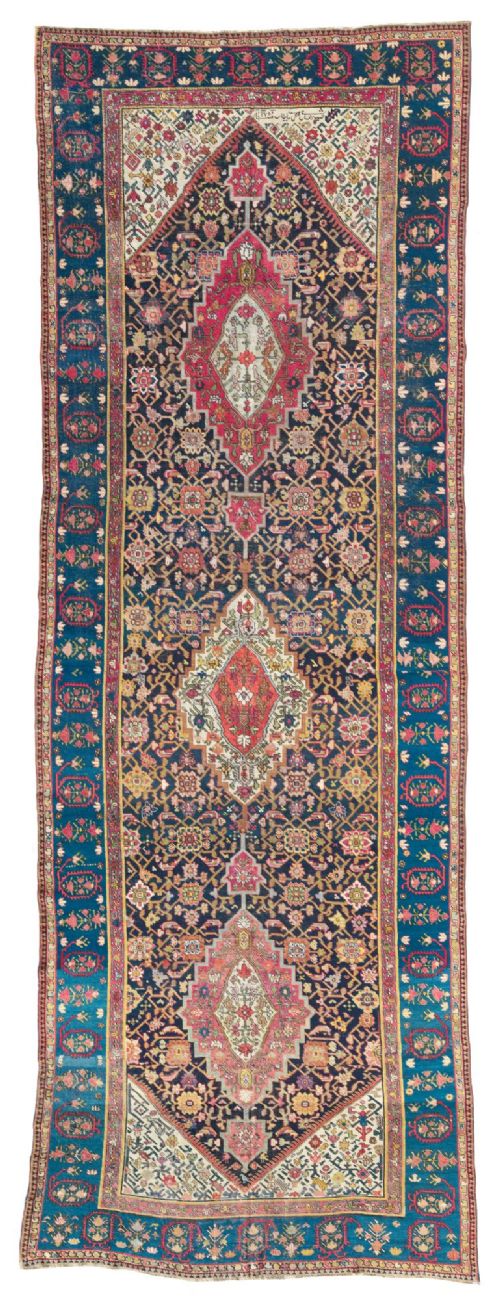


Persian Kelleh Long Carpet
These substantial room-sized floor coverings are the traditional persian kelleh long carpet you seek, valued for their generous rectangular proportions and rich tribal artistry.
Persian Kelleh Long Carpet
The persian kelleh long carpet occupies a specific format in oriental weaving, distinct in its narrow, elongated proportions relative to standard carpets. These pieces function as grand runners or extended rugs designed for specific room dimensions in historical homes.
The listings here span diverse regional origins across Persia, featuring Kurdish, Bidjar, Malayer, and Hamadan weaving traditions. Tribal groups such as the Luri, Qashqai, Khamseh, and Shashavan also contribute distinct stylistic expressions to this selection.
Dating across the nineteenth and early twentieth centuries, these floor coverings demonstrate traditional motifs including tree of life designs, boteh patterns, and crab borders. The forms appear as large rugs, runner rugs, and substantial area carpets.
How they were made
Weavers constructed each persian kelleh long carpet using durable wool and cotton foundations, employing hand-spun wool for the pile to ensure resilience. Natural dyeing traditions provided the deep colour palettes visible across the surviving examples.
Nomadic and village workshops utilised traditional upright looms to knot these textiles by hand, securing dense piles that withstand generational wear. Structural integrity relies on tightly packed foundation threads of cotton and wool.
Several pieces feature crab borders that have nothing to do with crustaceans, representing instead a stylised evolution of ancient Persian palmettes.
What varies in quality
Quality in a persian kelleh long carpet rests on the fineness of the knotting and the crispness of the drafted design. Tighter foundations yield greater durability and sharper definition in complex border patterns and central fields.
The richness and stability of the dyestuffs also differentiate examples, with saturated vegetable dyes indicating superior workshop standards. Completeness of original borders and minimal intervention in the pile elevate the standing of individual pieces.
The Persian Kelleh Long Carpet Glossary
- Kelleh
- A format descriptor for a carpet that is significantly longer than it is wide, traditionally proportioned for specific reception rooms. This shape sits between a standard carpet and a long runner.
- Boteh
- A stylised almond or paisley motif representing a floral shoot or cypress tree, frequently repeated across fields and borders. This ancient symbol appears extensively in Kurdish and Persian weaving.
- Bidjar
- A town and weaving centre in western Persia known for heavy, dense construction and robust wool foundations. Rugs from this origin earned a reputation as the iron rugs of Persia.
- Harshang
- A traditional crab-like botanical border pattern found in north-west Persian carpets. This geometric floral motif frames central fields with formal symmetry.
- Pile
- The cut vertical loops of wool that form the usable surface of the carpet. Pile density directly affects how motifs resolve and how the textile handles friction.
Persian Kelleh Long Carpet: Frequently Asked Questions
What is a kelleh carpet?
A kelleh is a traditional format of oriental carpet characterised by an elongated rectangular shape. It serves as a middle ground between a square room carpet and a narrow corridor runner.
These pieces were woven to fit specific architectural spaces in Persian houses, often framing the perimeter of a room. Their proportions allow them to anchor large furniture arrangements effectively.
How do I date an old Persian carpet?
Dating relies on stylistic markers, structural analysis, and material evidence such as hand-spun wool versus machine-spun yarns. Natural colour variations and regional weave characteristics also point to specific decades.
Comparing border patterns and knot densities against documented examples helps narrow down the period of production. Structural wear patterns provide further context regarding age.
Where were these long rugs made?
These carpets originate from various regions across Persia, including Kurdish districts, Bidjar, Malayer, Hamadan, and north-west tribal territories. Each area utilised distinct regional palettes and knotting techniques.
Nomadic confederations and village workshops contributed specific geometric and floral motifs that identify their geographical roots. Local materials reflect the sheep breeds and plant life available in each district.
How do I care for an antique wool carpet?
Maintenance involves regular gentle vacuuming without rotary brushes to protect the hand-spun wool pile. Keeping the textile out of direct sunlight prevents the fading of natural dyes.
Professional cleaning suited to antique textiles should occur periodically to remove embedded grit from the cotton foundation. Using a proper underlay reduces friction between the carpet and the floor.