


Persian Gallery Carpet
A Persian gallery carpet brings deep floor coverage and intricate tribal artistry into large spaces through dense wool weaves.
Persian Gallery Carpet
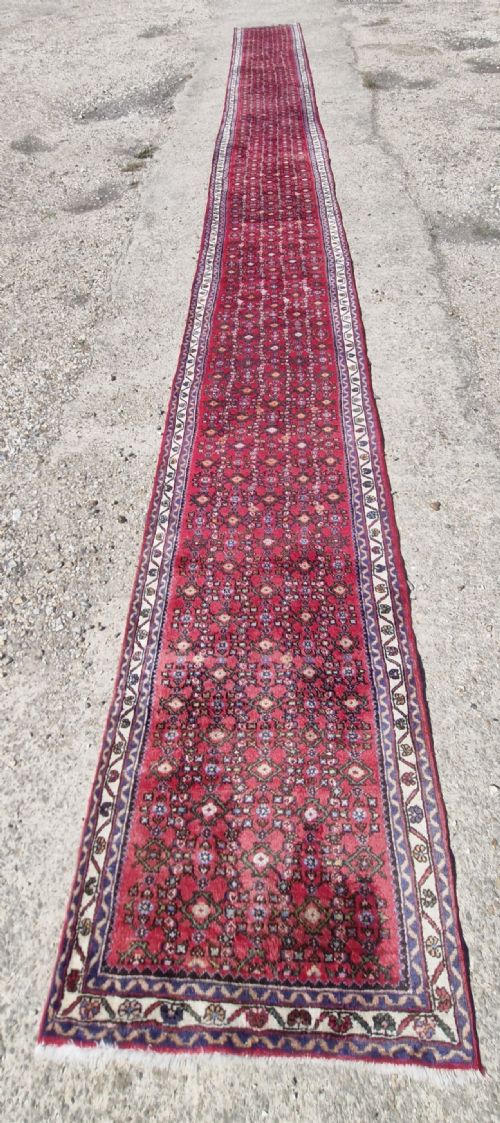
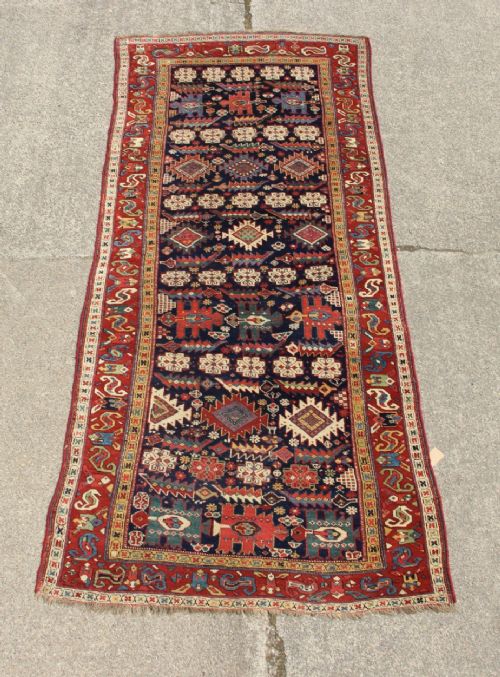
A Persian gallery carpet delivers substantial length and disciplined width suited for expansive halls and landings. These floor coverings span production dates from the mid-nineteenth century through the mid-twentieth century, capturing traditional weaving centres across the region.
Buyers encounter long formats including grand Kelleh carpets and narrow runner rugs designed for circulation routes. The selection represents diverse regional workshops and tribal groups such as Kurdish, Bidjar, Malayer, Bakshiash, Serapi, Khamseh, Zanjan, Senneh, Bakhtiari, Sarouk, and Serab.
Pieces from this grouping demonstrate distinct format requirements, functioning as expansive gallery centrepieces or elongated runners. The variety of dimensions matches historical architectural needs for corridors and large reception spaces.
Materials and Construction Methods
Weavers constructed these carpets using wool and hand-spun wool pile set upon sturdy cotton foundations. Natural dyes provide the enduring colour palette observed across the nineteenth and twentieth-century examples.
The combination of resilient wool fibres and traditional dyeing methods creates durable surfaces capable of handling heavy foot traffic. Hand-spun yarns impart subtle tonal variations that enrich the overall visual texture of each piece.
The selection includes pieces dated from 1850 through 1960, utilising wool, cotton, hand-spun wool, and natural dyes across various regional styles.
Evaluating Quality and Execution
Quality rests in the precision of the knotting and the complexity of regional designs like the Harshang border or Memling guls. Finer examples exhibit tight structural density and balanced proportions across exceptional lengths.
The integrity of the natural dyes and the crispness of tribal motifs distinguish superior pieces from standard production. Artisanal execution in the handling of geometric and figurative elements elevates the status of individual carpets.
The Persian Gallery Carpet Glossary
- Kelleh
- A specific rectangular format denoting a carpet that is significantly longer than it is wide. This shape suits gallery spaces and large hallways.
- Runner
- An elongated narrow rug designed for corridors, stairs, and long landings. These formats accommodate restricted widths while spanning considerable floor lengths.
- Natural Dyes
- Colourants derived from plant, insect, and mineral sources prior to the introduction of synthetic alternatives. They age gracefully and develop rich patinas over time.
- Gul
- A medallion or repeating octagonal motif frequently found in tribal and nomadic weaving traditions. These patterns often identify specific regional groups.
- Hand-spun Wool
- Yarn prepared manually using traditional spinning tools rather than industrial machinery. This method creates variable thickness that absorbs natural dye with mottled depth.
Persian Gallery Carpet: Frequently Asked Questions
How do I place a gallery carpet in a modern home?
These large formats suit high-traffic hallways, grand landings, and expansive living spaces where their length commands attention. Ensure the surrounding floor exposes a consistent border of timber or stone.
Allow sufficient clearance for doors to swing freely over the pile height. Positioning furniture partially on the carpet helps anchor the room's layout.
What defines a Kelleh carpet?
A Kelleh is a specific Persian carpet format defined by proportions that are longer than standard room-size rugs but wider than narrow runners. They traditionally served long reception rooms and galleries.
This format balances substantial floor coverage with a linear profile that guides movement through a space.
How do I care for antique wool carpets?
Regular gentle vacuuming without a rotating brush roll removes grit that settles deep within the wool pile. Professional cleaning by specialists in antique textiles preserves the integrity of the natural dyes.
Rotate the carpet periodically to ensure even exposure to foot traffic and sunlight. Using a quality underlay prevents slipping and cushions the foundation fibres.
Can I distinguish tribal rugs from workshop pieces?
Tribal and village pieces often display asymmetrical geometric patterns and expressive local variations in the design. Workshop carpets tend towards more formal symmetrical medallions and refined floral borders.
Examining the weave density and the handling of motifs provides insight into whether a piece originated from a nomadic group or a settled urban centre.