
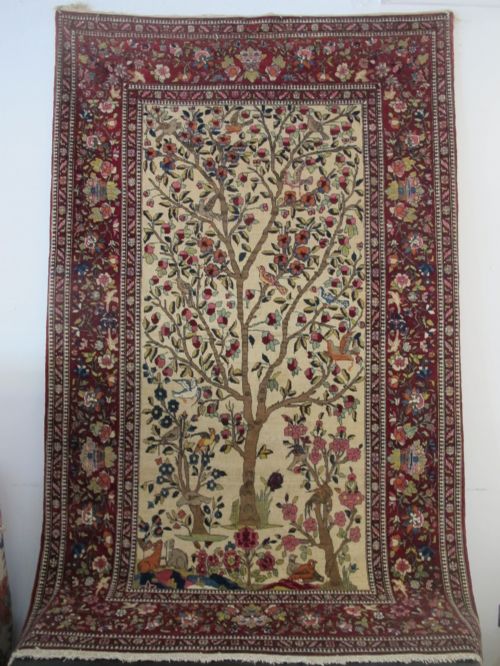


Persian Isfahan Carpet
A persian isfahan carpet brings central Persian court design into a room, offering dense floral patterns and fine knotting.
Persian Isfahan Carpet
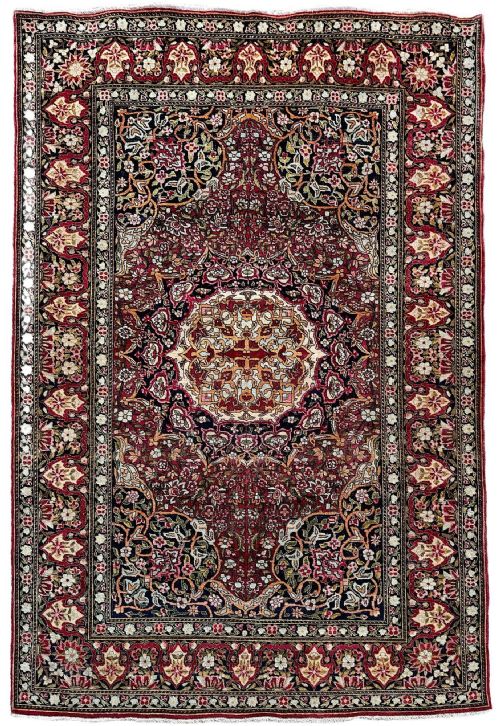
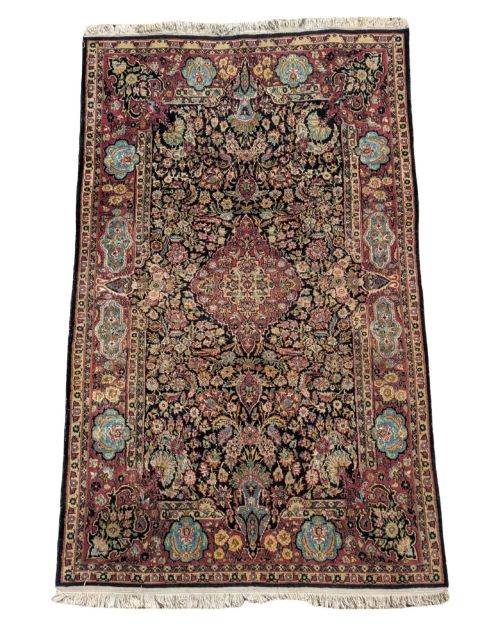
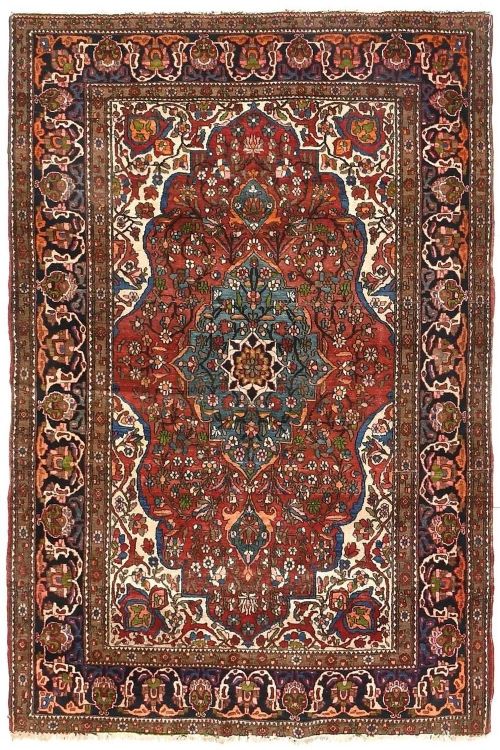
A persian isfahan carpet represents the weaving tradition of central Persia, known for intricate medallion layouts and pictorial designs. Buyers encounter formats ranging from manageable area rugs to large carpets suited for principal rooms.
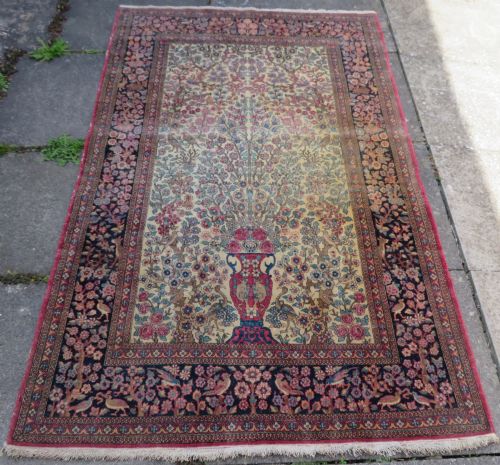
The pieces recorded span from the late nineteenth century through to the interwar decades, showing classic medallion compositions, tree of life motifs, and traditional floral arrangements. These textiles function as floor coverings or decorative works originating from Persian workshops.
Makers and workshops in central Persia produced these rugs and carpets using established design idioms, including Safavid style revivals and Qajar influences. The selection covers standard room sizes alongside finer examples with pictorial elements.
Materials and Technique
Weavers constructed these carpets using wool, lambswool, and silk pile on cotton or silk foundations. Many pieces incorporate silk highlights to accentuate specific floral or geometric contours within the field.
The physical structure relies on tight knotting on cotton or silk warps and wefts, producing a durable yet flexible textile. Workshops utilised fine yarn preparations, allowing complex curves and delicate tendrils to emerge clearly across the surface.
What Varies in Quality
The degree of fineness in the weave dictates the sharpness of the design and the density of the pile. Pieces utilising lambswool on silk foundations represent a higher grade of construction than standard commercial wool variants.
Visual complexity also separates examples, with pictorial subjects and intricate small medallion layouts demanding greater skill from the weaver. The preservation of the pile and the integrity of the foundation dictate the overall standard of survival.
Ahmadi·Nejafabad
The Persian Isfahan Carpet Glossary
- Medallion
- A central ornamental motif set in the middle of the carpet field. This design element organises the surrounding floral or geometric patterns.
- Foundation
- The structural base of the carpet, consisting of warp and weft threads. Materials include cotton or silk depending on the grade.
- Pile
- The vertical yarn surface of the carpet formed by knotted wool, lambswool, or silk. This layer creates the tactile feel and visual depth.
- Tree of Life
- A symbolic motif depicting a branching tree rising from a vase or ground. It represents growth and eternal life within traditional Persian weaving.
- Qajar
- A historical Persian period style associated with nineteenth and early twentieth-century decorative arts. It informs the aesthetic choices seen in many of these carpets.
Persian Isfahan Carpet: Frequently Asked Questions
Where were these carpets made?
These carpets originated in central Persia, specifically around Isfahan and surrounding weaving centres known for refined court designs.
Production spanned several decades, drawing on regional techniques and traditional pictorial themes established over generations.
What materials are used?
The pile typically consists of wool, lambswool, or silk, while the foundation relies on cotton or silk threads.
Many examples incorporate silk highlights to give specific floral details extra definition against the wool background.
How do I date a carpet?
Dating relies on stylistic markers, structural analysis, and period comparisons ranging from the late nineteenth century to the 1930s.
Design shifts from classic medallion formats to pictorial or distressed finishes help place pieces within specific decades.
Are these suitable for everyday use?
Many examples function well as area rugs in domestic spaces, provided they receive appropriate care and gentle treatment.
Finer silk-foundation pieces benefit from placement in low-traffic areas to preserve their delicate structure and pile.