
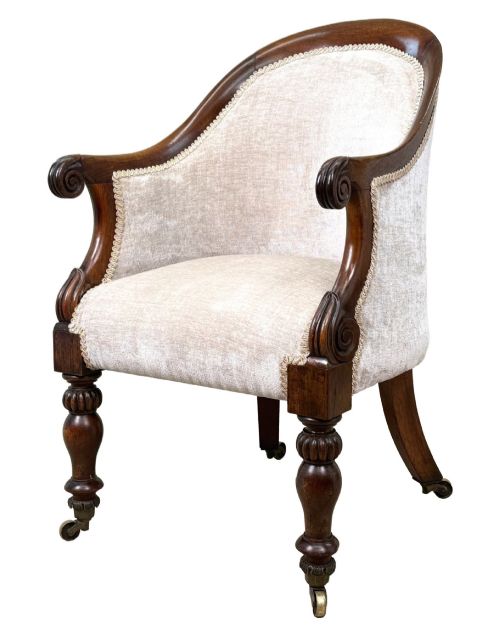
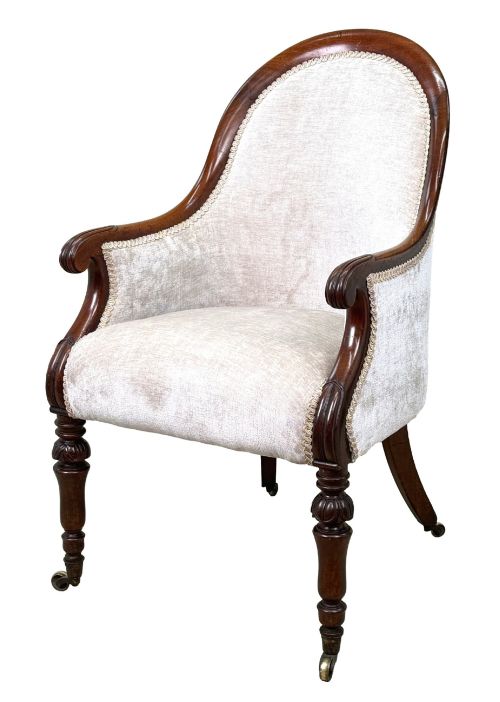
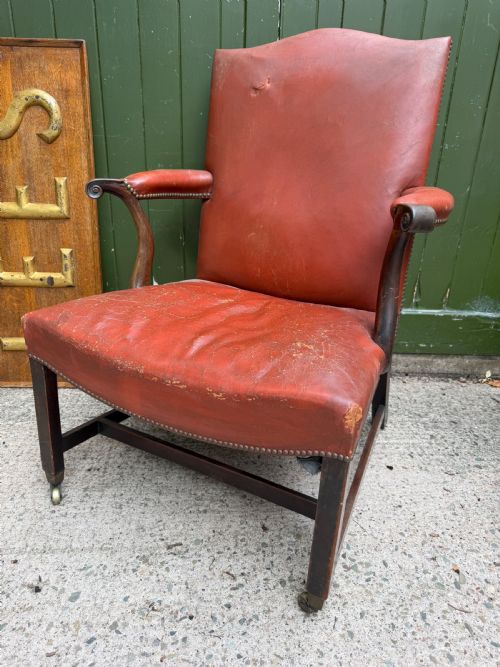
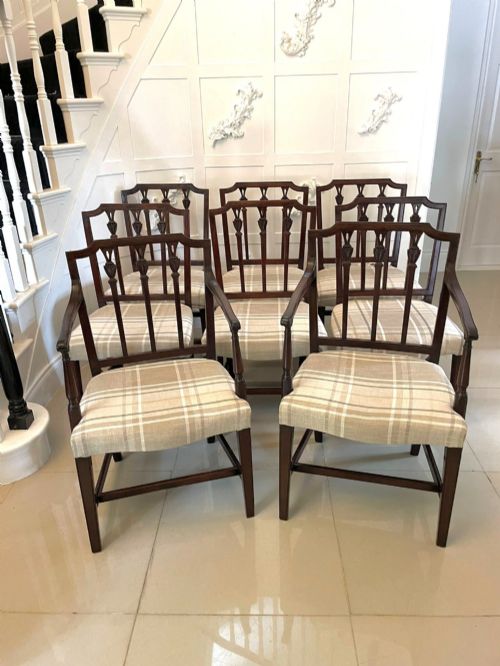
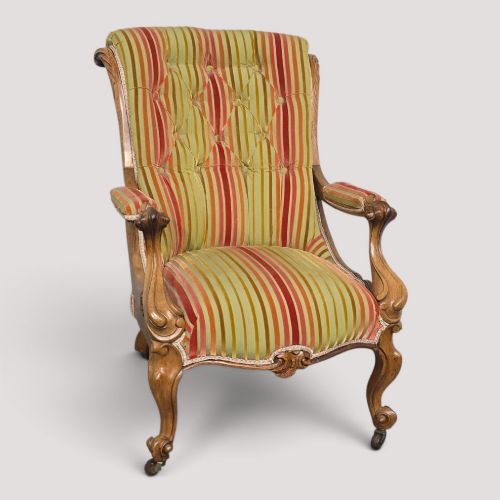
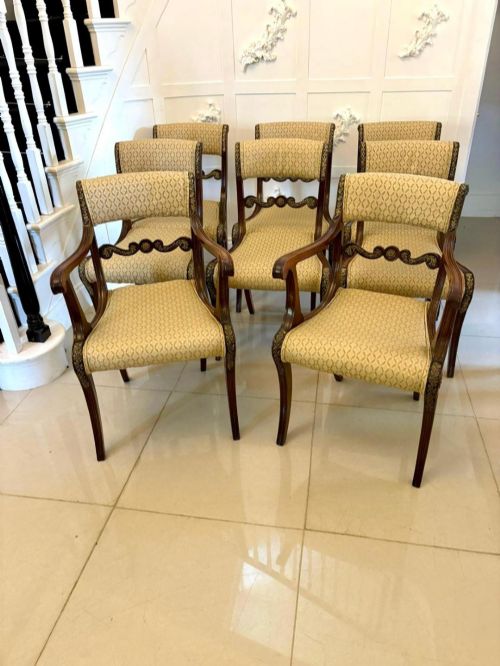
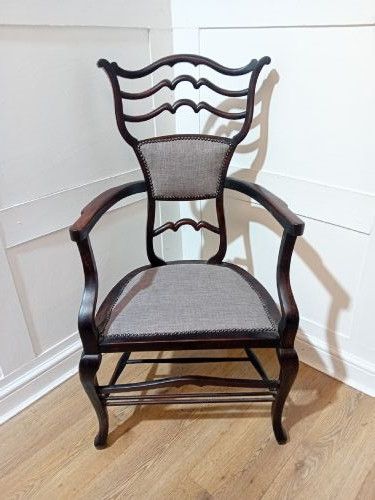

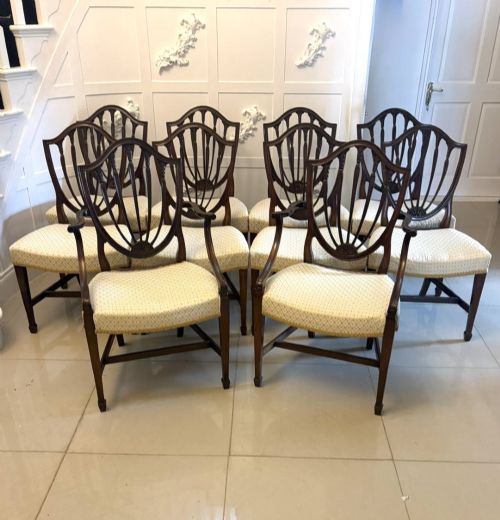
Period Upholstered Armchair
A period upholstered armchair brings a room together with generous proportions and historic character, offering comfort rooted in centuries of craftsmanship.
Period Upholstered Armchair
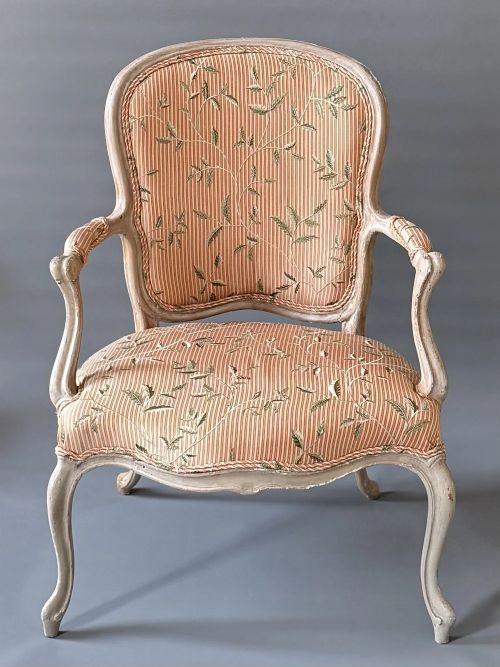
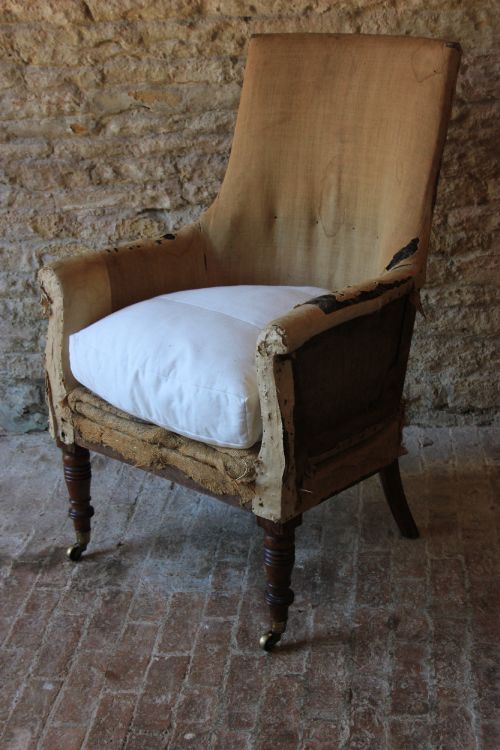
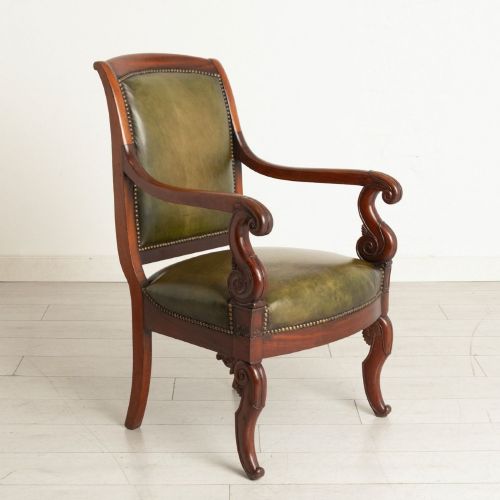
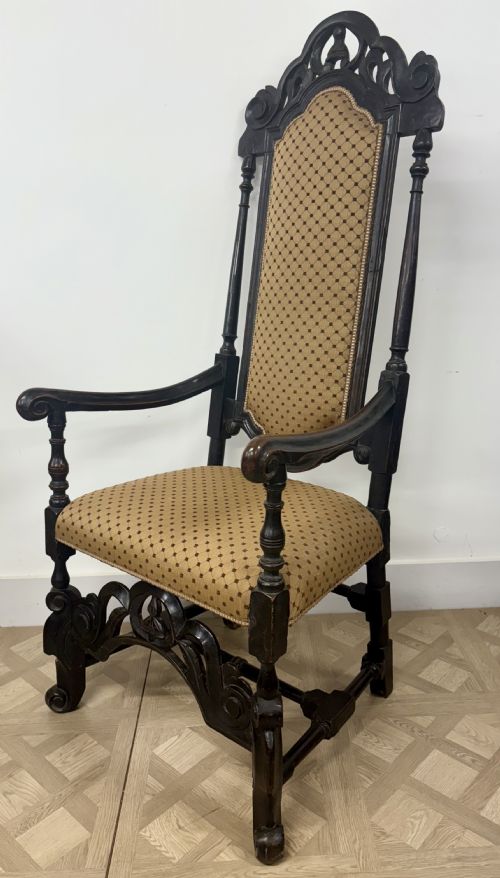
When searching for a period upholstered armchair, collectors encounter a diverse selection spanning the seventeenth through the early twentieth centuries. These seating pieces encompass library chairs, tub chairs, wingbacks, and salon models originating from English, French, and Scottish workshops.
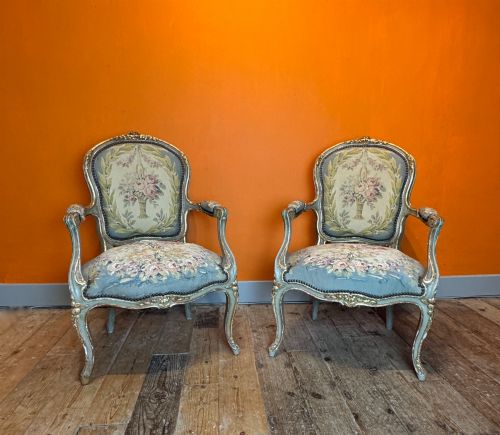
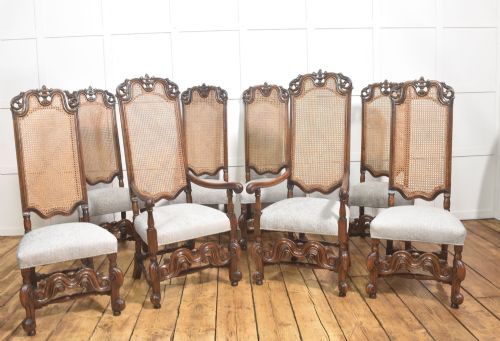
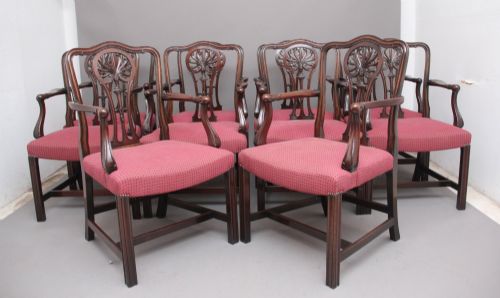
The specimens appearing on this page range from walnut and mahogany frames of the Georgian and Regency eras to later Edwardian and Victorian creations. Buyers regularly find both single pieces intended for intimate reading spaces and matched pairs designed for formal drawing rooms.
Makers and designers from past centuries utilised robust timbers like mahogany, walnut, and oak to construct the structural skeletons. These wooden frames support various historic seating forms shaped by shifting domestic fashions and ergonomic demands.
Construction and Materials
Craftsmen shaped structural elements from dense hardwoods including mahogany, walnut, oak, and beech, often carving intricate details directly into the timber. Joinery relied on traditional mortise and tenon techniques to ensure long-term stability under daily use.
Upholstery techniques developed across periods, employing traditional stuffing materials held by webbing and secured with metal tacks. Outer coverings incorporate historic textiles such as leather, velvet, damask, silk, and tapestry to finish the piece.
Surface treatments range from polished wood finishes and French polish to painted and parcel-gilt decorations seen on French and English neoclassical models.
Period Upholstered Armchair Retail Price Guide 2026
Typical asking prices for period upholstered armchair among the pieces listed under this phrase on Sellingantiques today, from the lower quarter to the upper quarter. They describe what is for sale here now, not the wider market.
Some library armchairs were built with extra-wide seats specifically to accommodate voluminous eighteenth-century gentleman's coats.
Distinctions in Quality
The distinction between standard examples and the finest works lies in the depth of carving and the crispness of detail executed by the cabinetmaker. Superior frames display well-proportioned lines and harmonious proportions that reflect the aesthetic standards of their specific period.
Material selection dictates much of the inherent value, with dense, well-figured timber and high-status decorative elements such as giltwood setting elite pieces apart from utilitarian seating. The integrity of the underlying frame construction determines how well the chair has survived centuries of use.
Alfred Allen of Birmingham·Gillows·Blaise Maucuy·Maple and Co
The Period Upholstered Armchair Glossary
- Bergère
- An enclosed upholstered armchair with wooden framing exposed around the sides and back, originating in France. This form became popular during the eighteenth century.
- Tub chair
- A seating form characterised by a continuous curved back and armrest rail enclosing the sitter. Examples frequently appear in Regency and Edwardian contexts.
- Carver
- An armchair designed to match a set of smaller dining chairs, traditionally positioned at the head of a table. These pieces share stylistic traits with their smaller counterparts.
- Parcel-gilt
- A decorative treatment where selected portions of a wooden or gesso surface receive a gold leaf application. This technique highlights carved mouldings and details.
Period Upholstered Armchair: Frequently Asked Questions
How do I identify a Georgian armchair?
Georgian armchairs typically feature mahogany or walnut frames with characteristic stylistic markers such as carved cabriole legs or straight structural supports. The joinery is robust and reflects the cabinetmaking standards of the eighteenth century.
Upholstery on these pieces often utilises traditional leather or heavy woven textiles. Proportions remain generous, designed for formal domestic interiors and libraries.
What is a library armchair?
Library armchairs were built for reading rooms and studies, emphasising deep seating and upholstered comfort. They frequently incorporate leather panels on the armrests and back.
These chairs often date from the Regency or Georgian periods, constructed from dark hardwoods like mahogany and rosewood. Their sturdy frames accommodated prolonged periods of study.
Are French and English armchairs different?
French armchairs from periods like the Louis XVI or Regence eras tend to feature exposed giltwood, carved floral motifs, and lighter decorative flourishes. English equivalents from the same eras focus more on sturdy mahogany frames and understated classical lines.
Both traditions utilised high-quality upholstery, but French seating often prioritizes salon elegance while English designs lean towards library utility.
How do I care for antique upholstery?
Maintaining antique upholstery requires gentle cleaning methods suitable for historic textiles such as silk, velvet, or leather. Direct sunlight should be avoided to prevent fading and degradation of the fibres.
Professional conservation advice helps preserve original stuffing and fabric where applicable. Regular dusting with soft brushes keeps surface dirt from settling into the weave.