


Period Oak Drop Leaf Table
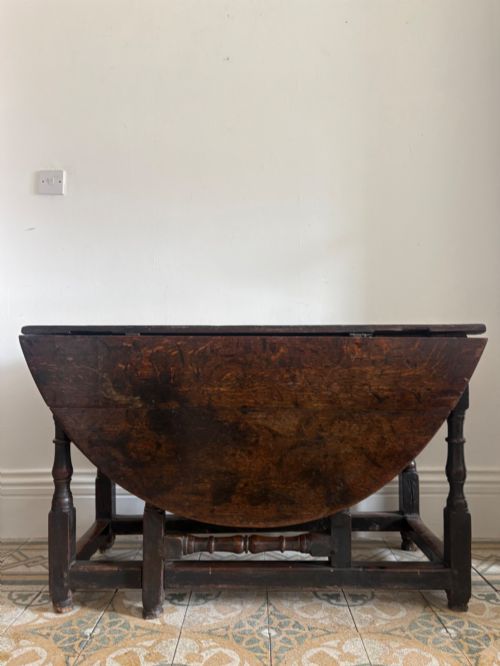
A period oak drop leaf table offers solid timber construction and folding leaves that save space when not in use.

Period Oak Drop Leaf Table
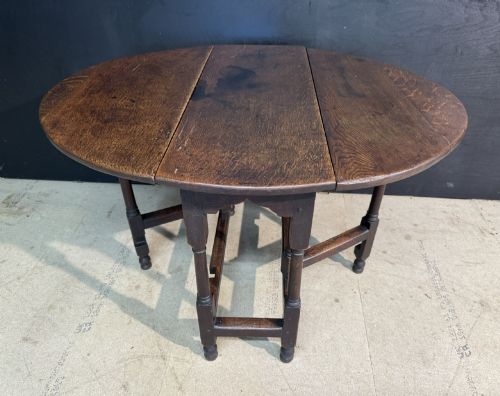
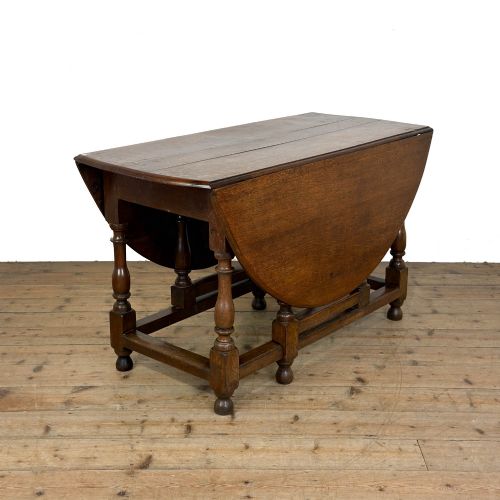
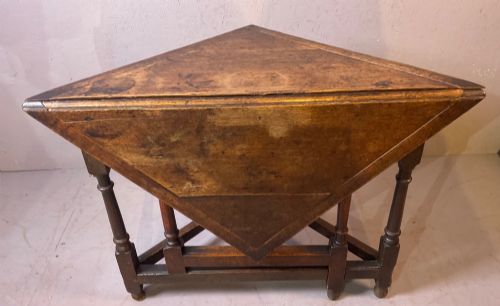
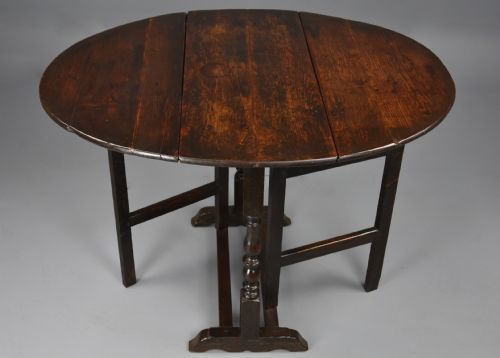
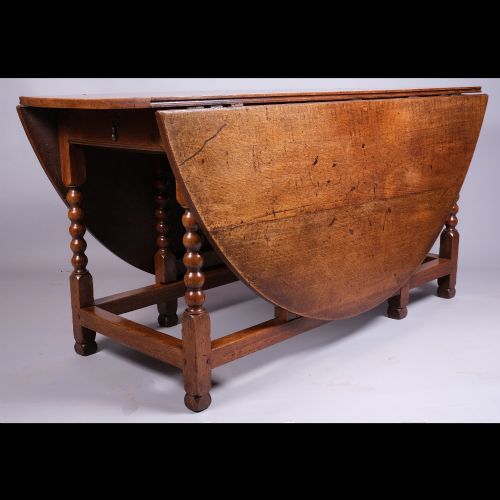
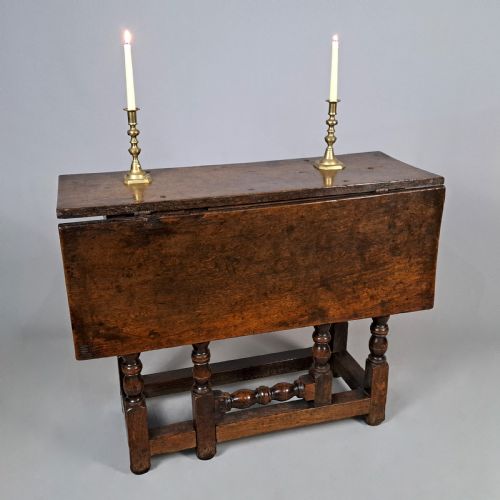
A period oak drop leaf table is a practical piece of antique furniture designed with hinged flaps that raise to expand the surface area. When searching for a period oak drop leaf table, buyers encounter various forms including dining tables, gateleg tables, side tables, and occasional tables spanning multiple centuries.
The versions most commonly met on this page date from the 17th century and 18th century, alongside occasional pieces from the 19th century. These tables range from small proportions suitable for compact rooms to large dining tables designed to seat six people.
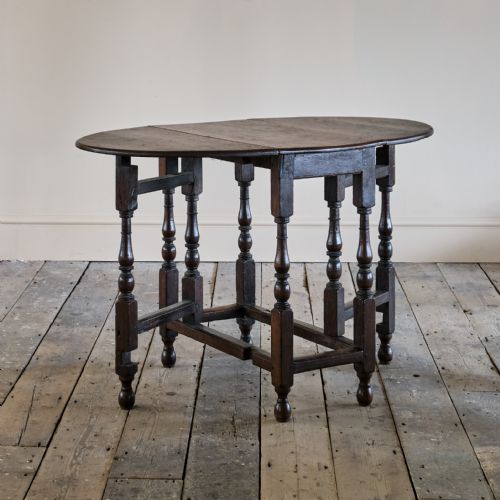
Originating predominantly from English workshops, these items reflect historical periods such as Jacobean, Charles II, Queen Anne, Georgian, and Regency. Forms include standard drop leaf designs, gateleg configurations with swinging legs to support the flaps, and specialised work tables.
Materials and construction
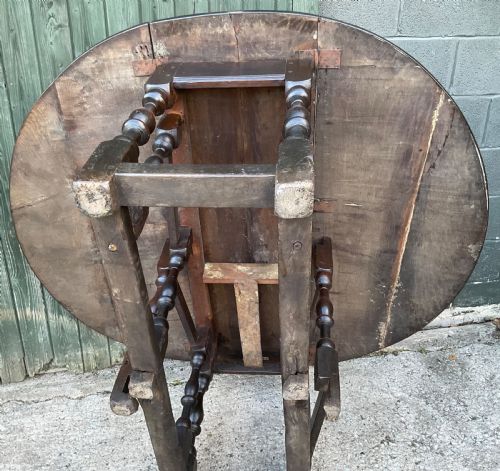
Construction relies heavily on solid oak, complemented by secondary timbers such as ash and mahogany, alongside decorative variations like pollard oak and burr oak. Joinery techniques connect thick timber planks and support leaves with hinged wooden or iron mechanisms.
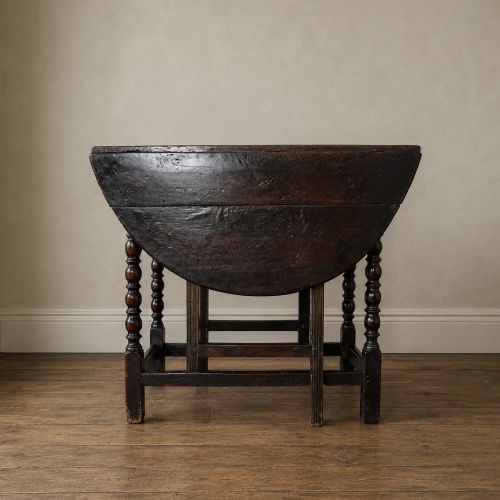
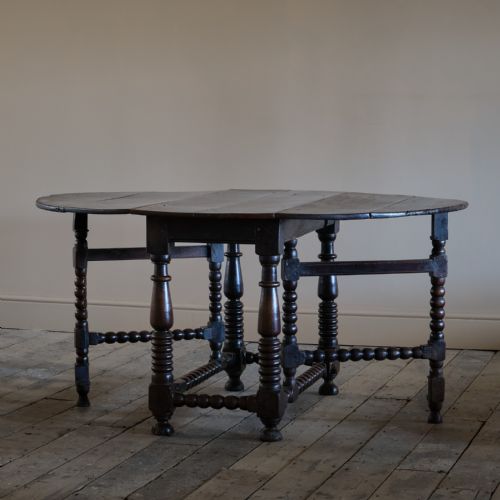
Leg structures often incorporate turned baluster supports, bobbin turning, or six-leg gateleg arrangements designed to swing outward and bear the weight of extended leaves. Brass fittings appear on later examples, while surfaces display natural grain patination accumulated over centuries.
Listings feature oak, ash, pollard oak, and burr oak alongside iron and brass hardware.
Evaluating the standard
Quality depends upon the integrity of the original timber and the retention of untouched surfaces showing authentic colour and patination. Examples exhibiting early turnings, such as bobbin or baluster legs, demonstrate higher craftsmanship.
Proportion and scale dictate desirability, with smaller proportions and large dining tables holding distinct utility. The survival of original gate mechanisms and sound structural joints separates superior examples from heavily altered pieces.
The Period Oak Drop Leaf Table Glossary
- Gateleg table
- A table with hinged leaves supported by one or more legs that swing outward like a gate.
- Drop leaf table
- A table with a fixed central section and hinged flaps that fold down.
- Baluster leg
- A turned vertical support shaped like a column or vase, commonly found on 17th century frames.
- Bobbin turning
- A form of woodturning consisting of spherical or cylindrical shapes resembling spools of thread.
- Patina
- The surface sheen and colour developed on wood over long periods of use and polishing.
Period Oak Drop Leaf Table: Frequently Asked Questions
How do I date a drop leaf table?
Dating relies on leg turnings, joint construction, and timber characteristics. Pieces with bobbin or heavy baluster turnings typically point to the 17th century.
Later 18th century and Regency examples show smoother lines, lighter framing, and occasionally decorative veneers like pollard or burr oak.
Were these tables used for dining?
Many large gateleg and drop leaf tables served primarily for dining and supper in historical households. Their folding leaves allowed them to be pushed against walls when meals concluded.
Smaller versions functioned as side tables, occasional tables, or work tables in parlours and chambers.
How do I care for antique oak?
Maintain antique oak by keeping it away from direct heat sources and drastic humidity changes. Natural wax applications preserve the surface sheen without damaging the underlying timber.
Avoid synthetic polishes that can build up and dull the historic finish.
What is a gateleg mechanism?
A gateleg mechanism uses hinged legs attached to a pivoting frame that swings outward to support the drop leaves. This design provides sturdy reinforcement for extended surfaces.
When not in use, the legs swing back toward the centre to allow the flaps to drop.