


Period Oak Coffer Panel
When you search for a period oak coffer panel, you are looking at centuries of sturdy domestic storage built from English timber.
Period Oak Coffer Panel
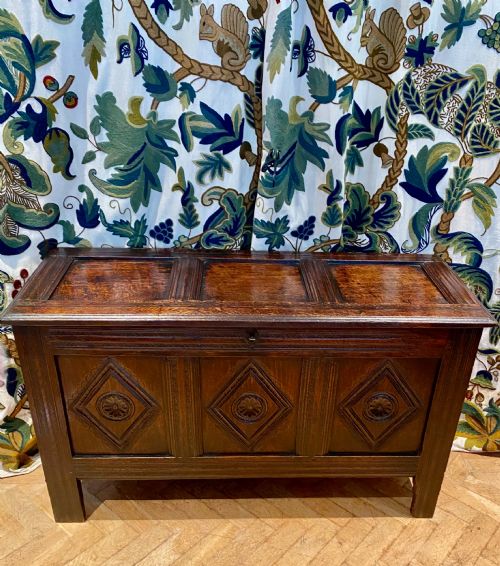
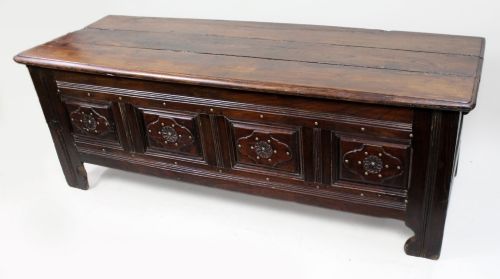
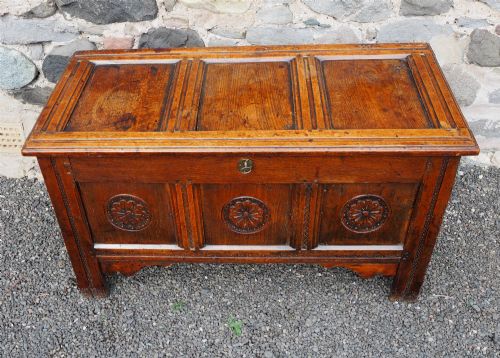
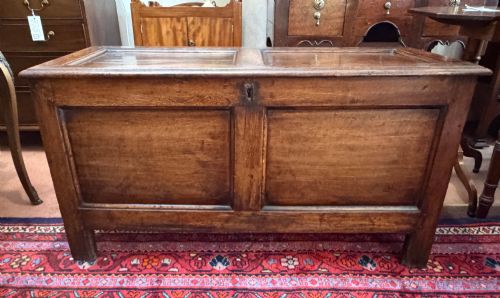
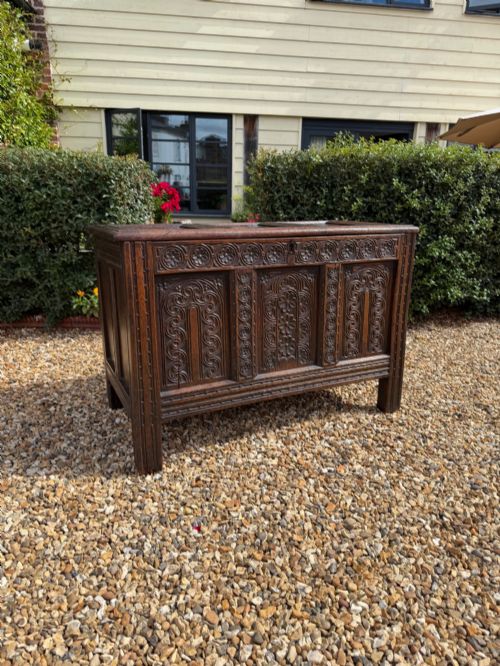
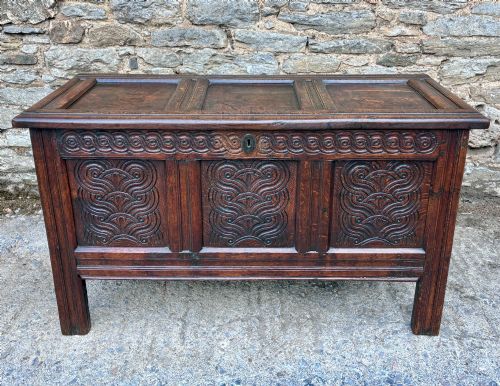
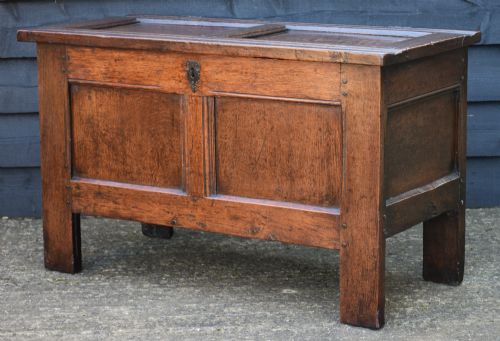
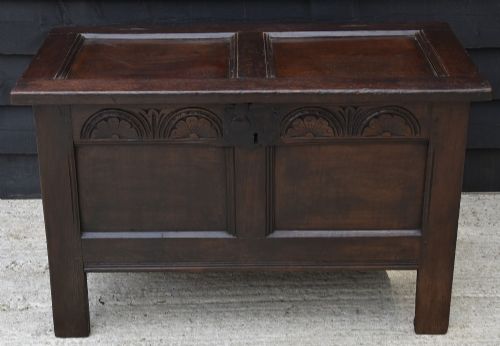
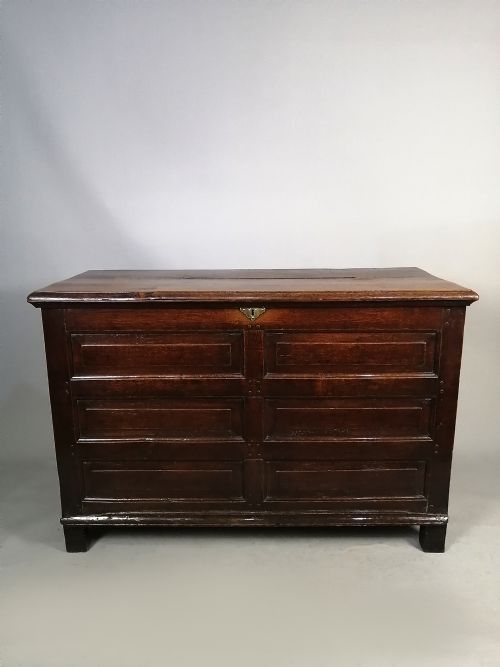
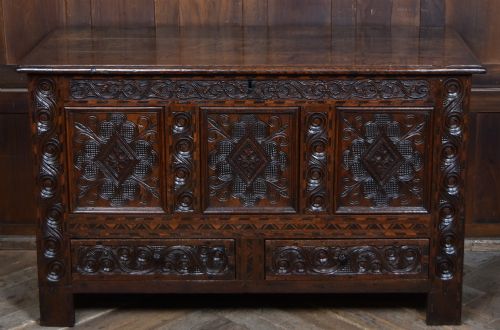
A period oak coffer panel forms the structural unit of heavy storage chests and blanket boxes originating primarily from the sixteenth, seventeenth, and eighteenth centuries. These items served as domestic repositories for household valuables, linens, and documents before the widespread domestic use of fitted wardrobes and chests of drawers.
The versions most frequently met on this page span the Jacobean, Charles II, and Georgian eras, often constructed with two or three distinct panel configurations. Regional variations such as Welsh Gower Peninsula pieces or Dorset coffers appear alongside standard English country workshop examples.
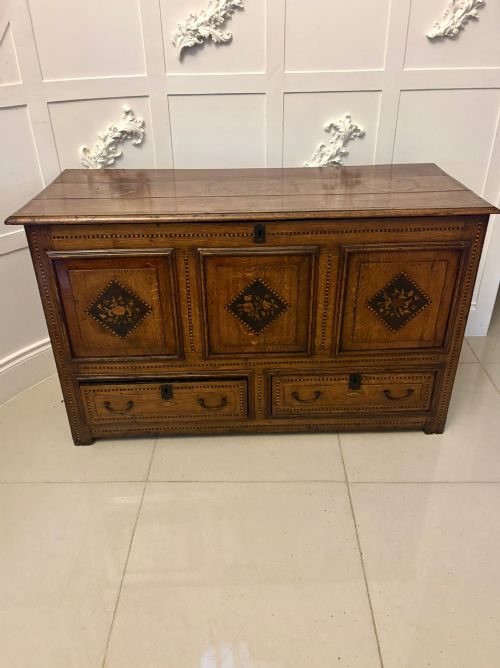
Beyond standard blanket chests, the category encompasses mule chests featuring lower drawers, along with occasional transitional items that link seventeenth-century framing techniques with eighteenth-century domestic forms.
How they were made
Joinery defines the construction of these storage chests, utilising frame and panel techniques designed to accommodate the natural expansion and contraction of timber. Craftsmen fashioned the primary framework from oak, occasionally incorporating secondary woods such as walnut or fruitwood for contrast.
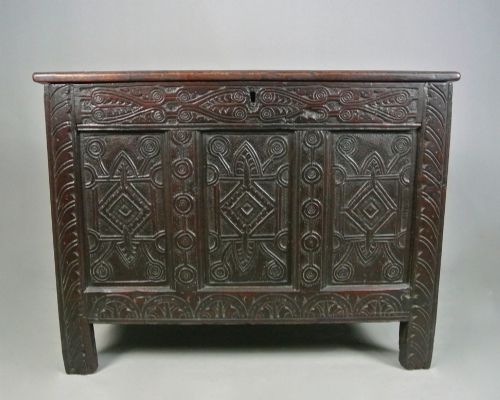
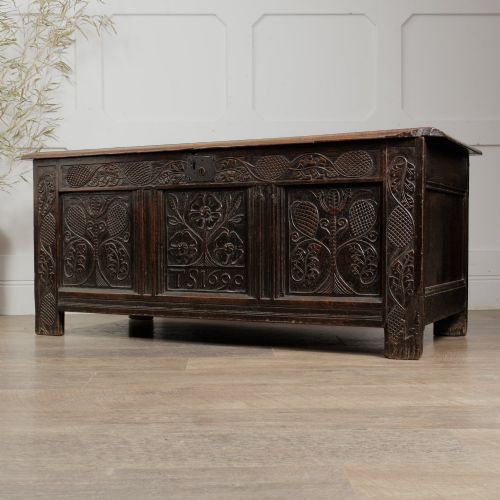
Surface ornamentation relied on hand carving, geometric mouldings, and occasional marquetry or wood inlay work rather than applied veneers. Iron and brass hinges, locks, and brackets secured the heavy lids and provided functional reinforcement to the main body.
Many an antique coffer spent its youth doubling as a window seat for muddy boots.
What varies in quality
The depth and clarity of carved detail distinguish superior examples from plain utilitarian boxes, with crisply executed geometric or floral motifs showing the hand of a skilled joiner. The integrity of the original framing, including surviving floorboards and unmodified panel assemblies, elevates a piece above those altered or heavily restored over subsequent centuries.
Surface quality rests largely on the depth of the finish, where natural wax accumulation over generations produces a warm, undulating glow distinct from modern chemical treatments. Proportion also plays a role, with smaller, more compact furniture formats commanding distinct interest compared to heavy, utilitarian chests.
Thomas Dennis
The Period Oak Coffer Panel Glossary
- Panel
- A flat piece of wood set within a surrounding frame to prevent splitting caused by shrinkage. This method formed the structural foundation of early seventeenth-century furniture.
- Mule chest
- A storage chest featuring one or more drawers built beneath the main internal compartment. This form bridges the traditional coffer and the modern chest of drawers.
- Linenfold
- A style of wood carving resembling folded linen cloth, frequently seen on sixteenth and seventeenth-century panels. It requires precise gouge work by the carver.
- Geometrical
- A style of decoration utilising applied mouldings arranged in complex geometric patterns, popular during the Charles II and William and Mary periods. These designs created strong shadow lines across the timber facade.
Period Oak Coffer Panel: Frequently Asked Questions
What were coffers used for?
These chests served primarily as secure storage for domestic valuables, church plate, and valuable textiles in early households.
They also functioned occasionally as impromptu benches or tables within modest homes before specialised seating became common.
How do I date a coffer?
Dating relies on examining the construction methods, such as the transition from boarded construction to framed panel assembly, alongside specific carved motifs.
Secondary clues include the presence of original iron hardware, lock plates, and regional stylistic markers.
Where should I place a coffer?
These sturdy pieces suit hallways, living rooms, or bedroom spaces where they provide both surface display area and concealed storage.
Position them away from direct heat sources and radiators to prevent the dry oak timber from splitting or warping.
What is a coffer bach?
A coffer bach translates from Welsh as a little coffer, representing a distinct regional miniature chest form.
These smaller items often incorporate drawers and served as presentation pieces or specialised keepsake boxes.