
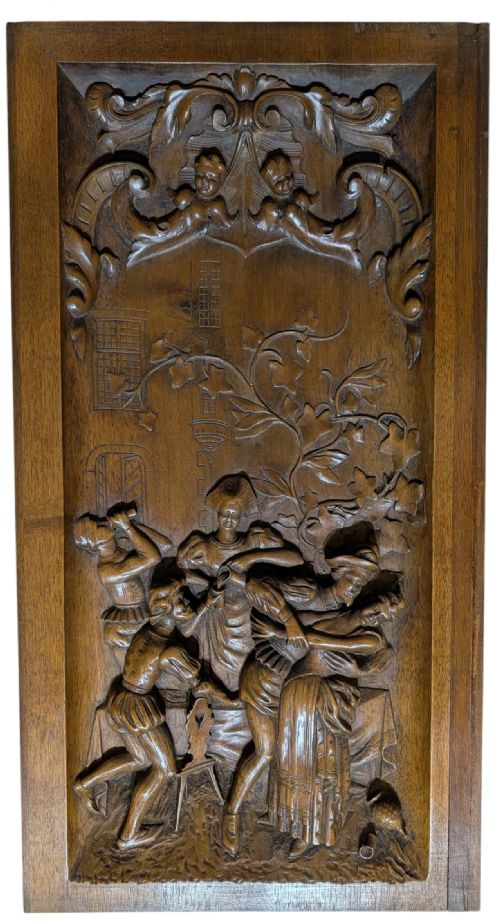


Dark Timber Relief
Dark timber relief brings together centuries of hand-carved panels, plaques, and architectural fragments fashioned from dense woods.
Dark Timber Relief
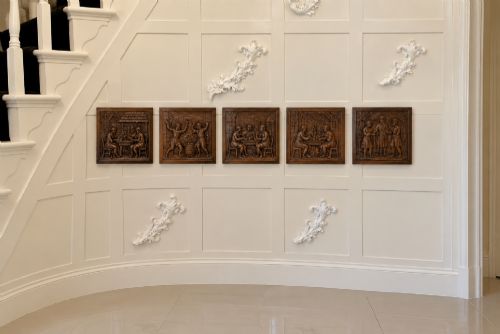
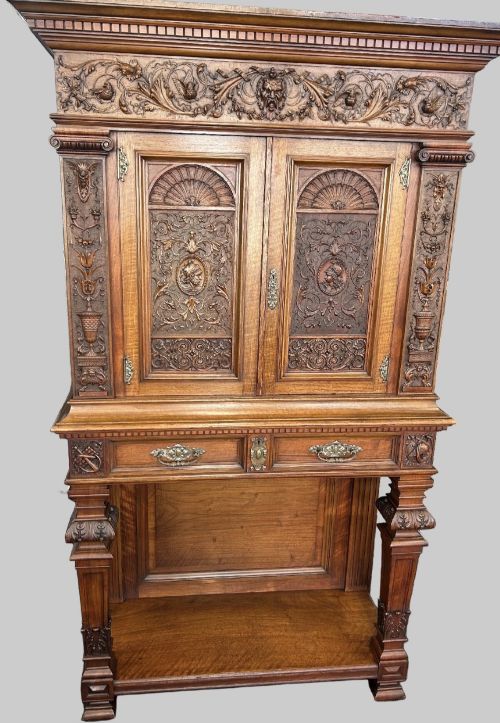
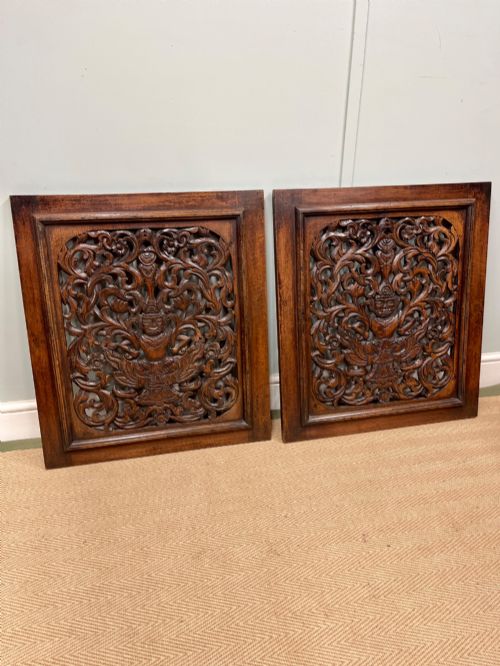
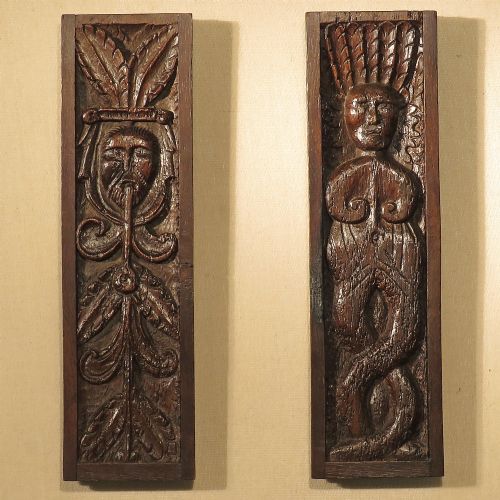
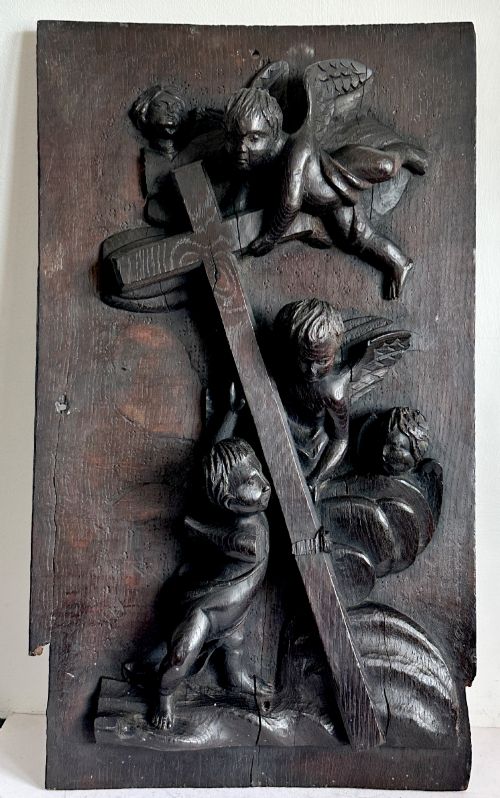
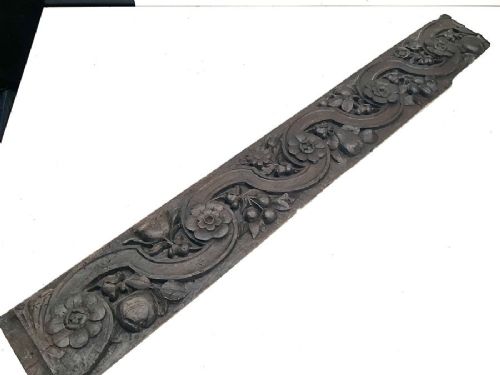
Dark timber relief pieces on this page span from the sixteenth century through the nineteenth century, taking the form of wall panels, architectural salvage, plaques, and friezes. You encounter items originating from English Tudor workshops, continental Baroque carvers, and nineteenth-century Black Forest or Asian traditions.
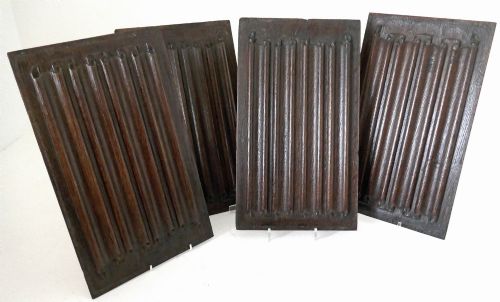
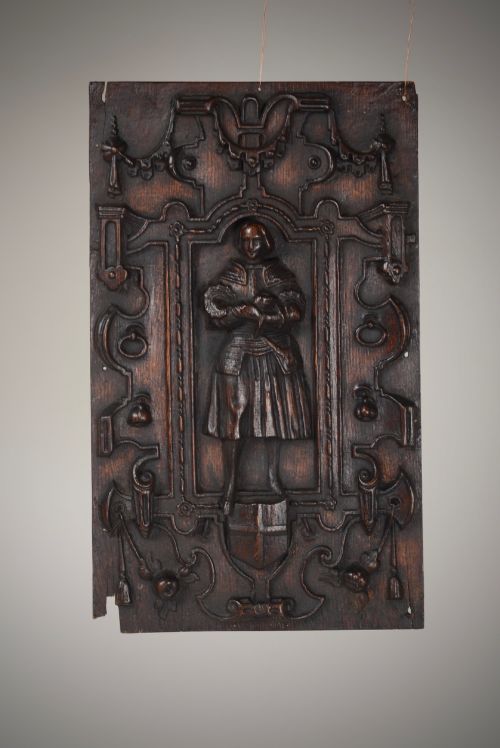
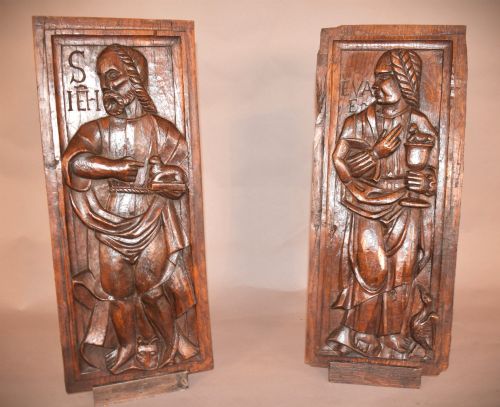
The most common survivals are oak panels carved in deep relief, often removed from domestic interiors, overdoors, or staircases. These objects display figural scenes, heraldry, or botanical motifs such as acanthus leaves and linenfold patterns.
Materials and technique
Makers utilised dense timbers, predominantly oak and walnut, alongside mahogany, fruitwood, and regional hardwoods capable of holding crisp edges under chisel work. These woods were worked by hand using gouges and chisels to achieve varying depths of projection.
Surfaces often show tool marks left by the carver, revealing the direct hand labour involved in shaping figures, animals, and architectural ornaments from solid timber blocks.
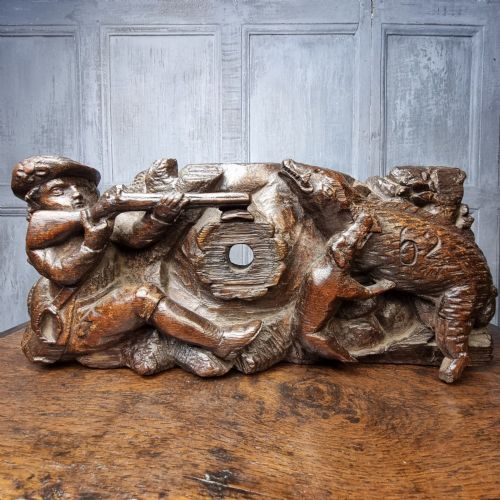
Among the historic wooden portraits and hunting scenes, a small carved chicken thief manages to steal the show.
Judging quality
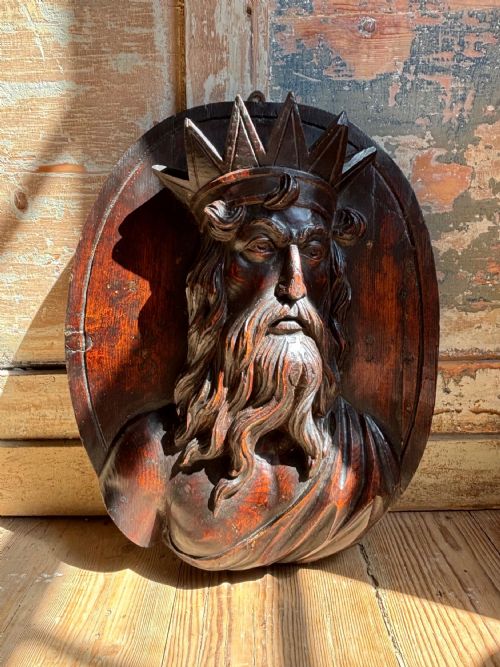
Quality rests on the depth of the carving and the anatomical or structural precision of the figures and foliage. Pieces attributed to skilled hands display lively movement in drapery and facial expressions, whereas simpler examples show stiff, repetitive cutting.
The integrity of the timber and the preservation of the original carved surface without excessive modern sanding also determine the standing of each piece.
Edward Pearce·Hugues Sambin
The Dark Timber Relief Glossary
- Relief
- Sculpture where the figures project from a flat background. This technique defines wall panels and plaques.
- Linenfold
- A style of wood carving resembling folded parchment or linen. It appears frequently on early oak panels.
- Corbel
- A structural piece of stone or timber jutting from a wall to carry a superincumbent weight. Examples include carved wooden brackets.
- Acanthus
- An ornament based on the stylized leaves of the acanthus plant. Carvers used this motif extensively in Baroque woodwork.
- Terme
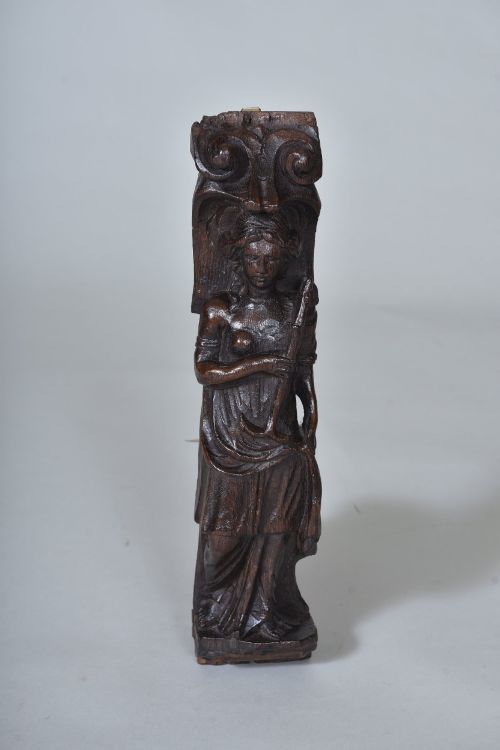
- A pillar or pedestal tapering towards the base, surmounted by a bust or figure. These appear in sixteenth-century works.
Dark Timber Relief: Frequently Asked Questions
What is dark timber relief?
Dark timber relief encompasses carved wooden panels, plaques, and architectural elements created from dense woods like oak and walnut over several centuries.
These pieces typically depict historical scenes, portraits, or decorative foliage intended for interior decoration.
How were these panels used originally?
Many items functioned as structural woodwork within domestic interiors, including overdoors, staircase panels, friezes, and wall linings.
Others served as independent wall plaques, devotional artworks, or architectural salvage removed from historic buildings.
How do I care for antique wood carvings?
Keep carved wooden pieces away from direct sunlight and sudden temperature shifts to prevent the timber from drying out or splitting.
Dust the deep recesses gently with a soft brush and avoid applying modern liquid polishes that build up in the carved details.
How can I tell sixteenth-century work from nineteenth-century revivals?
Early pieces from the sixteenth and seventeenth centuries display tool marks, timber shrinkage, and wear consistent with centuries of age.
Nineteenth-century Gothic Revival and Black Forest pieces often show mechanical saw marks on the reverse and crisper, harder edges from different workshop methods.