
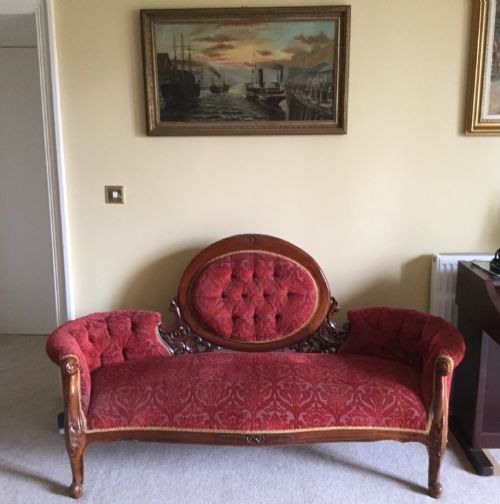
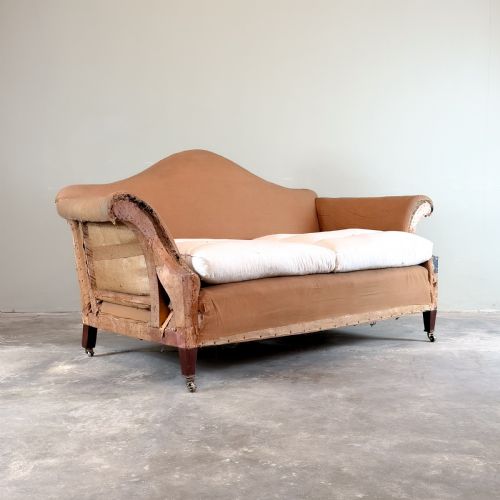
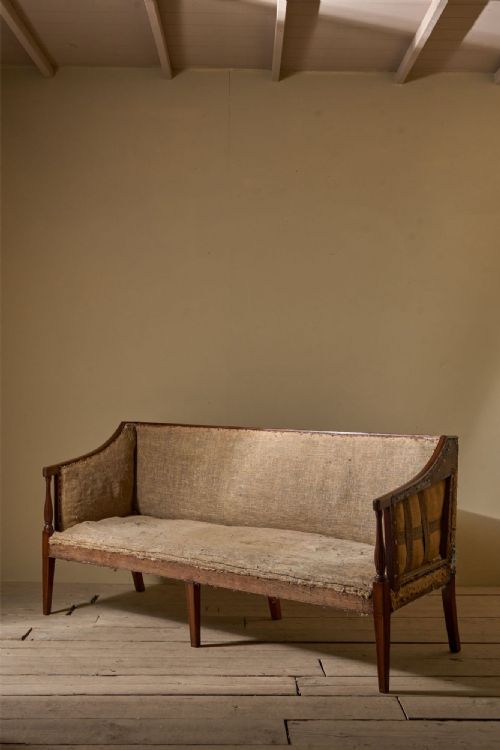
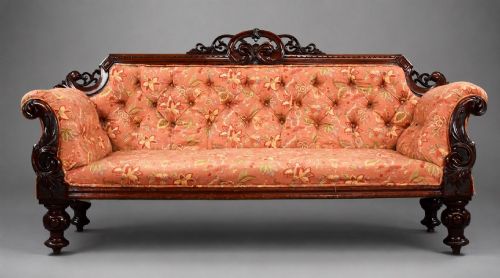
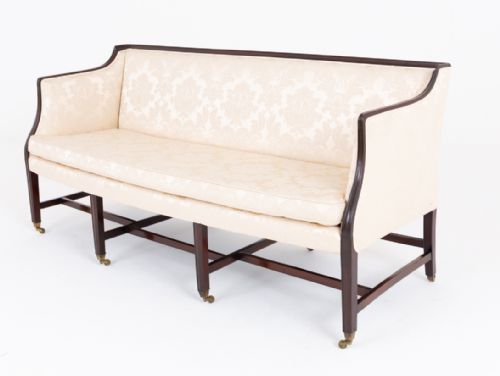
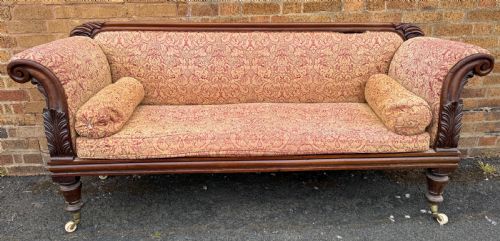


Period Mahogany Settee
A period mahogany settee brings proper seating architecture into a room, offering grand scroll ends, camel backs, and deep timber frames that anchor an interior.
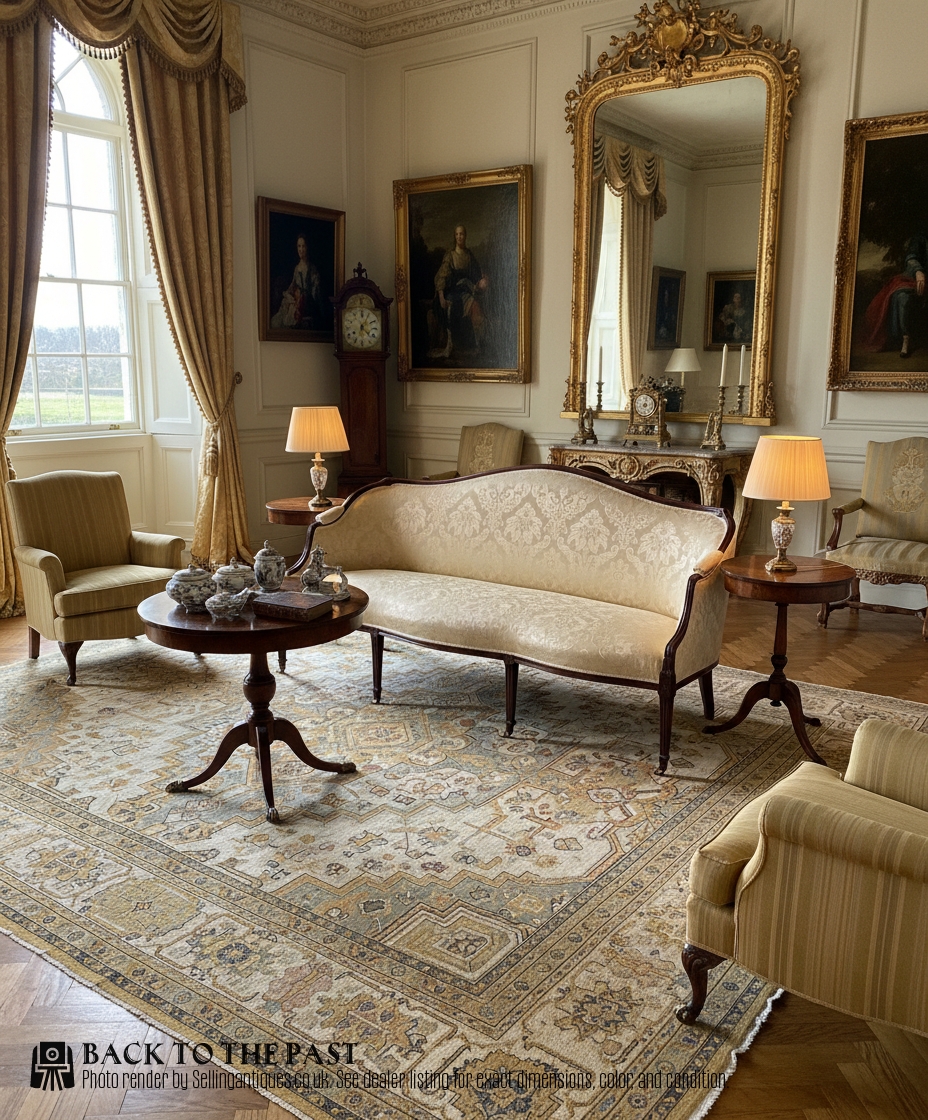
Period Mahogany Settee
A period mahogany settee is a substantial upholstered seating form designed for formal drawing rooms and country houses, appearing in styles from the 18th century through the Edwardian era. You will frequently encounter George III, Regency, and William IV designs alongside later Edwardian interpretations.
The configurations range from two-seater settees and double-ended scroll sofas to triple camel backs and large country house examples. Frames utilise solid mahogany timber, often displaying carved details or inlaid decoration depending on the period of manufacture.
How They Were Made
Cabinetmakers constructed the primary structural support from solid mahogany timber, sometimes incorporating rosewood elements or brass fittings. Frames feature carved scroll ends, herms, or exposed show frames that demonstrate classical joinery and carving skills.
Upholstery methods evolved across the centuries, utilising materials such as horsehair, hessian, and sprung bases beneath top layers of damask, brocade, leather, or upholstery fabric.
Period Mahogany Settee Retail Price Guide 2026
Typical asking prices for period mahogany settee among the pieces listed under this phrase on Sellingantiques today, from the lower quarter to the upper quarter. They describe what is for sale here now, not the wider market.
Listings span from 18th-century George III pieces through Regency and Victorian eras to Edwardian and early 20th-century revivals.
What Varies in Quality
The distinction between tiers rests upon the crispness of the timber carving and the architectural proportion of the frame. Superior examples display deeply sculpted scroll arms, finely figured mahogany grain, and balanced serpentine or camel back contours.
Integrity of the underlying construction and the fidelity of revival styling relative to original Georgian or Regency archetypes further separate standard production from exceptional pieces.
The Period Mahogany Settee Glossary
- Scroll end
- A sofa arm that curves outward and downward in a tight or sweeping spiral shape, typical of Regency and William IV pieces.
- Camel back
- A serpentine or arched top rail on a sofa that resembles the hump of a camel, popular during the Georgian period.
- Show frame
- A wooden structural frame left exposed around the upholstered portions of a settee to display the polished mahogany timber.
- Inlay
- Contrasting woods or decorative materials fitted flush into the mahogany surface of Edwardian settees.
- Lyre shaped
- A backrest or arm support formed in the symmetrical outline of a classical stringed musical instrument.
Period Mahogany Settee: Frequently Asked Questions
How do I identify a Regency period mahogany settee?
Regency settees typically feature distinctive scroll-end arms, saber legs, or carved mahogany show frames derived from classical motifs.
Look for architectural symmetry, deep timber frames, and occasional brass mounts or lyre-shaped back components that date the piece to the early 19th century.
What is the difference between a settee and a sofa?
Historically, the terms are often used interchangeably in antique listings, though a settee traditionally denotes a fully upholstered or timber-framed two-seater bench with a backrest.
Sofas in these periods frequently encompass larger proportions, scroll ends, and more elaborate reception room styling.
Can I use a period settee in a modern interior?
These settees function well as focal seating pieces in living spaces, halls, and studies, where their timber frames provide strong structural contrast.
Many examples retain modern upholstery or traditional horsehair stuffing, allowing them to integrate into contemporary room schemes.
How do I care for antique mahogany timber?
Maintain the wood by keeping the settee away from direct heat sources and strong sunlight that can dry out or fade the mahogany finish.
Apply a traditional beeswax polish sparingly with a soft cloth to nourish the timber grain without building up a heavy residue.