

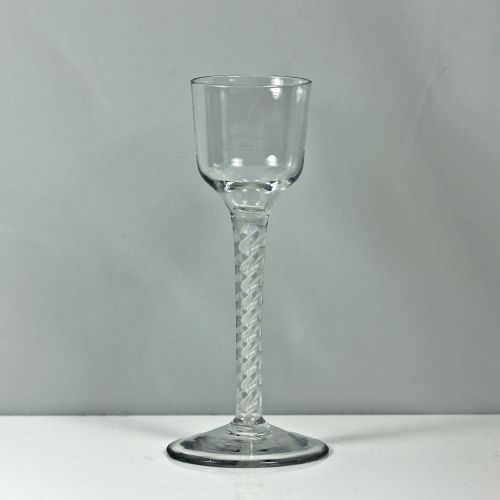


Period Glass Wine Goblet
A period glass wine goblet brings real tactile weight to the table, offering an authentic encounter with Georgian craftsmanship.
Period Glass Wine Goblet
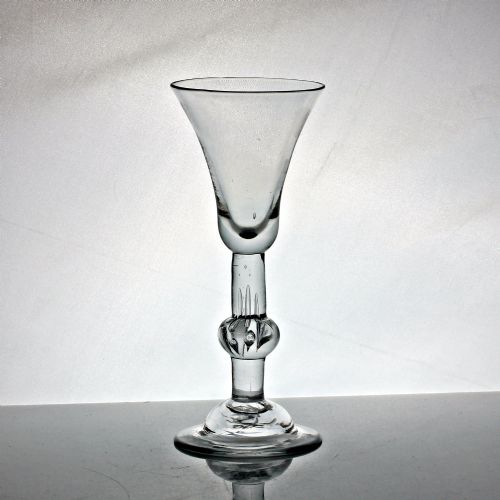
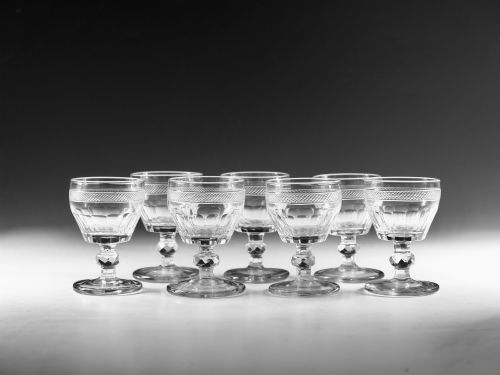
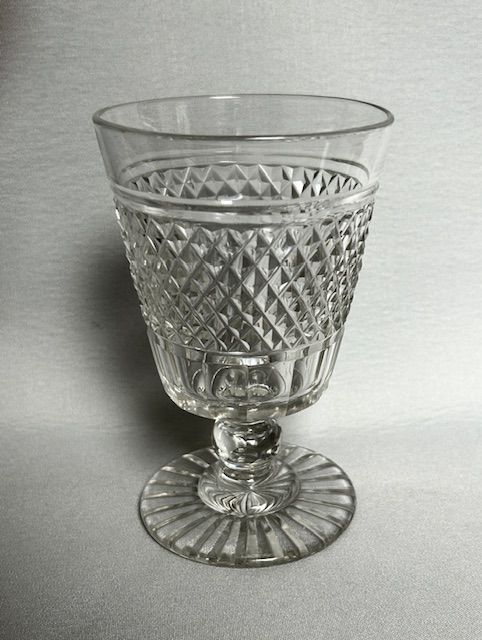
A period glass wine goblet is a drinking vessel originating mainly from the eighteenth century and the Regency era, taking forms such as wine glasses, port glasses, ale glasses, and rummers. These pieces reflect historical dining traditions, often featuring substantial lead glass or lead crystal construction.
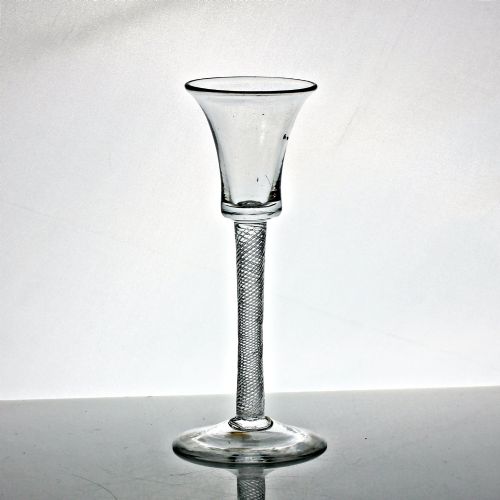
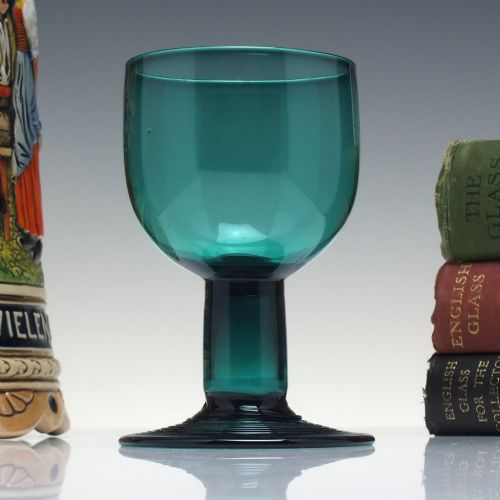
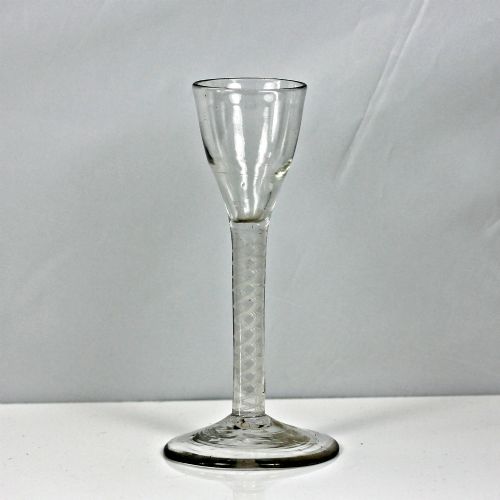
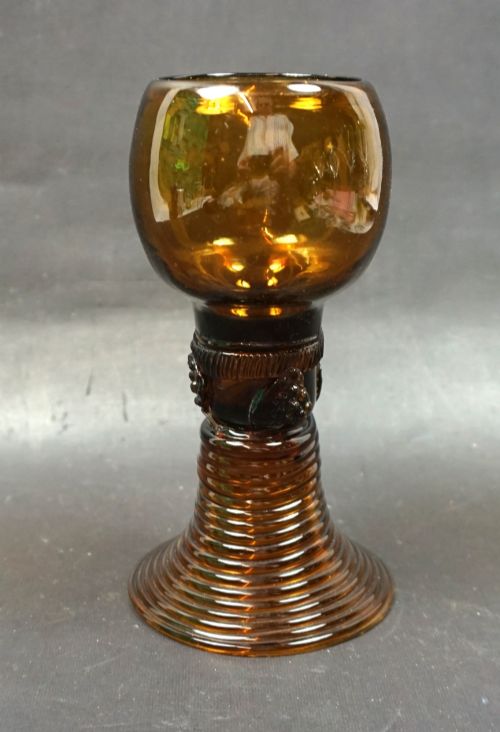
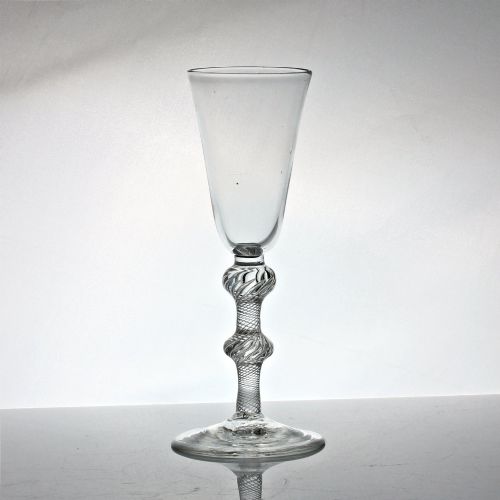
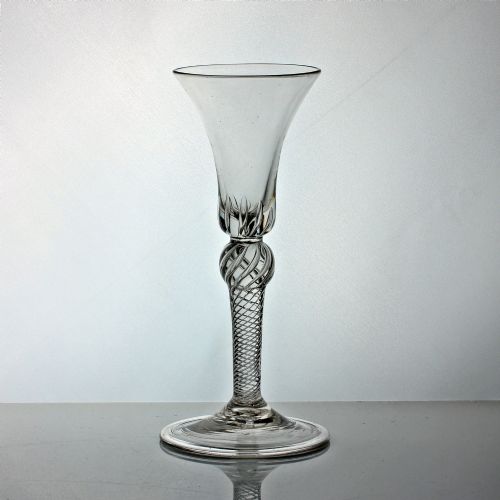
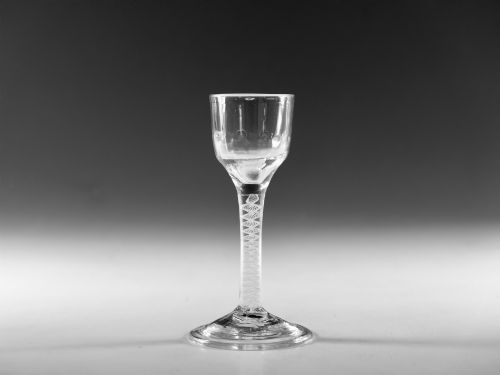
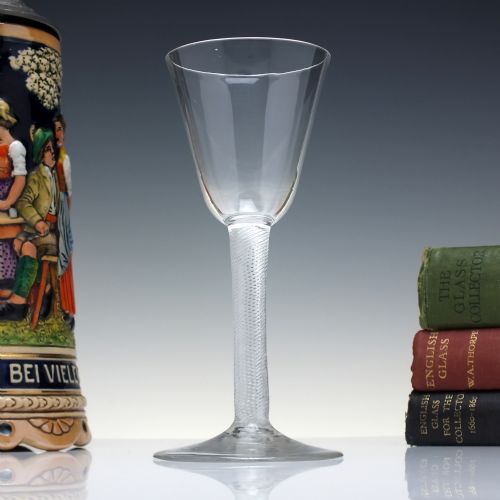
The most common examples encountered on this page belong to the Georgian period, spanning air twists, opaque twists, and baluster stems. Buyers will also find distinct variations including green glass and dark amber roemers alongside cut glass rummers from later decades.
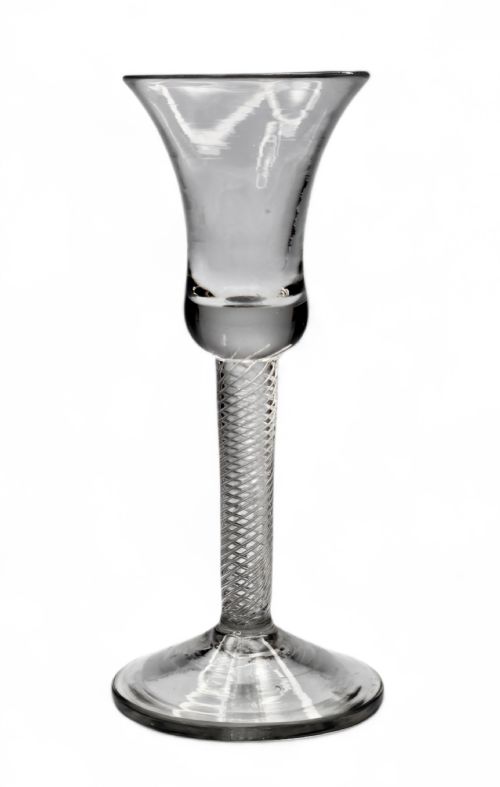
Forms vary from trumpet and bell bowls supported by shoulder knops to plain and facet stems with folded feet. Each piece demonstrates the distinct hand-formed characteristics of early British and European glassmaking.
Materials and methods of early glass
Makers utilised lead glass and lead crystal, which allowed craftsmen to pull slender stems and form complex internal twist patterns. These materials provided the clarity and heft characteristic of high-quality eighteenth-century vessels.
Objects were hand-blown, sometimes incorporating applied collars or trailing such as vermicular work on the stem. Colour was introduced through specific batch compositions, producing green glass, amber glass, and peacock blue variants.
Period Glass Wine Goblet Retail Price Guide 2026
Typical asking prices for period glass wine goblet among the pieces listed under this phrase on Sellingantiques today, from the lower quarter to the upper quarter. They describe what is for sale here now, not the wider market.
Some eighteenth-century drinkers enjoyed ales and wines through stems so twisted and bubbly they look like frozen tornadoes.
Assessing quality in historical glassware
Quality rests in the precision and complexity of internal stem formations, such as multi-spiral air twists or intricate opaque enamel twists. Superior examples display exceptional material clarity and balanced proportions between bowl, stem, and foot.
The execution of the foot and the finish of the pontil mark underneath indicate the level of craftsmanship. Hand-cut facets and applied decorative elements require a high degree of skill to maintain symmetry and clean lines.
The Period Glass Wine Goblet Glossary
- Air twist
- A stem containing spiral threads of enclosed air created during the manufacturing process. These delicate optical effects define many mid-eighteenth-century English wine glasses.
- Opaque twist
- A stem featuring white or coloured enamel rods drawn into spiral threads within the clear glass. This technique became popular in English glasshouses after the mid-eighteenth century.
- Baluster
- A heavy, thick stem shape derived from architectural supports, often featuring knops or collars. These sturdy forms are typical of early eighteenth-century drinking vessels.
- Roemer
- A continental drinking vessel, often made of green or amber glass, featuring a rounded bowl and a coiled foot. German examples are particularly noted for this traditional form.
- Pontil mark
- The rough scar left on the underside of a vessel where the punty rod was detached after blowing. Its presence indicates traditional hand-blown production methods.
Period Glass Wine Goblet: Frequently Asked Questions
Can I use these for wine?
These historical vessels were made for dining and consumption, and many people continue to use them for special occasions today. Hand washing in warm water without harsh detergents protects the fragile material.
Care must be taken with sudden temperature changes to avoid thermal shock in old lead glass.
What is an air twist?
An air twist is a decorative stem containing elongated bubbles drawn into a spiral thread during manufacture. Makers created these by piercing hot metal and twisting the glass as it was pulled.
Single and multi-spiral variations produce different optical effects when light passes through the stem.
Why are some stems coloured?
Coloured glass resulted from specific metal oxides added to the batch, producing tones like green, dark amber, and peacock blue. Continental workshops frequently utilised green glass for roemers, while British makers occasionally adopted rich hues for specific sets.
These variations add distinct visual character compared to standard clear metal.