





Double Series Twist Glass
A double series twist glass combines complex stemwork with hand-blown lead crystal, offering collectors a tactile piece of Georgian and Victorian drinking history.
Double Series Twist Glass
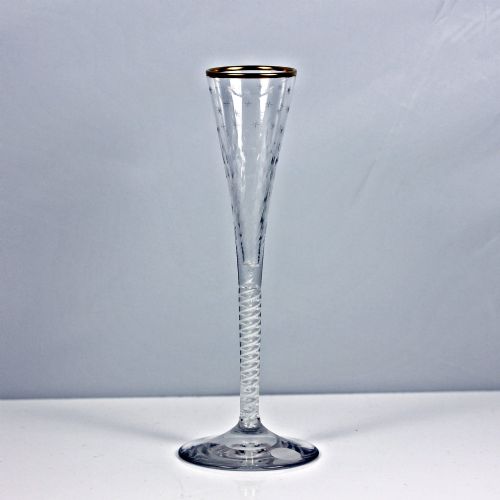
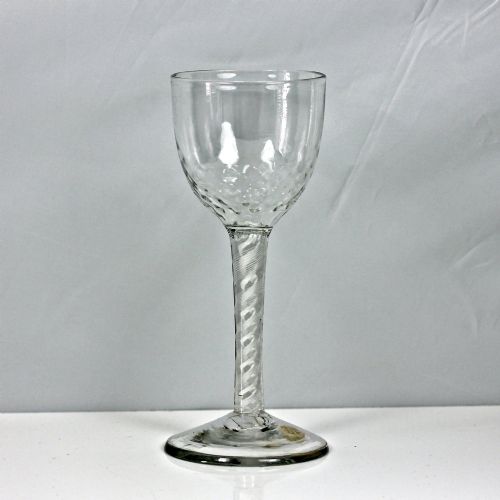
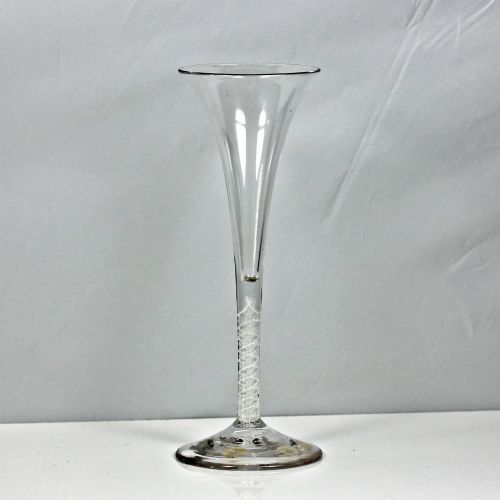
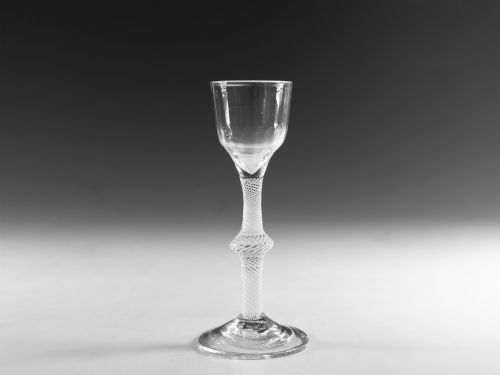
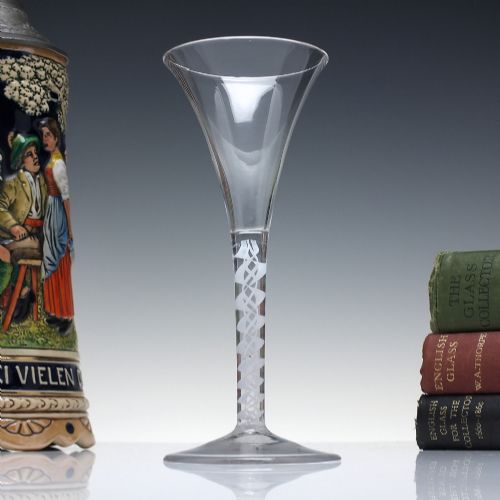
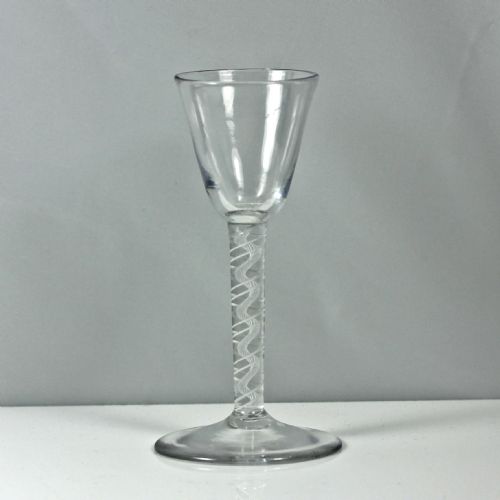
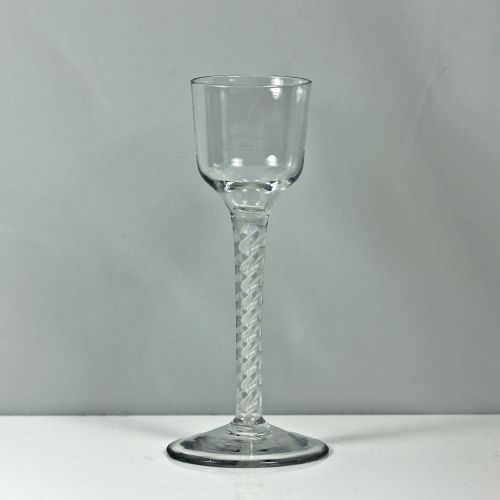
Most examples found on this page date from the eighteenth century and the Georgian period, taking the form of wine glasses, cordial glasses, and ale glasses with trumpet, bell, or ogee bowls.
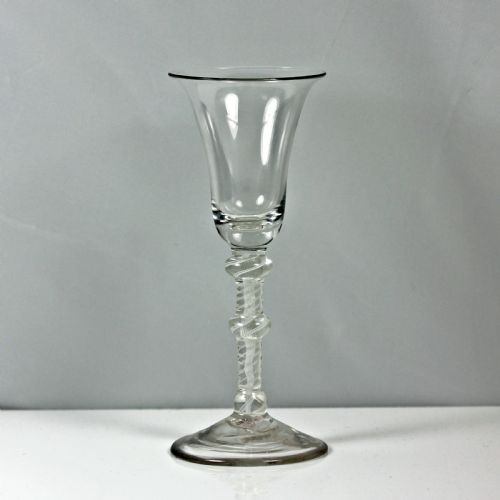
The selection ranges from plain bowls to examples with fluted moulding, knops along the stem, and engraved hop and barley motifs or Jacobite symbols.
Materials and Manufacture
Craftsmen used lead glass and flint glass to create these drinking vessels, relying on hand-blown techniques that resulted in individual variations in weight, bowl shape, and foot profile.
The characteristic stems were formed by drawing out glass cane containing coloured or white enamel rods twisted around a central core of air or additional threads before being shaped into the finished stem.
Listings span the eighteenth century and the Victorian era, utilising lead crystal, flint glass, and hand-blown techniques.
Evaluating Quality and Detail
Quality in a double series twist glass rests upon the regularity and tightness of the internal twist, alongside the clarity and resonance of the lead crystal.
James Giles
The Double Series Twist Glass Glossary
- Double series twist
- A stem containing two separate sets of internal threads, such as an outer spiral of opaque white enamel enclosing an inner twist.
- Ogee bowl
- An S-profile bowl shape curving outward at the rim and inward toward the base, commonly seen on eighteenth-century drinking vessels.
- Air twist
- A stem formation created by trapping elongated bubbles of air within the molten glass before twisting and drawing the stem.
- Conical foot
- A simple, sloping circular base shape tapering evenly from the ground edge up to the stem junction.
- Sweetmeat glass
- A wide-bowled vessel intended for serving small confectionery items rather than liquid refreshments.
Double Series Twist Glass: Frequently Asked Questions
What is a double series twist glass?
A double series twist glass is an antique drinking vessel defined by an intricate stem containing two intertwined patterns of internal threads, usually made from white enamel or air.
These pieces date primarily to the eighteenth century and were produced for serving wine, ale, and cordials.
How were these glasses used?
In the Georgian period, these drinking glasses were kept on dining tables and sideboard trays for formal toasts and social gatherings.
Specific bowl shapes corresponded to specific drinks, such as narrow ale glasses or wide sweetmeat vessels.
How do I date a twist glass?
Dating relies on observing the combination of bowl proportions, foot manufacturing techniques, and the style of the internal twist.
Most genuine examples belong to the eighteenth century, though occasional nineteenth-century revivals appear from Scottish workshops.
What is the difference between air twist and opaque twist?
An air twist contains elongated bubbles drawn into spirals within the clear lead crystal stem.
An opaque twist substitutes those air channels with solid threads of white or coloured enamel glass.