
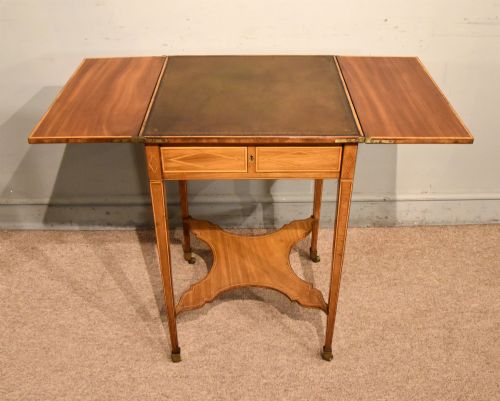
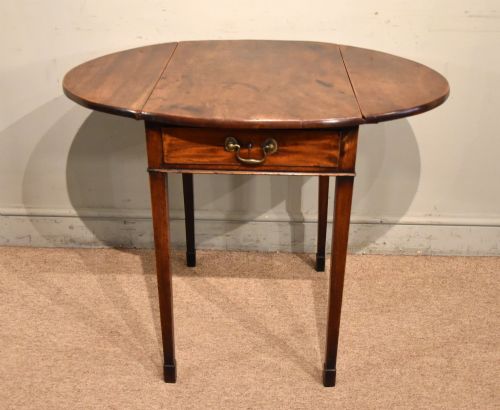
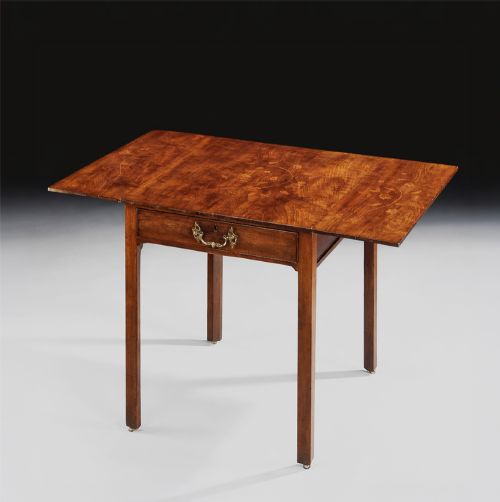
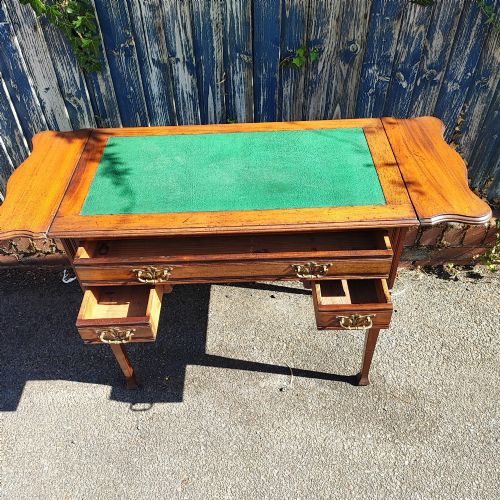
Pembroke Side Table
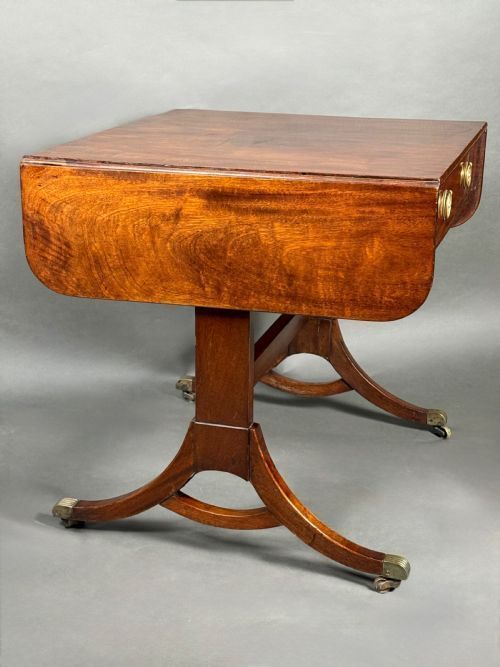
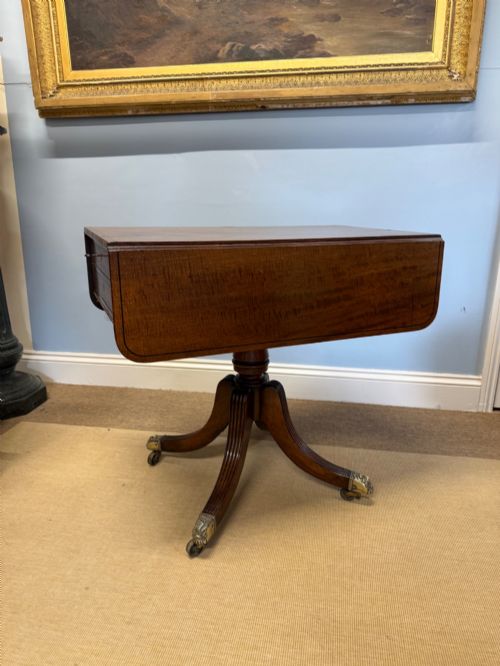
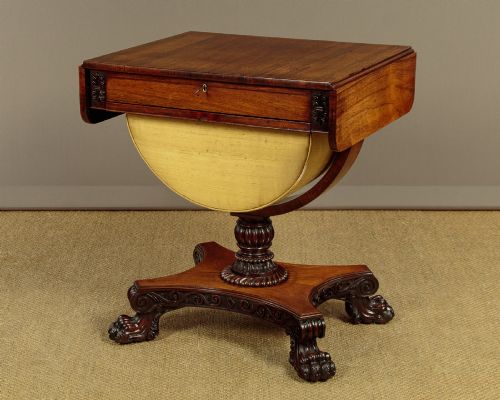
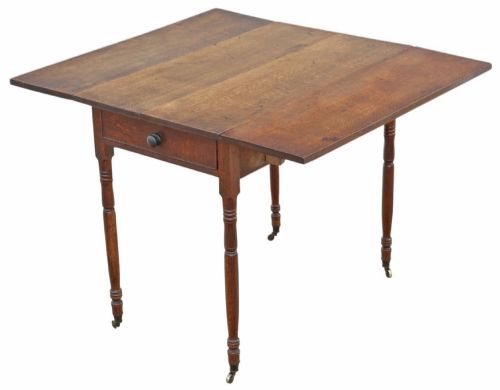
A pembroke side table is a versatile drop-leaf piece designed for flexible living spaces, offering hinged flaps that expand its surface when required.
Pembroke Side Table
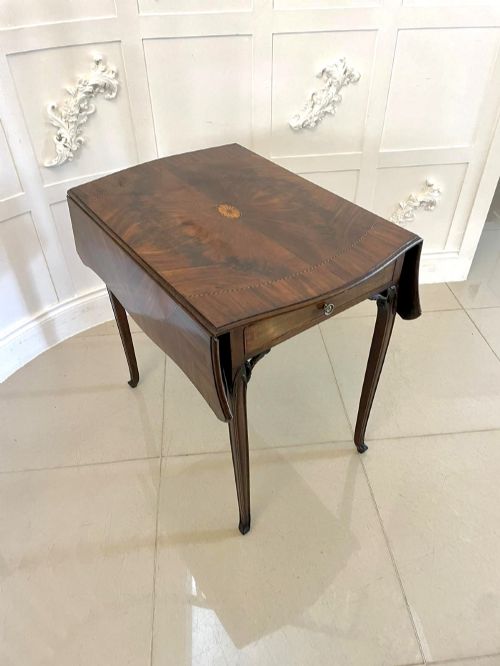
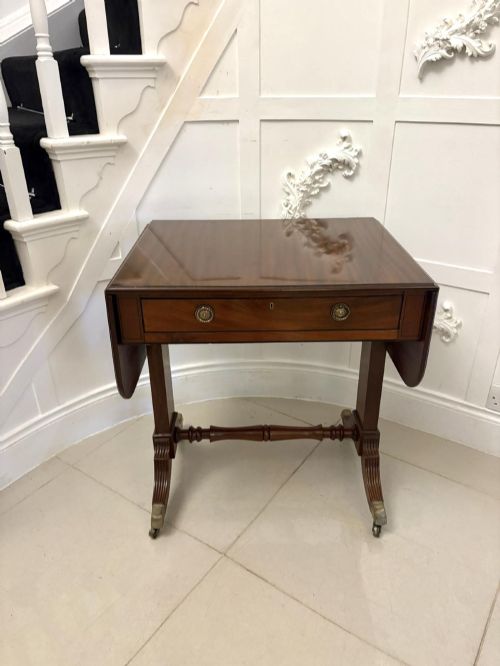
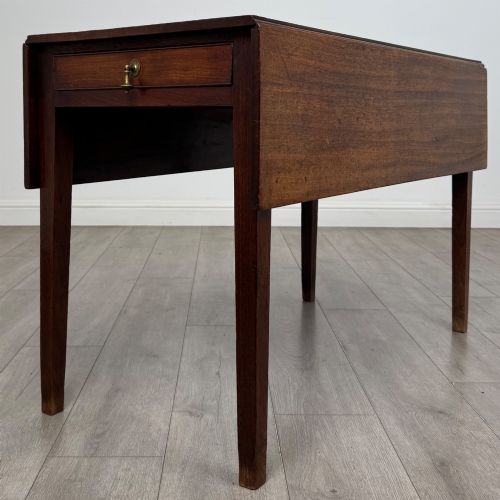
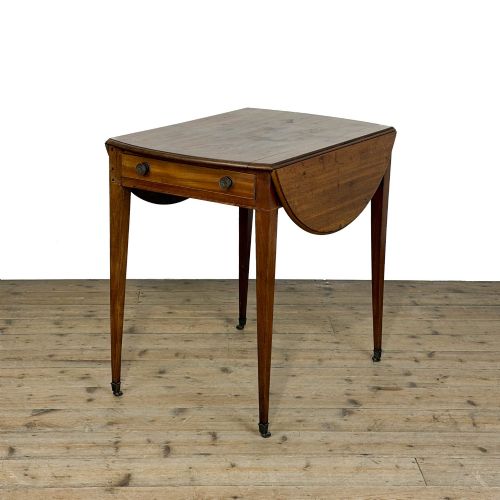
The version most commonly met on this page dates from the Georgian, Regency, and Victorian periods, constructed primarily as compact occasional or work tables.
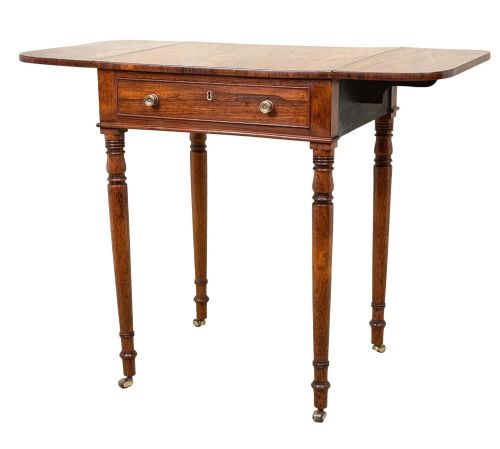
Makers often incorporated end drawers for sewing implements or writing materials, making these tables adaptable for multiple domestic uses.
How they were made
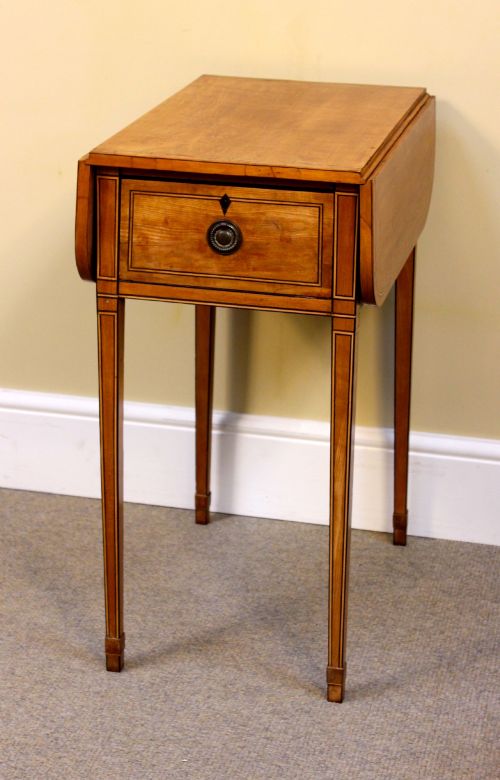
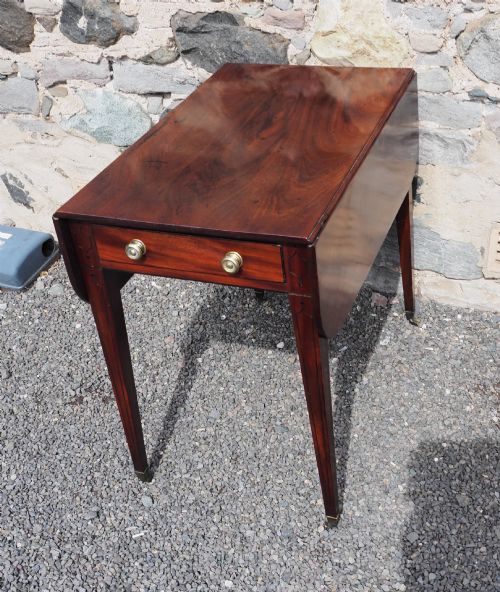
Cabinet makers relied heavily on solid and veneered mahogany, frequently accented with satinwood, rosewood, and boxwood inlay along the borders and drawer fronts.
Structural integrity relied on precise joinery for the drop-leaf hinges and stability for the pivoting or folding supports underneath the flaps.
Listings feature woods including mahogany, rosewood, satinwood, burr walnut, and fiddleback sycamore across the Georgian, Regency, and Victorian eras.
What varies in quality
Quality rests in the choice of timber figurations, such as flame mahogany or fiddleback sycamore, and the crispness of any cross-banding and stringing.
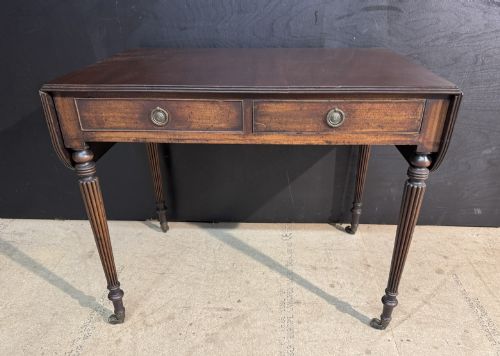
The refinement of the undercarriage, from slender spade feet to delicate spider legs or turned pillar supports, distinguishes standard utility pieces from finer examples.
Edwards and Roberts·Gillows·Holland and Sons
The Pembroke Side Table Glossary
- Drop leaf
- A hinged flap at the side of a table that folds down to save space or lifts up to expand the surface area.
- Cross-banding
- A strip of veneer applied perpendicularly to the grain of the main surface around the outer edges.
- Boxwood
- A pale, dense wood often utilised for fine stringing lines and contrasting inlay work.
- Satinwood
- A lustrous timber native to the tropics, prized for its golden yellow sheen and decorative grain.
- Spider leg
- An exceptionally slender turned table leg associated with lightweight occasional and work tables.
Pembroke Side Table: Frequently Asked Questions
What is a pembroke side table used for?
These pieces served multiple domestic purposes historically, functioning as small writing desks, sewing tables, or occasional lamp stands in parlours and bedrooms.
Today, their compact footprint and expanding leaves make them practical as bedside tables or convenient side surfaces in smaller rooms.
How do I date a pembroke side table?
Dating relies on observing timber choices, hardware, and leg styles, with earlier Georgian examples often featuring square tapered legs and mahogany.
Later Victorian and Edwardian pieces frequently display heavier turned supports, alternative exotic veneers, or factory-produced brass fittings.
Are the drop leaves sturdy?
The drop leaves are supported by hinged wooden brackets, swinging wooden arms, or pull-out supports designed to bear moderate weight.
While suitable for lamps, books, or writing, heavy downward pressure should be avoided on the unsupported outer edges of the flaps.
How do I fit one into a modern room?
A pembroke side table works well beside a sofa or armchair, allowing one or both leaves to drop down when space is tight.
They also function effectively as compact hallway consoles or freestanding lamp tables where surface area is needed intermittently.