
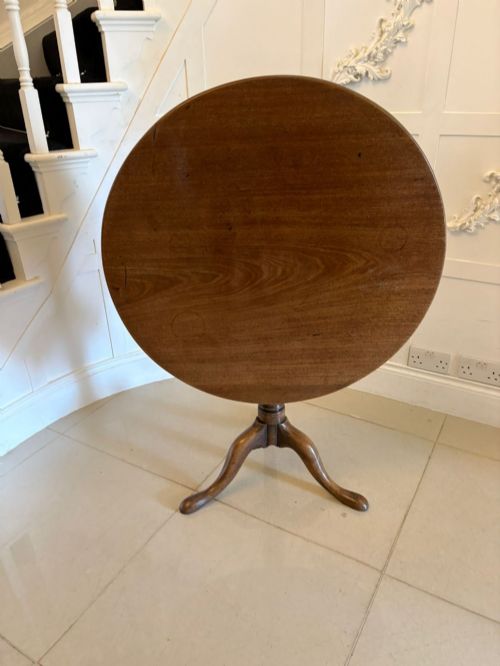
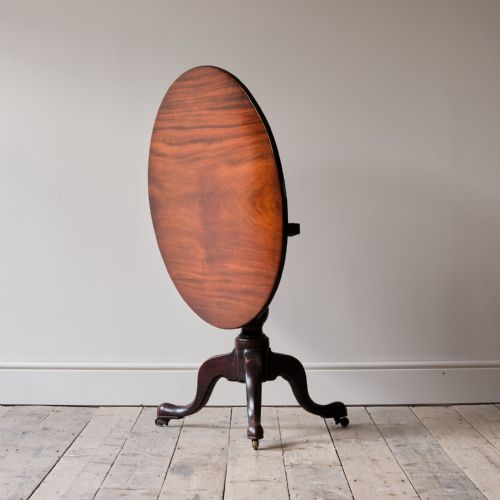
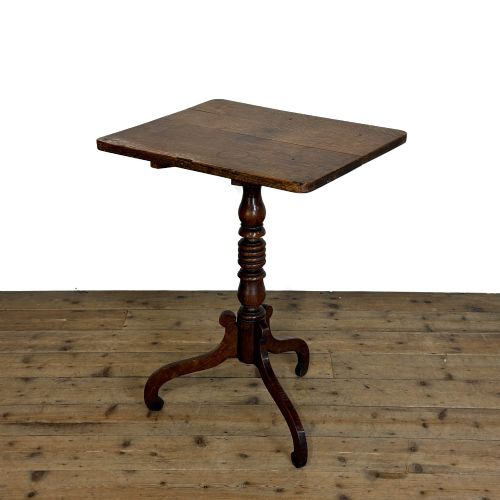
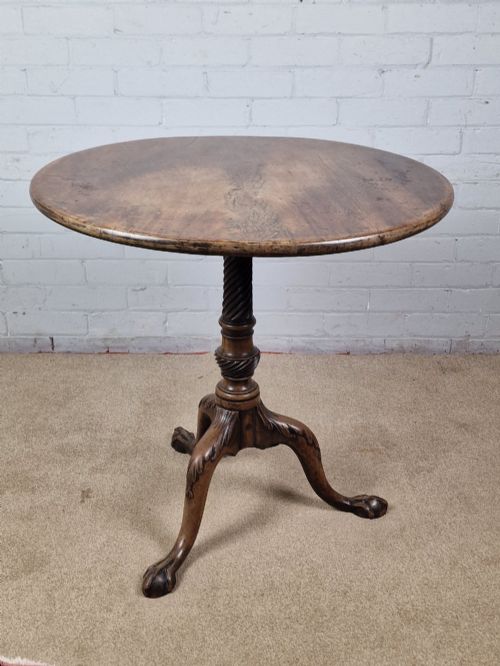
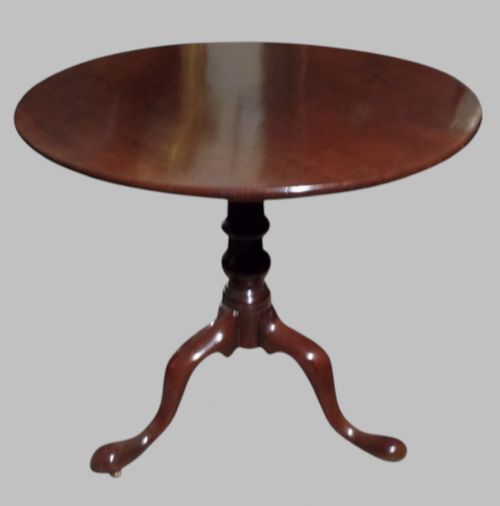
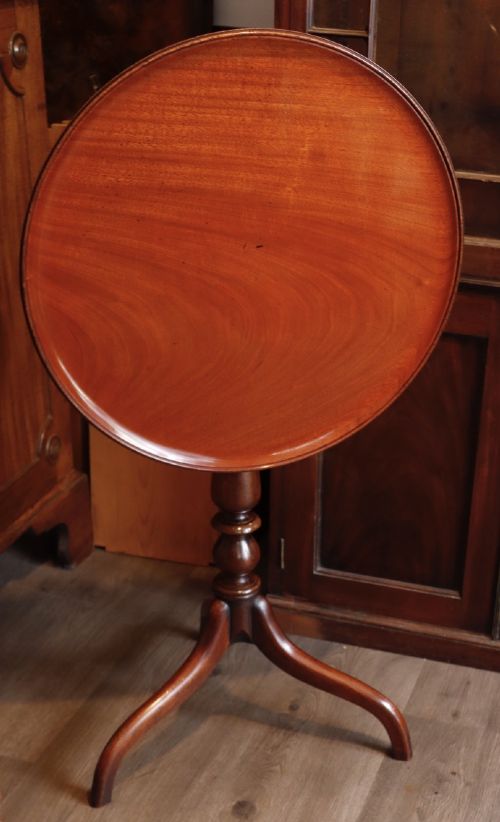
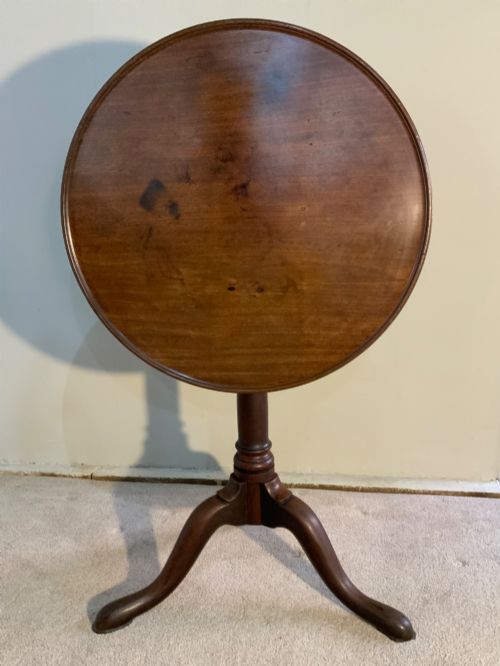
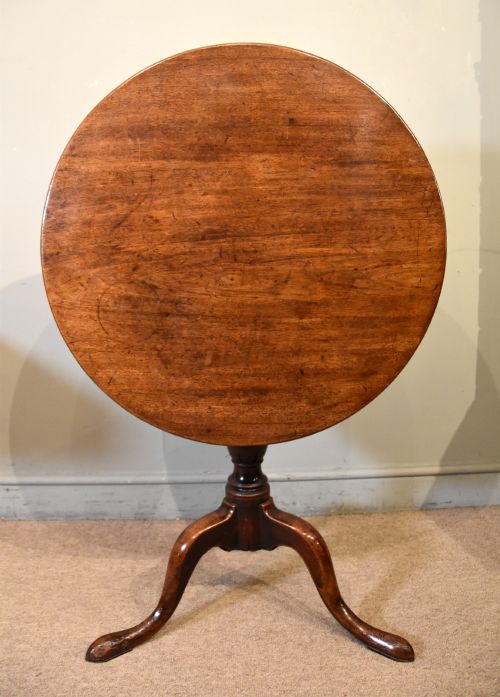
Pedestal Snap Top Table
A pedestal snap top table combines a clever tilting mechanism with a central column support, offering practical versatility and traditional charm.
Pedestal Snap Top Table
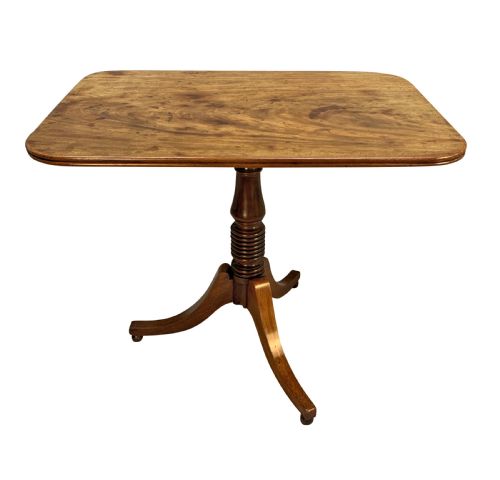
When you search for a pedestal snap top table, you are looking at practical furniture designed to tilt flat when not in use. These pieces function as occasional tables, wine tables, side tables, and larger dining or breakfast tables depending on their proportions.
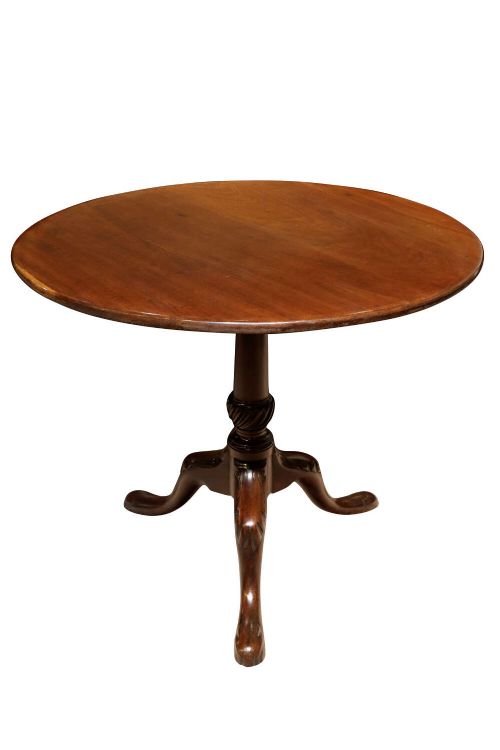
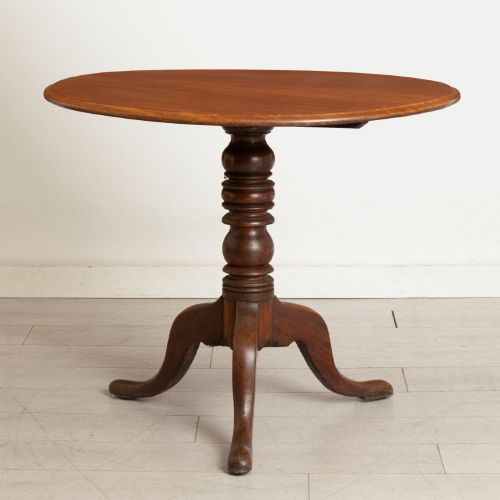
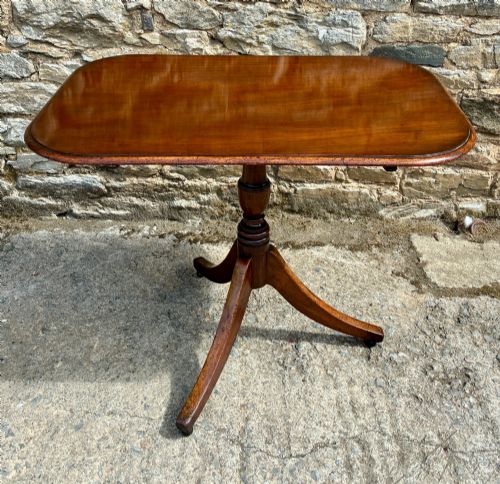
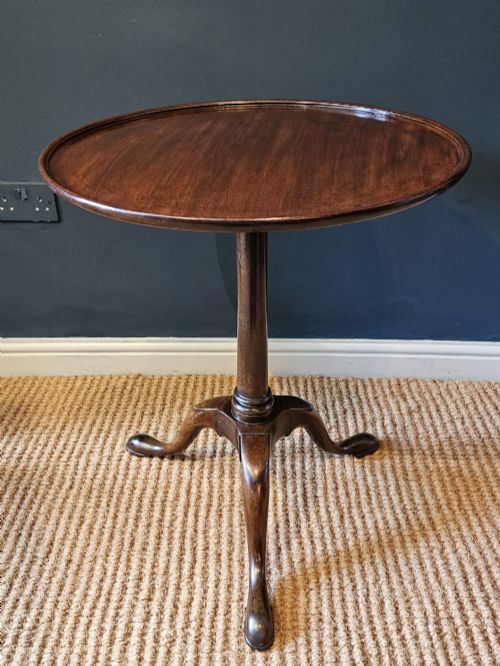
The versions you will most commonly meet on this page date from the Georgian, Regency, and Victorian periods, alongside later revival pieces. They typically stand on tripod bases supporting a central pillar, making them easy to move around a room.
The form developed to save space in domestic interiors, allowing the top to pivot vertically against the pedestal. Examples range from compact wine tables to large dining surfaces seating multiple people.
How they were made
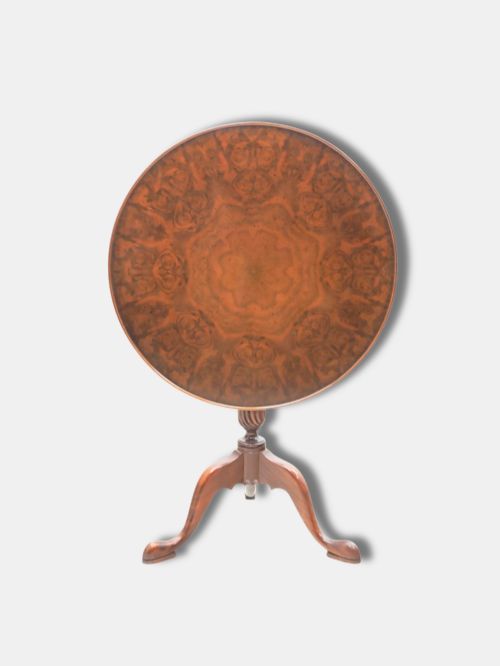
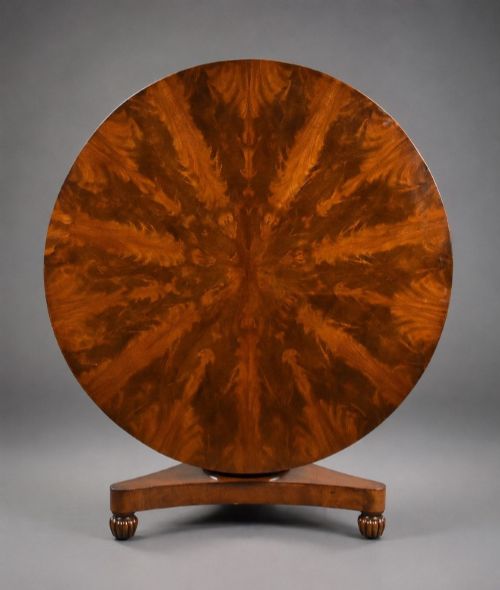
Cabinet makers constructed these tables primarily in timbers like mahogany, oak, walnut, and rosewood, often selecting figured veneers such as flame mahogany or burr oak for the top surfaces. Timber selection governed both the structural integrity and the visual richness of the piece.
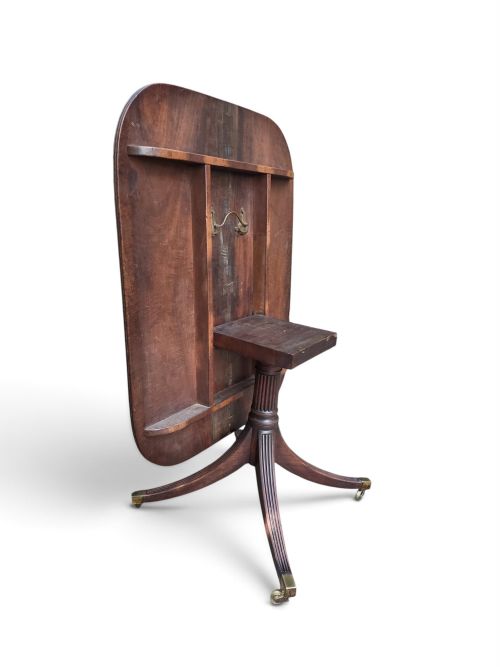
Mechanisms involved specialised pivoting catches and birdcage assemblies that allowed the top to tilt and rotate independently of the pedestal base. Joinery on the tripod legs typically utilised robust dovetail or tenon joints to bear the weight of the tilting surface.
Decoration varied from plain polished wood to intricate marquetry inlay, brass detailing, and turned spiral twist columns. Surface finishes were achieved through traditional polishing techniques that highlighted the natural grain of the timber.
Formats recorded include occasional tables, side tables, dining tables, centre tables, tilt top tables, and wine tables.
What varies in quality
The refinement of the timber selection dictates the visual standing of the piece, with richly figured veneers and dense solid mahogany sitting at the upper end. Lesser examples utilise plain or secondary timbers without the same depth of grain.
Engineering of the tilt action and the stability of the pedestal base reveal the maker's competence. A superior table locks firmly into place without wobble, whereas lesser execution shows play in the pivot mechanism and uneven footing on the tripod legs.
The Pedestal Snap Top Table Glossary
- Snap top
- A table top fitted with a spring catch or latch mechanism that secures the surface in a horizontal position when lowered.
- Tilt top
- A descriptive term for tables whose tops pivot vertically on the central pedestal to save space.
- Birdcage
- A revolving wooden framework beneath the table top that permits both rotation and tilting actions.
- Tripod base
- A pedestal support terminating in three legs, providing stable footing on uneven floors.
- Marquetry inlay
- Decorative patterns formed by fitting contrasting pieces of veneer into a primary wood ground.
Pedestal Snap Top Table: Frequently Asked Questions
What is a pedestal snap top table used for?
These tables serve primarily as flexible surface space in living areas, studies, and dining rooms. Historically, smaller versions functioned near firesides or as wine tables, while larger formats accommodated meals.
Because the top tilts away vertically, the table occupies minimal floor space when pushed against a wall, making it practical for versatile room layouts.
How do I identify the period of a snap top table?
Dating relies upon timber choices, leg profiles, and the complexity of the pedestal turning. Georgian examples often display elegant tripod curves and birdcage supports, while Victorian pieces tend to feature heavier proportions and rosewood or walnut veneers.
Construction marks, such as hand-cut screws or block joints beneath the top, also help distinguish eighteenth-century craftsmanship from later nineteenth-century production.
Why does the top tilt?
The tilting mechanism was originally engineered to clear floor space in domestic rooms when the furniture was not actively in use. By releasing a catch, the top pivots flat against the central pillar.
This clever design allowed multiple tables to be stored compactly around the perimeter of a formal room until needed for dining or entertaining.
Are these tables sturdy enough for daily use?
Solidly built antique examples handle everyday placement of lamps, books, and drinks without issue. The three-legged tripod design naturally adjusts to slight floor irregularities.
Care should be taken when operating the pivot mechanism to support the weight of the top and prevent sudden snapping against the central column.