



Pedestal Porcelain Urns
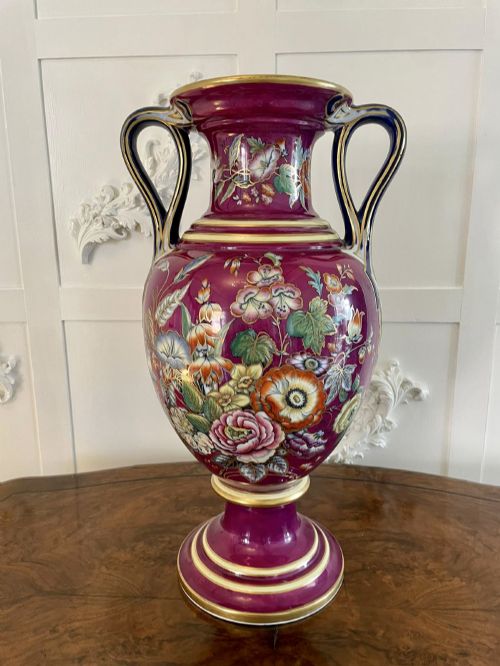
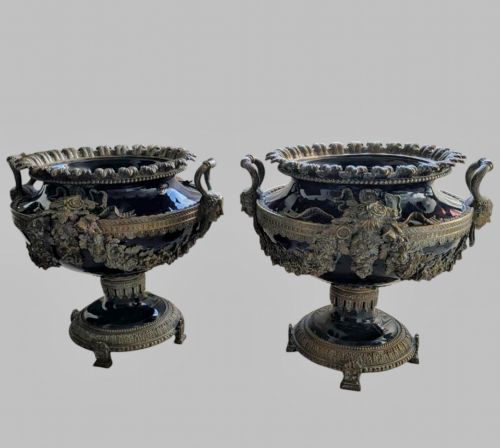
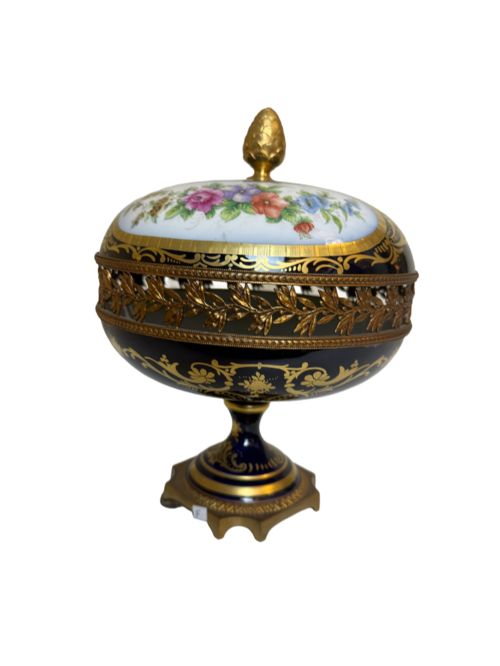
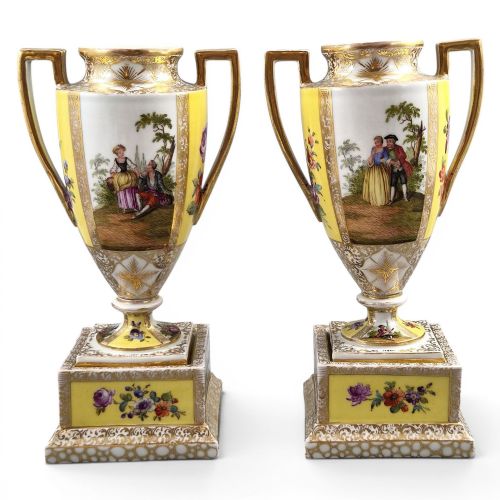
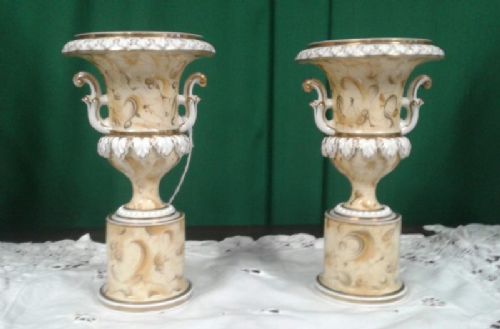
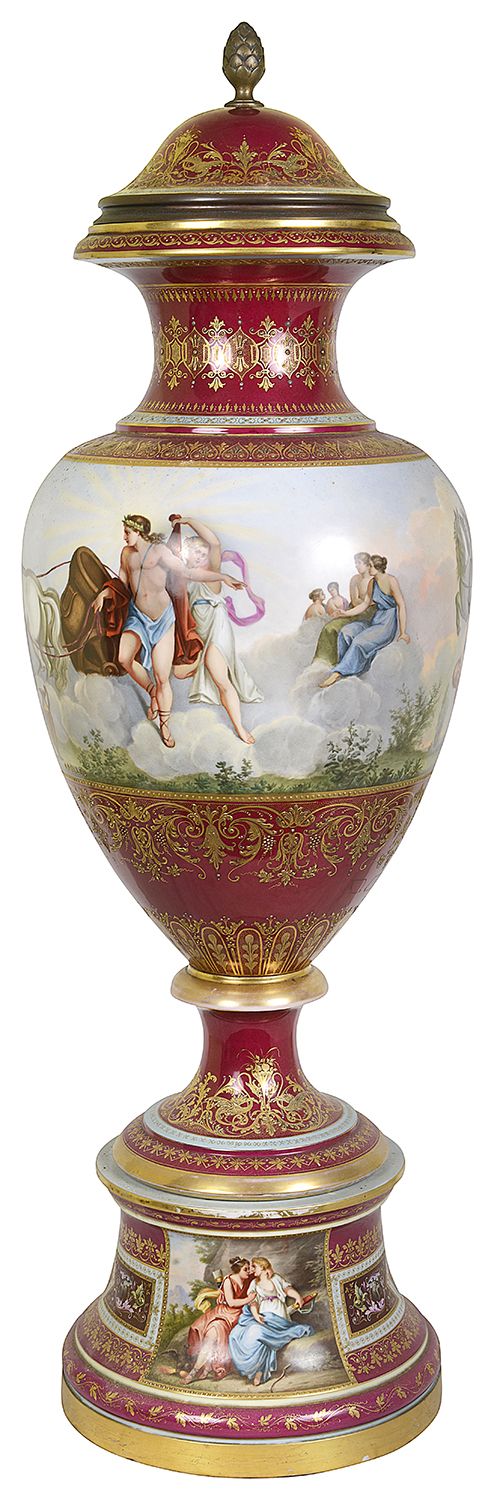
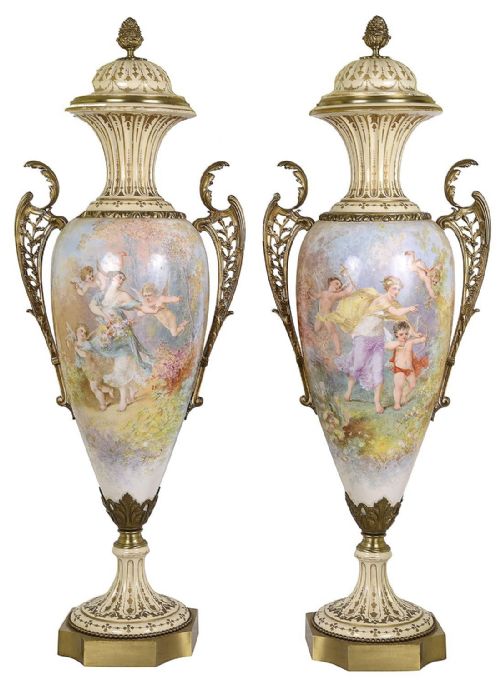
These pedestal porcelain urns bring classical presence and decorative weight to a room, drawing the eye with raised profiles and painted detail.
Pedestal Porcelain Urns
Pedestal porcelain urns combine raised ceramic forms with classical shapes, standing on fitted bases or distinct feet to create height and visual command on a surface. These display pieces draw on centuries of ceramic tradition, taking the form of campana vases, lidded vessels, and twin-handled urns designed for interior display.
The pieces available here lean heavily into nineteenth-century production, spanning Victorian, Edwardian, and Georgian periods alongside revivalist movements. French and English factories dominate the selection, offering everything from restrained classical silhouettes to ornate polychrome decoration.
Buyers will encounter matched pairs alongside individual cabinet pieces, often finished with handles, covers, and pedestals that elevate the main body of the vessel. The forms range from small mantel ornaments to large floor-standing focal points.
Materials and construction
Makers shaped hard-paste porcelain and porcelaneous bodies into complex vessel forms, often throwing them in sections before luting the parts together. Handles, pedestals, and covers required separate moulding or throwing, demanding precise alignment to ensure the finished urn stood straight and balanced.
Surface enrichment relied on enamels, gilding, gold leaf, and gilt bronze mounts, which were applied and fired in multiple stages to achieve deep colour saturation and metallic lustre. Ormolu mounts frequently framed the porcelain bodies, adding structural support and a contrasting golden trim to French and English works.
Some nineteenth-century decorators snuck tiny painted ladybirds inside urn lids, leaving a secret pop of colour for future collectors to discover.
Quality and execution
The distinction between standard production and top-tier execution rests in the crispness of the porcelain moulding and the refinement of the hand-painting. Superior examples show delicate brushwork in floral panels or figural scenes, with clean registration of gilt highlights and consistent enamel firing without clouding or surface pitting.
Proportion and symmetry dictate the success of the piece, particularly where pedestals and handles must balance a heavy lidded body. Finer items integrate their ormolu mounts and gilt bronze footings seamlessly, ensuring the ceramic and metal elements function as a single harmonious design.
Doulton Burslem·Hadley's Worcester·Helena Wolfsohn Dresden·Meissen·Royal Crown Derby·Royal Worcester·Sevres·Vienna·Wedgwood
The Pedestal Porcelain Urns Glossary
- Campana urn
- A bell-shaped vessel with a flaring rim and a footed pedestal, modelled on ancient Roman garden vessels. These shapes became central to neoclassical and Victorian decorative arts.
- Ormolu
- Gilt bronze mounted onto or around ceramic bodies, cast and chased to provide decorative handles, rims, or bases. This technique was widely employed in French and English decorative pieces.
- Hard-paste porcelain
- A dense, vitrified ceramic fired at very high temperatures, composed of kaolin and petuntse. It yields a durable, bright white body that resists scratching and holds enamel colours firmly.
- Jasperware
- A fine stoneware developed by Josiah Wedgwood, known for its unglazed matte surface and contrasting applied white bas-relief figures. It frequently appears on classical urns and pedestals.
- Garniture
- A set of three or more matching ornamental vases or urns designed to be displayed together on a mantelpiece or sideboard. They typically feature a central tall vessel flanked by a matched pair.
Pedestal Porcelain Urns: Frequently Asked Questions
How were pedestal porcelain urns used historically?
These vessels served primarily as ornamental centrepieces for mantelpieces, sideboards, and large antechamber tables during the eighteenth and nineteenth centuries. Rather than holding cut flowers, most lidded urns and campana shapes were manufactured purely for display to demonstrate the owner's taste and wealth.
Some specialised forms, such as potpourri vases, were pierced at the shoulders or covers to diffuse scented dried petals into the room. Larger pairs were often placed on pedestals in entrance halls or grand dining rooms as architectural accents.
How do I identify a nineteenth-century piece?
Nineteenth-century pieces often display factory marks, pattern numbers, or decorator initials stamped, impressed, or hand-painted onto the unglazed base. The style of the decoration, such as Victorian revivalism or hand-painted floral panels on blush ivory grounds, offers strong chronological clues.
Examining the weight of the porcelain, the composition of the gilding, and the method of handle attachment also helps distinguish nineteenth-century manufacturing techniques from later twentieth-century reproductions.
How should I clean porcelain urns safely?
Dust these decorative pieces gently with a soft, dry artist's brush or a microfiber cloth to remove surface particles without disturbing delicate ormolu mounts. Avoid using water or chemical cleaning solutions, particularly on pieces with cold-painted highlights, enamel work, or vulnerable gold leaf.
If deeper cleaning is required for uncompromised hard-paste surfaces, use a damp cloth with mild soap, testing a small hidden area first and drying thoroughly immediately afterwards.
Can I display these urns in direct sunlight?
Direct sunlight should be avoided because prolonged exposure can fade delicate overglaze enamels, hand-painted bird or floral scenes, and coloured grounds. Enamels fired at lower temperatures are particularly susceptible to ultraviolet degradation over time.
Positioning the urns away from south-facing windows or using UV-filtering glass protects the integrity of the painted decoration and the underlying porcelain body.