

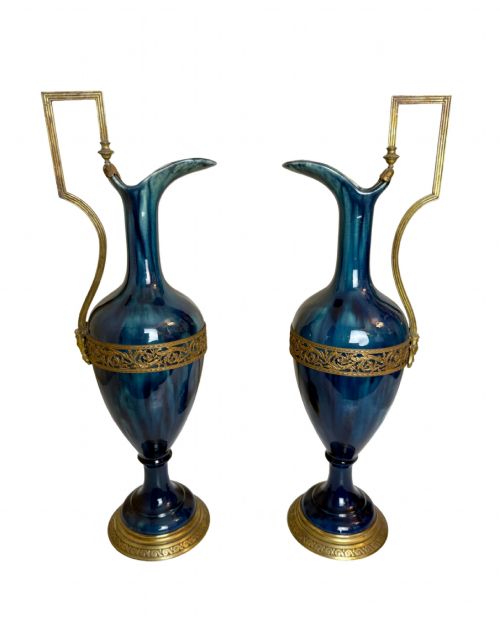
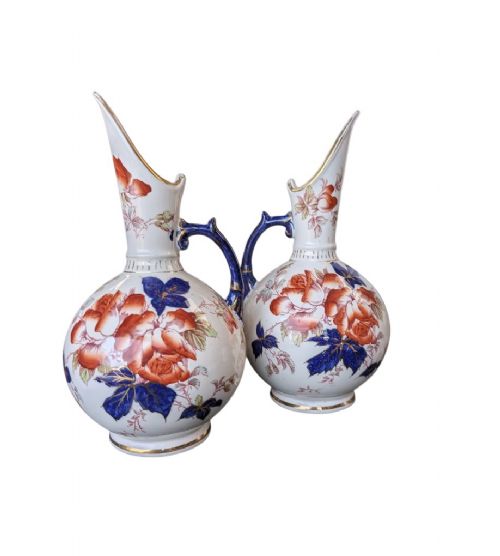


Pair of Porcelain Ewers
A pair of porcelain ewers brings sculptural elegance to a mantelpiece, offering classical form and hand-painted artistry from the nineteenth and early twentieth centuries.
Pair of Porcelain Ewers
A pair of porcelain ewers represents a traditional form originating from classical vessel shapes, adapted primarily for decorative display across interior spaces. When searching for a pair of porcelain ewers, buyers encounter diverse iterations ranging from Victorian revival pieces to Edwardian interpretations.
The evidence shows forms spanning traditional ewers, pedestals, jugs, and scent bottles, often featuring elaborate handles and spout designs. Pieces from this selection typically emerge from nineteenth-century manufacture through to the early twentieth century, reflecting varied European and Japanese aesthetic influences.
Makers such as Royal Worcester, Minton, and Vienna dominate the physical evidence, alongside pieces attributed to Meissen and Coalport. These dual-display items function as balanced decorative objects, frequently finished with handles and spouts that echo Renaissance or Neoclassical motifs.
Judgments of quality
Quality rests significantly on the precision of the hand-painted decoration and the crispness of the porcelain moulding. Pieces decorated by named artists display finer brushwork and more complex chromatic control than standard factory output.
The integration of secondary materials like gilt bronze mounts and the application of heavy gilding distinguish superior examples. Furthermore, the balance and symmetry between the two vessels dictate the overall success of the matching set.
Pair of Porcelain Ewers Retail Price Guide 2026
Typical asking prices for pair of porcelain ewers among the pieces listed under this phrase on Sellingantiques today, from the lower quarter to the upper quarter. They describe what is for sale here now, not the wider market.
Listings feature porcelain ewers spanning Victorian, Edwardian, and nineteenth-century periods, utilising gold leaf, enamel, and gilt bronze.
Royal Worcester·Minton·Royal Crown Derby·Coalport·Meissen·Doulton Burslem
The Pair of Porcelain Ewers Glossary
- Ewer
- A large jug or pitcher with a wide spout and handled grip, historically used for pouring water but frequently produced in porcelain purely for display. These vessels trace their lineage back to metal prototypes from classical antiquity.
- Hard-paste porcelain
- A dense, durable ceramic composed of kaolin and petuntse, fired at high temperatures to produce a vitrified body. This material allows for thin wall sections and crisp sculptural detailing.
- Gilding
- The application of gold leaf or powdered gold suspended in a medium onto the porcelain surface. It is often fired and burnished to create a bright metallic sheen along rims and handles.
- Blush ivory
- A matte cream-coloured porcelain ground popularized by late-nineteenth-century British potteries, providing a soft backdrop for floral painting. This finish mimics the tone of aged ivory.
- Enamel
- Vitrified glass powder mixed with pigment, applied to the glazed porcelain surface and refired to fuse permanently. It provides the vibrant colours seen in floral and figural scenes.
Pair of Porcelain Ewers: Frequently Asked Questions
What were porcelain ewers used for?
Despite originating from functional vessels used for washing or pouring liquids, porcelain ewers produced in the nineteenth century were almost exclusively decorative objects. They served as ornamental garnitures on mantelpieces, pedestals, or washstand sets.
Their sculptural shapes and elaborate painting made them status symbols in Victorian and Edwardian drawing rooms, designed to be seen rather than handled.
How do I date a pair of ewers?
Dating relies heavily on factory backstamps, ceramic bodies, and the prevailing artistic style of the decoration. Victorian pieces often display distinct registration marks or factory ciphers specific to the decade of manufacture.
Stylistic cues such as Japanese Imari motifs or blush ivory grounds further narrow the production period to the late nineteenth or early twentieth century.
Are these ewers painted by hand?
Many examples feature hand-painted details, ranging from delicate floral sprays to intricate figural scenes. Artists signed notable pieces to denote individual authorship.
Closer inspection under magnification reveals brushstrokes and subtle variations in pigment application that distinguish hand-painted surfaces from printed transfers.