





Gilt Porcelain Pedestal Vase
These gilt porcelain pedestal vase examples bring neoclassical and rococo elegance to any room through rich gilding and classical forms.
Gilt Porcelain Pedestal Vase
A gilt porcelain pedestal vase combines fine ceramic bodywork with elevated architectural bases and heavy gold decoration. Collectors encountering this phrase find objects spanning the Georgian era through the Edwardian period, with nineteenth-century pieces forming the largest share of the selection.
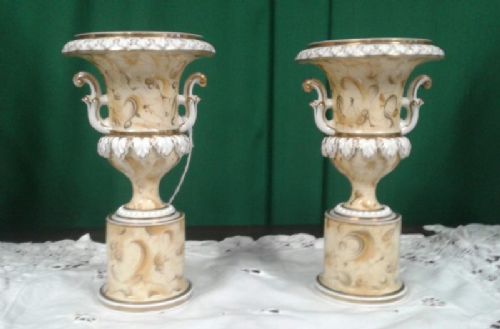
The physical forms include campana shapes, lidded urns, pitchers, ewers, and multi-piece garniture sets. These items originate from notable European centres including English potteries, French houses, German factories, and Austrian workshops.
Surviving pieces display distinct aesthetic movements such as Neoclassical, Rococo Revival, Empire, and Victorian styles. Buyers often select these vessels to anchor mantelpieces, sideboards, or large display tables in period interiors.
How They Were Made
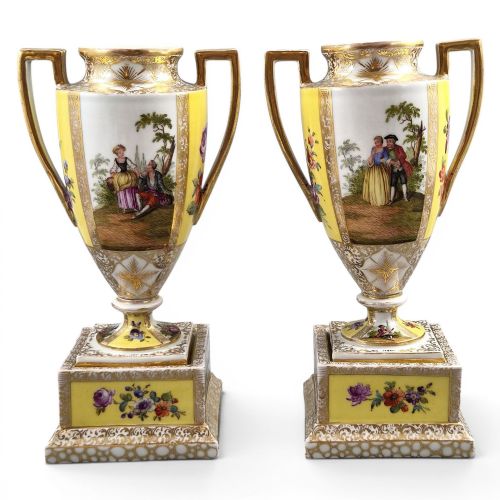
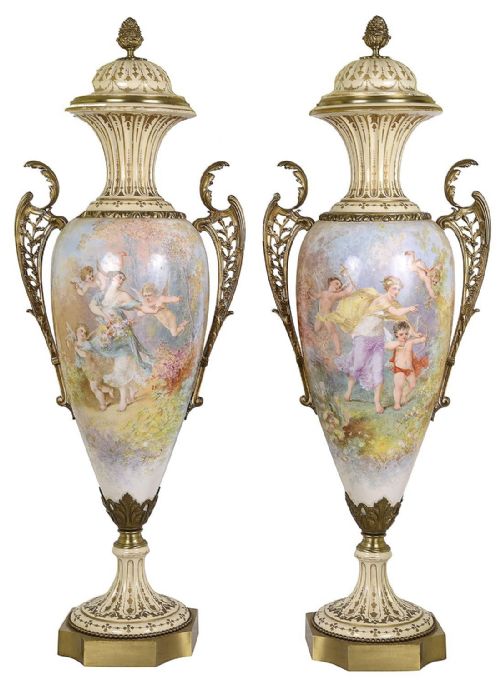
The manufacture relies on hard-paste porcelain shaped into body vessels, pedestals, and covers, often combined with cast or chased ormolu and gilt bronze mounts. Artisans applied enamel paints alongside gold leaf and painted highlights to achieve deep surface lustre.
Firing techniques in European factories allowed for intricate hand-painted figural and floral scenes beneath or over the glaze. Metal components were secured to the ceramic bodies using specialised adhesives, pins, or threaded brass fittings.
The listings on this page span the Georgian era through the Edwardian period, featuring hard-paste porcelain, ormolu, and enamel paint.
What Varies in Quality
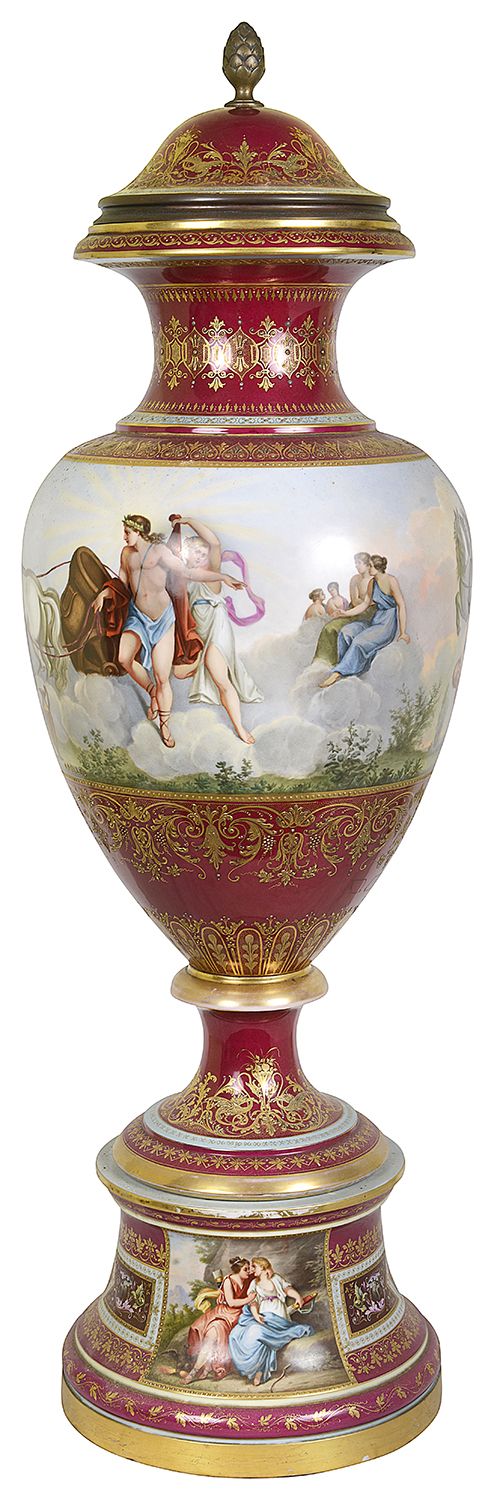
Quality rests upon the crispness of the porcelain moulding and the precision of the hand-painted detailing on panels and borders. Superior examples show refined brushwork in figural subjects and botanical motifs rather than repetitive transfer-printed designs.
The weight, depth, and hand-chasing of the gilt bronze or ormolu mounts dictate the overall grade of the piece. Heavier, more substantial gilding applied to the porcelain surface maintains its brilliance better across centuries of handling.
Helena Wolfsohn Dresden·Meissen Porcelain·Vienna Porcelain·Royal Worcester·Capodimonte
The Gilt Porcelain Pedestal Vase Glossary
- Campana
- A bell-shaped vessel with a flaring rim and a footed base, common in classical and neoclassical ceramic design. This shape derives from ancient Roman bronze and marble garden vessels.
- Ormolu
- Gilded bronze used for decorative mounts, handles, and feet on nineteenth-century ceramic pieces. The technique involves applying a mercury-gold amalgam to cast bronze before heating.
- Garniture set
- A matched group of three or five vases and urns displayed together on a mantelpiece or cabinet top. These sets gained popularity during the eighteenth and nineteenth centuries.
- Hard-paste porcelain
- A durable ceramic composition fired at very high temperatures using kaolin and petuntse. This material produces a dense, translucent body capable of supporting detailed enamel work.
Gilt Porcelain Pedestal Vase: Frequently Asked Questions
Were these vases used for flowers?
Many large pedestal urns and lidded vessels served purely as decorative objects rather than functional containers for water and stems. Their primary purpose was to display wealth and classical taste in formal reception rooms.
Some smaller ewers and pitchers saw functional use, but elaborately gilded pieces were generally kept dry. The narrow openings on lidded urns make them impractical for regular floral arrangements.
How do I identify a Vienna piece?
Look for underglaze blue shield or bee-hive marks stamped on the unglazed base of the porcelain. These factory marks often accompany impressed numbers and painted decorator ciphers.
Vienna pieces typically feature rich classical scenes, raised gilding, and deep cobalt blue or maroon ground colours. The quality of the hand-painted figures remains exceptionally high across nineteenth-century examples.
What is a garniture set?
A garniture set consists of a central large vase flanked by two smaller matching vases or urns. These groups were designed to create symmetry when displayed across a chimney piece or sideboard.
Complete surviving sets share identical decorative motifs, colour palettes, and mould types. Individual pieces within a set often show graduated heights to balance the visual weight.