


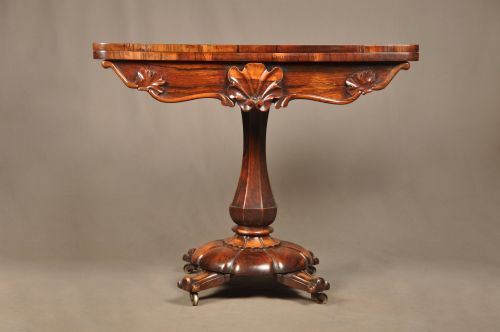
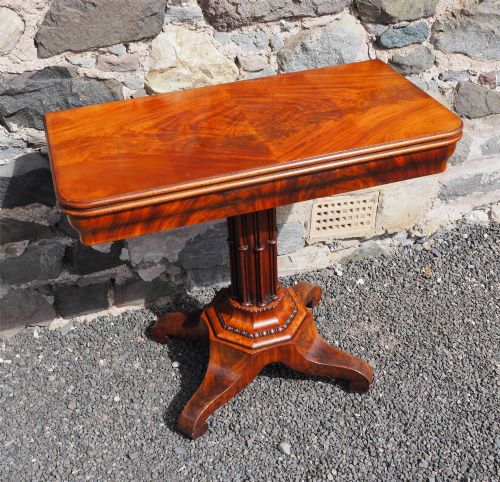
Pedestal Fold Over Table
A pedestal fold over table brings versatile timber and clever pivoting mechanics together for daily dining and evening entertainment.
Pedestal Fold Over Table
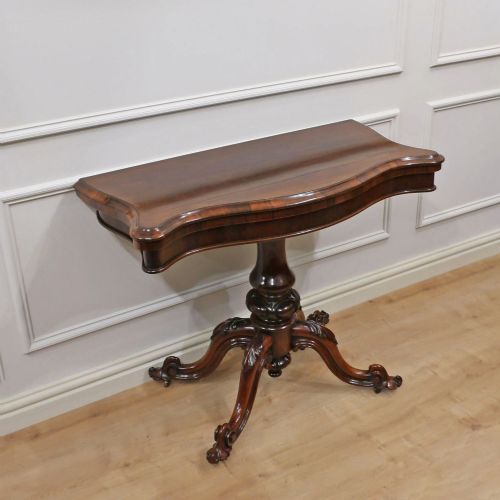
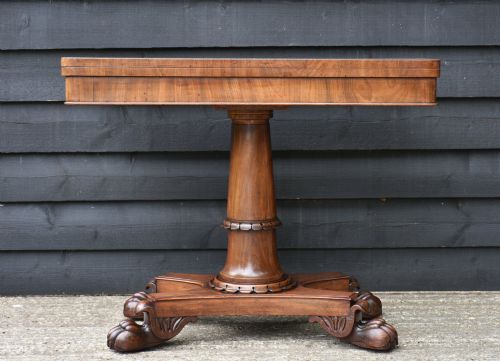
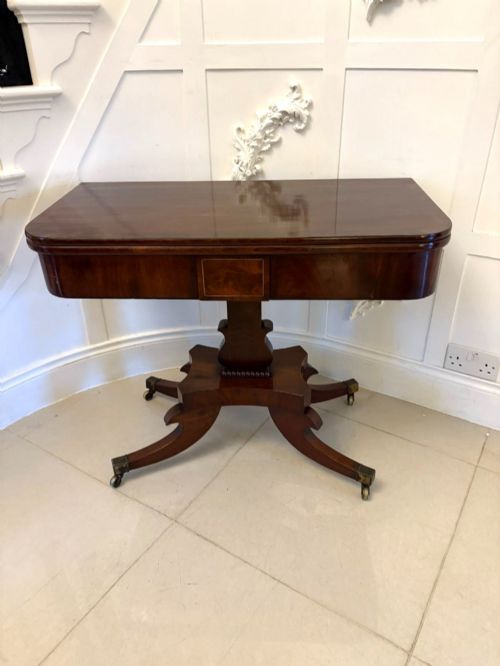
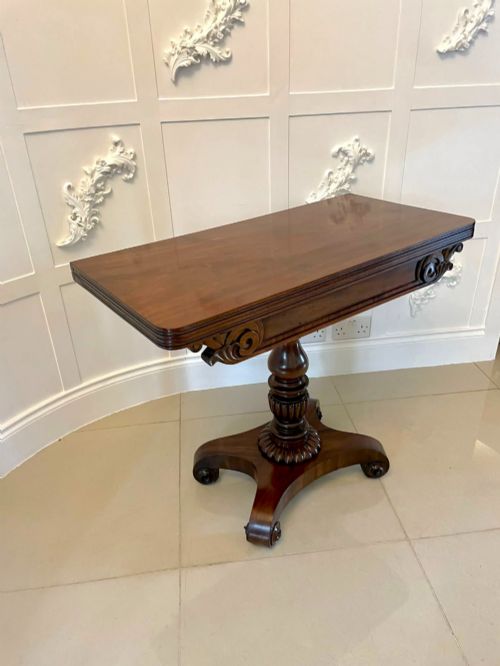
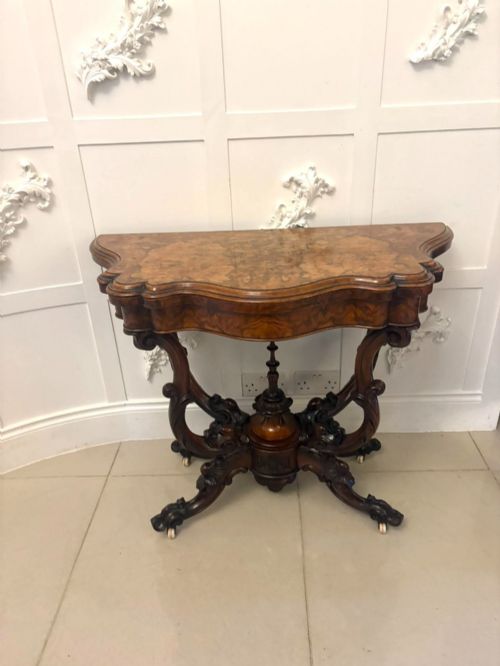
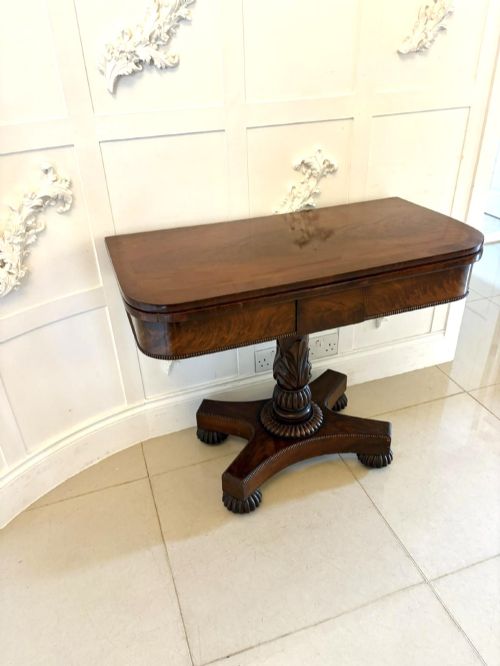
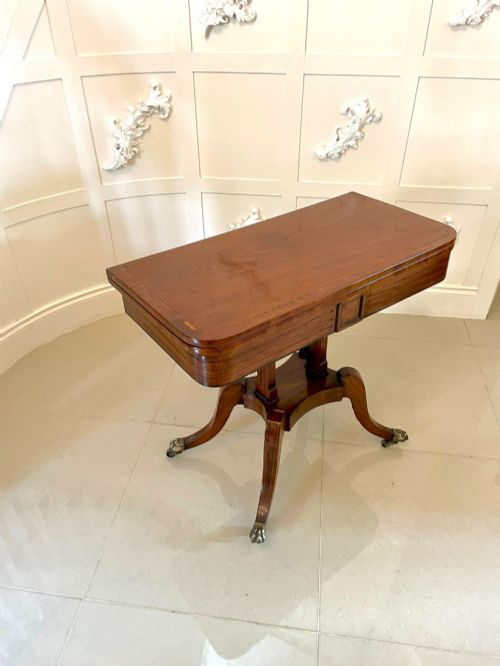
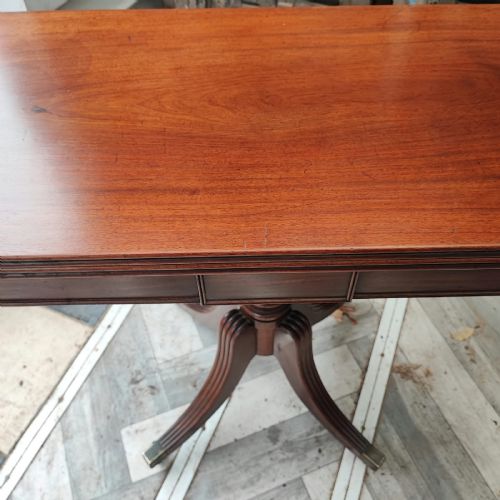
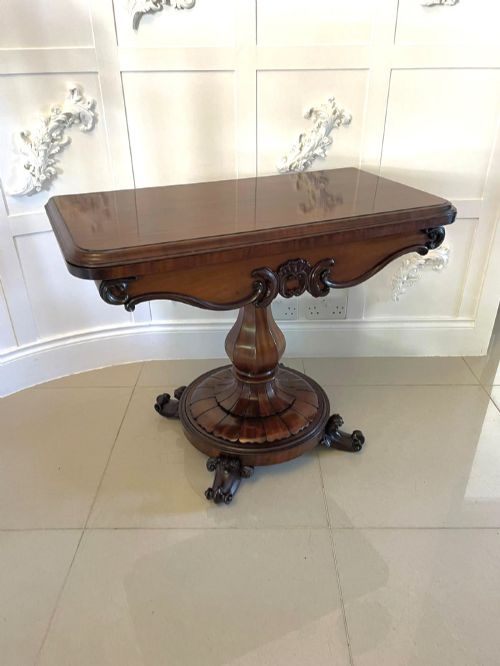
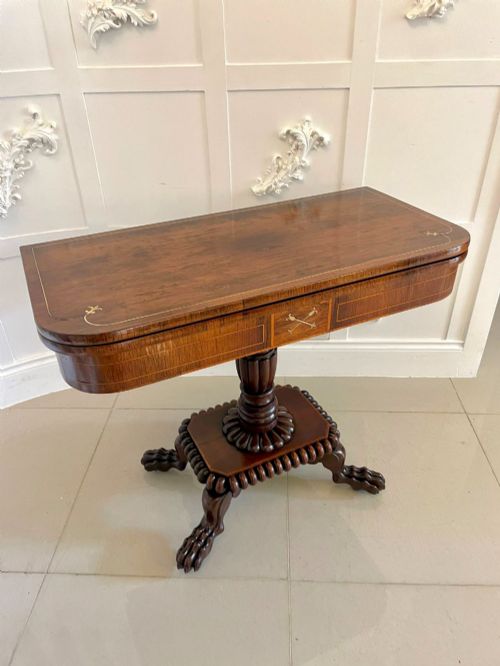
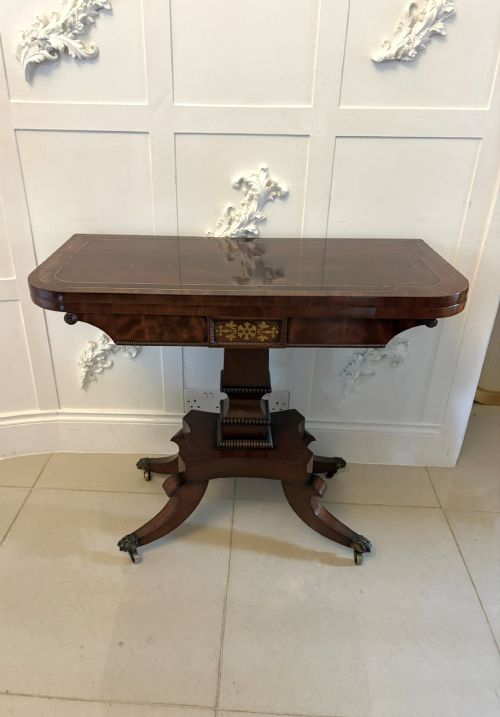
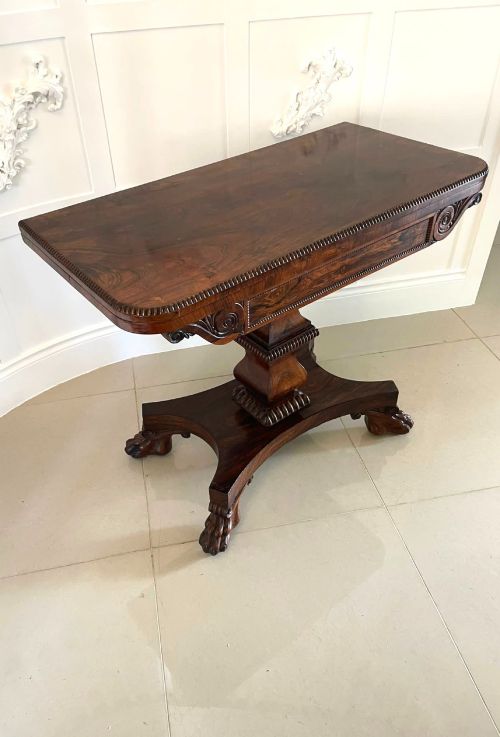
A pedestal fold over table stands on a central pillar supported by carved feet or a platform base, carrying a top that opens out to double its surface area. You will find these pieces largely originating from the Georgian, Regency, William IV, and Victorian periods.
The primary forms on this page include card tables, games tables, tea tables, and console tables. Many examples serve multiple functions, shifting easily from a compact side table to a larger surface for cards or tea.
Makers shaped these tables in mahogany, rosewood, and burr walnut, frequently incorporating baize linings inside the folding leaves for card playing.
Materials and construction
Cabinet makers utilised solid timbers alongside figured veneers such as flame mahogany, rosewood, and burr walnut to create rich grain patterns across the folding top. Satinwood and brass inlay frequently appear as decorative accents on Regency pieces.
The pivoting mechanism relies on a hinged leaf that rotates and folds flat onto a supporting frieze or framework, resting above a central pedestal column.
Pedestal Fold Over Table Retail Price Guide 2026
Typical asking prices for pedestal fold over table among the pieces listed under this phrase on Sellingantiques today, from the lower quarter to the upper quarter. They describe what is for sale here now, not the wider market.
Many surviving card tables still retain faint chalk marks inside their frieze compartments left by past players keeping score.
Assessments of quality
Quality rests on the choice of timber veneer and the precision of the joining work where the top folds and meets the pedestal base. Pieces with strongly figured flame mahogany or burr walnut display a higher grade of material selection by the maker.
Carved details on the pedestal supports, paw feet, or scroll bases demonstrate the sculptor's hand, distinguishing standard workshop production from finer cabinet work.
George Bullock·Gillows
The Pedestal Fold Over Table Glossary
- Fold over top
- A hinged wooden surface that doubles in area when opened out flat. This design allows a compact side piece to function as a card or tea table.
- Pedestal base
- A central pillar support resting on a platform or radiating feet. It replaces traditional four-leg configurations.
- Baize
- A coarse woolen fabric used to line the interior of card tables. It provides a soft surface for dealing cards and placing counters.
- Crossbanding
- A strip of veneer applied to the border of a table top with the grain running perpendicular to the centre panel. This technique frames the primary wood figure.
- Frieze
- The horizontal band of wood situated directly beneath the table top. It often houses the pivot mechanism or a small storage well.
Pedestal Fold Over Table: Frequently Asked Questions
What is a pedestal fold over table used for?
These tables function as compact side or console pieces during the day when the top remains closed against the wall. Opening the leaf creates a larger surface intended for serving tea or playing card games.
Interior spaces benefit from this dual utility because the furniture adapts to different activities without taking up permanent floor space.
How do I tell Regency from Victorian tables?
Regency examples often feature clean architectural lines, brass inlay, and rosewood or mahogany veneers with sabre legs or platform bases. Victorian pieces frequently display heavier proportions, burr walnut timber, and more elaborate carved pedestal supports.
Examining the secondary woods and carving styles helps clarify the manufacturing period.
How do I care for a rosewood top?
Keep wooden surfaces away from direct sunlight and heat sources to prevent the rosewood or mahogany veneers from drying out. Dust regularly with a soft dry cloth and avoid applying modern silicone polishes.
Maintaining a stable room humidity preserves the old polish and protects the internal hinges of the folding mechanism.
Why does the top fold over?
The hinged design allows a small wall table to expand into a full-sized gaming or tea table when entertaining guests. A pivoting mechanism swings across the pedestal to support the opened leaf securely.
This clever engineering was essential for period homes where rooms served multiple purposes throughout the day.