



Patterned Wool Hall Runner
A patterned wool hall runner brings lasting warmth and rich traditional colour straight to narrow corridors.
Patterned Wool Hall Runner
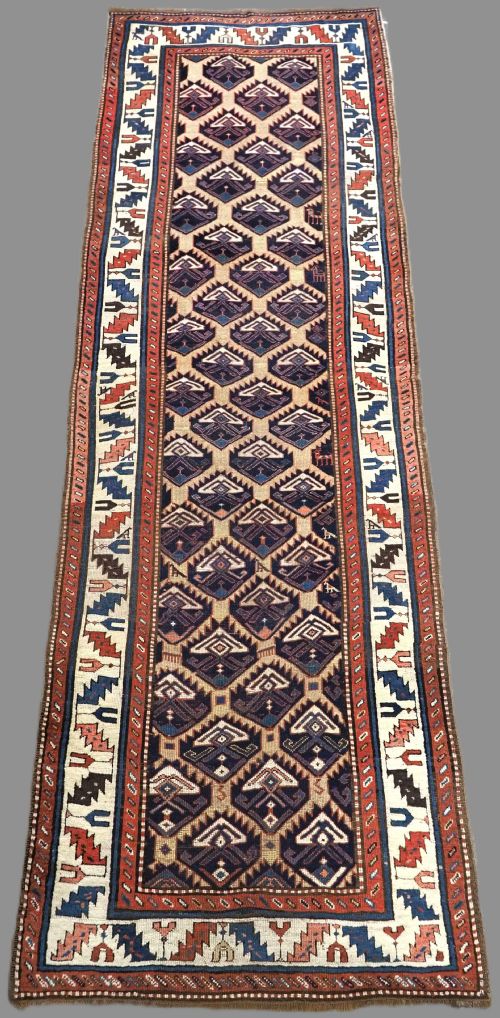
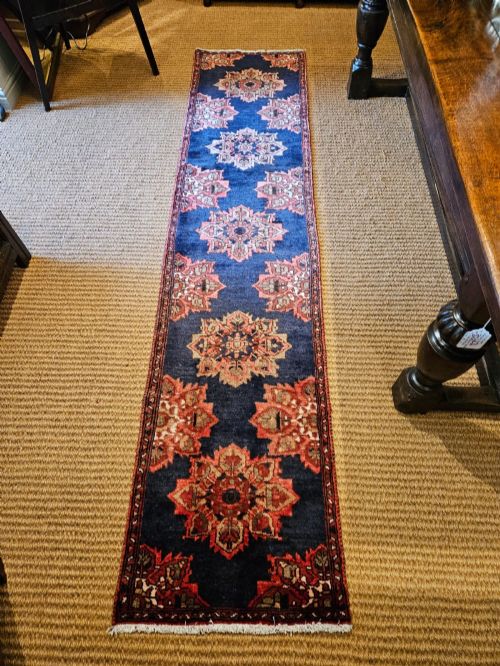
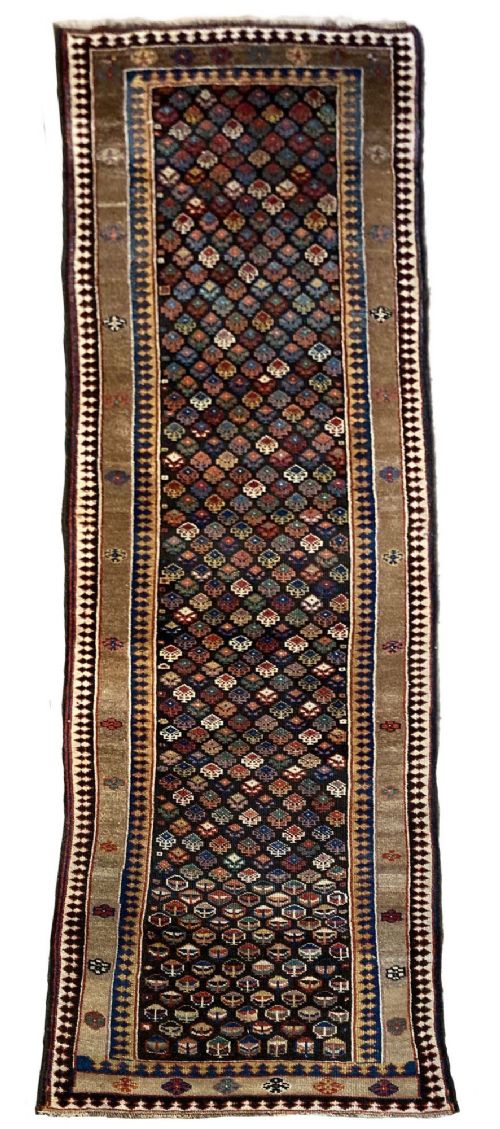
A patterned wool hall runner is a long, narrow carpet designed specifically for corridors, hallways and narrow spaces. When searching for a patterned wool hall runner, you will encounter pieces spanning from the mid-nineteenth century through to the early twentieth century.
Geometrical motifs, lattice patterns, boteh designs and diagonal layouts dominate the visual character of these floor coverings. They bring distinct regional artistry and durable textile craftsmanship directly into domestic passageways.
Materials and construction methods
These runners are constructed primarily using wool, hand-spun wool and cotton foundations, dyed with natural dyes that yield deep navy blue and variegated tones. The combination of resilient wool pile and sturdy foundation materials ensures structural integrity under heavy foot traffic.
Weavers utilised traditional hand-knotting and hand-weaving techniques passed down through generations in regions such as the Caucasus, Anatolia and Persia. This meticulous craft creates a dense, tactile surface that preserves intricate tribal and traditional motifs over centuries of use.
Patterned Wool Hall Runner Retail Price Guide 2026
Typical asking prices for patterned wool hall runner among the pieces listed under this phrase on Sellingantiques today, from the lower quarter to the upper quarter. They describe what is for sale here now, not the wider market.
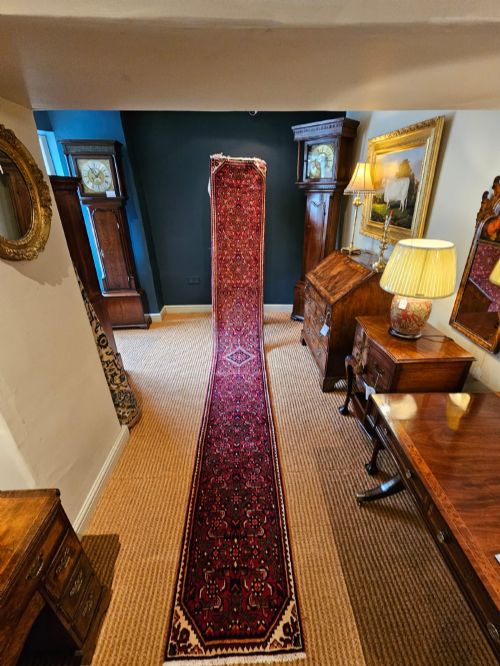
One remarkably long pair of antique Malyor runners spans nearly thirteen metres, ready to warm up the grandest historical hallway.
Distinguishing quality in older runners
Quality in these textiles rests upon the fineness of the knotting, the complexity of the regional design, and the integrity of the natural dyes. Tightly woven piles and crisp geometric layouts indicate superior workshop execution or accomplished tribal weaving.
The depth and stability of the colour palette further separate standard examples from finer works, as natural dyes age with distinctive character. Preservation of original side cordings and end finishes also dictates the overall standard of survival in these antique floor coverings.
The Patterned Wool Hall Runner Glossary
- Boteh
- A stylised almond, pear or pine-cone motif frequently found in Persian and Caucasian textile designs. This ancient symbol represents fertility, life and eternity.
- Mina Khana
- A repeating geometric flower pattern arranged in a delicate lattice grid across the field of the rug. It is commonly observed in traditional Kurdish and Persian weaving.
- Natural Dyes
- Colourants derived from plants, insects and minerals rather than synthetic compounds. They produce rich, nuanced hues that mellow gracefully over time.
- Knot Density
- The measurement of individual knots per square unit on the reverse of the rug. Higher density typically correlates with finer detail in the geometric patterns.
- Runner
- A long, narrow carpet format specifically proportioned for corridors, staircases and narrow hallways. They protect high-traffic wooden floors while adding decorative focus.
Patterned Wool Hall Runner: Frequently Asked Questions
Where should I place a long runner?
These narrow carpets suit hallways, corridors and landings where traditional floorboards need protection and visual warmth. Their elongated proportions guide the eye through domestic spaces while softening footfall.
Ensure you measure the corridor width and length carefully before selecting a piece. Leave a balanced margin of exposed wood or tile around the perimeter of the rug.
How do I care for antique wool?
Vacuum gently with the suction attachment only, avoiding rotating brush bars that can pull at the vintage pile. Rotate the piece periodically to distribute wear evenly across high-traffic zones.
Professional specialist cleaning is recommended for antique textiles to preserve the natural dyes and wool fibres. Address spills immediately by blotting with a clean, dry cloth rather than rubbing.
What are tribal rug motifs?
Tribal designs reflect the cultural heritage, folklore and daily surroundings of nomadic or village weavers. They often feature geometric lattices, stylised flora and repeating symbols unique to specific regions.
Unlike formal workshop carpets, tribal pieces display spontaneous variations in symmetry and colour. These charming irregularities confirm their handmade, authentic origins.
How can I date an old runner?
Dating relies on examining the material composition, dye types, structural wear patterns and regional design conventions. Hand-spun wool and specific natural colour palettes often point toward the nineteenth or early twentieth century.
Comparing knot structure and border motifs with known examples from regions like the Caucasus or Kurdistan helps narrow the era of production. Expert dealer descriptions provide the primary historical baseline.