
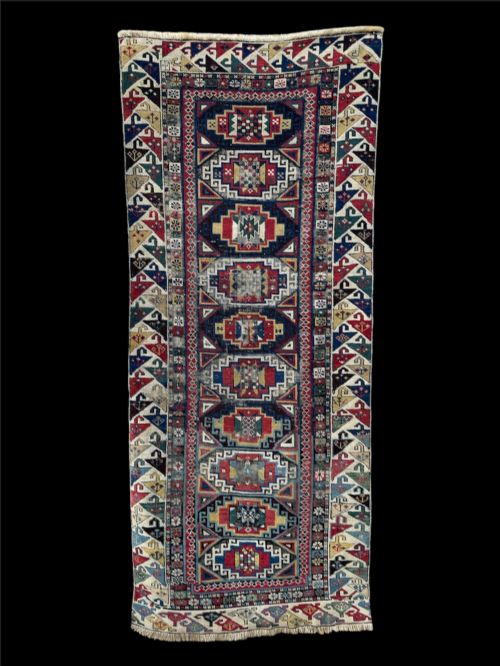
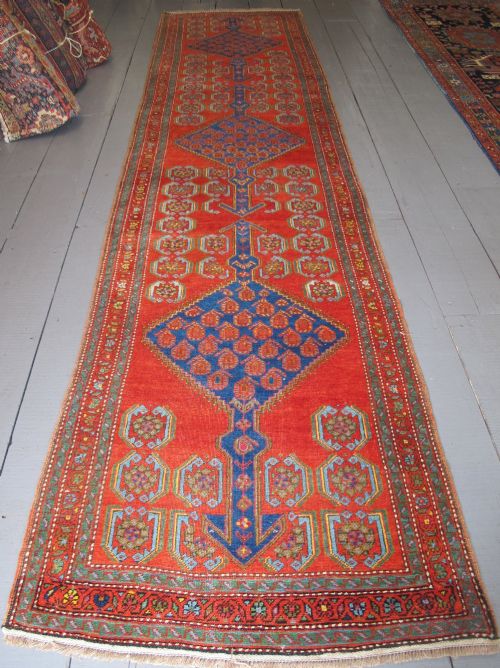


Red Wool Hall Rug
When you search for a red wool hall rug, you are looking at long, narrow tribal and village floor coverings designed to line corridors and landings.
Red Wool Hall Rug
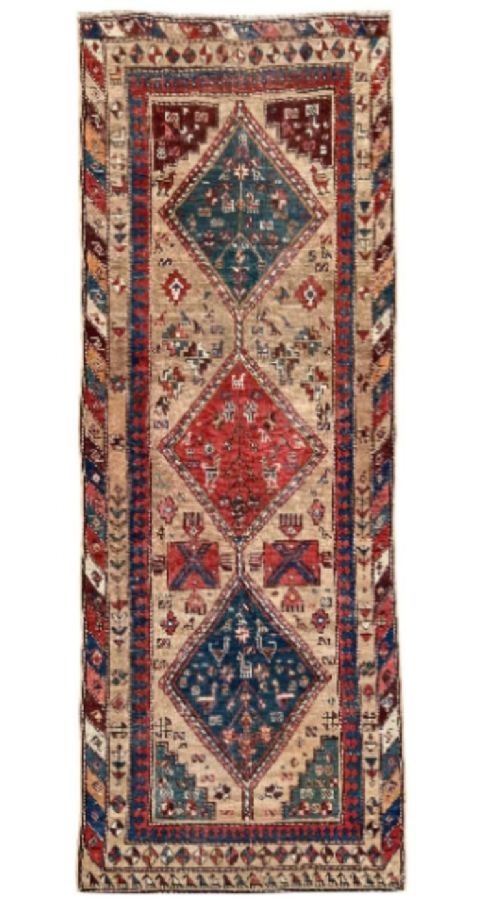
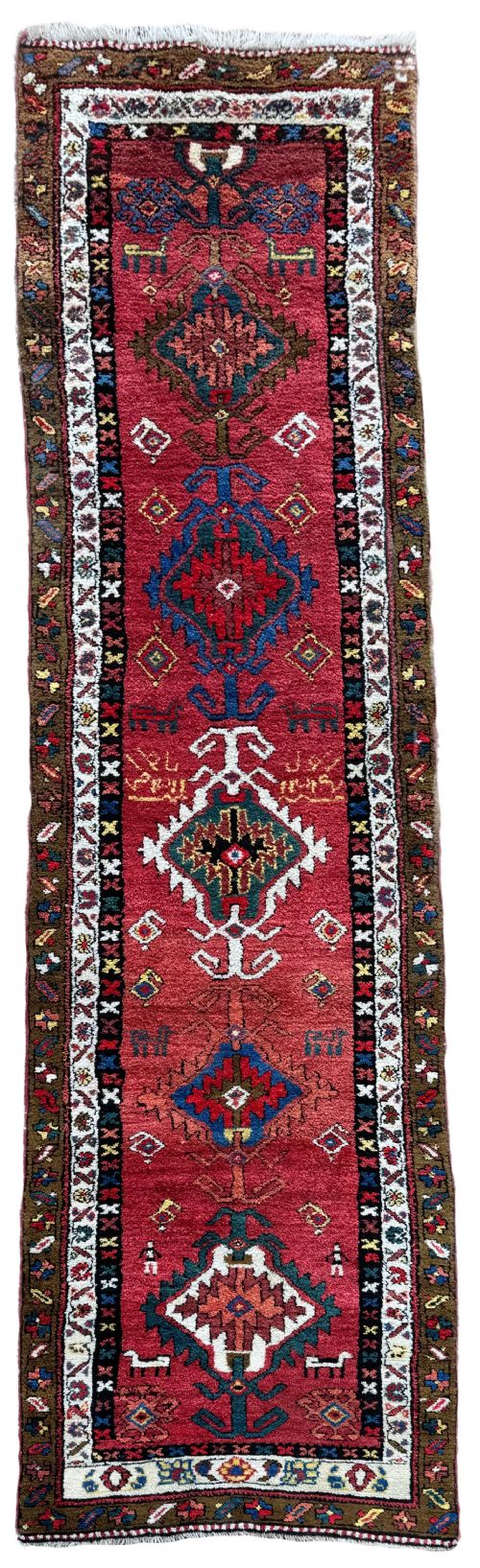
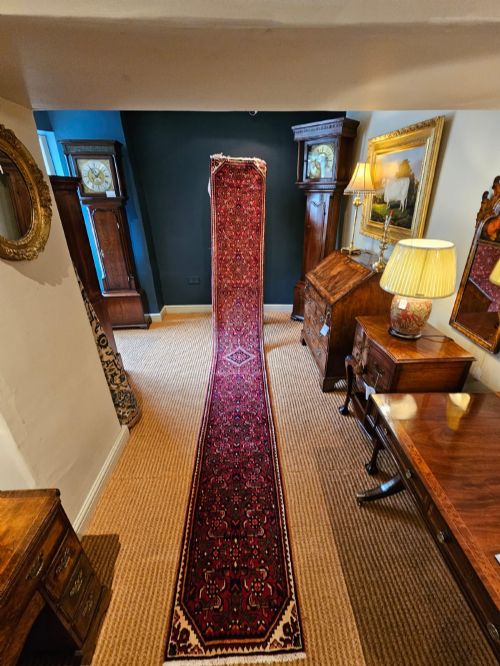
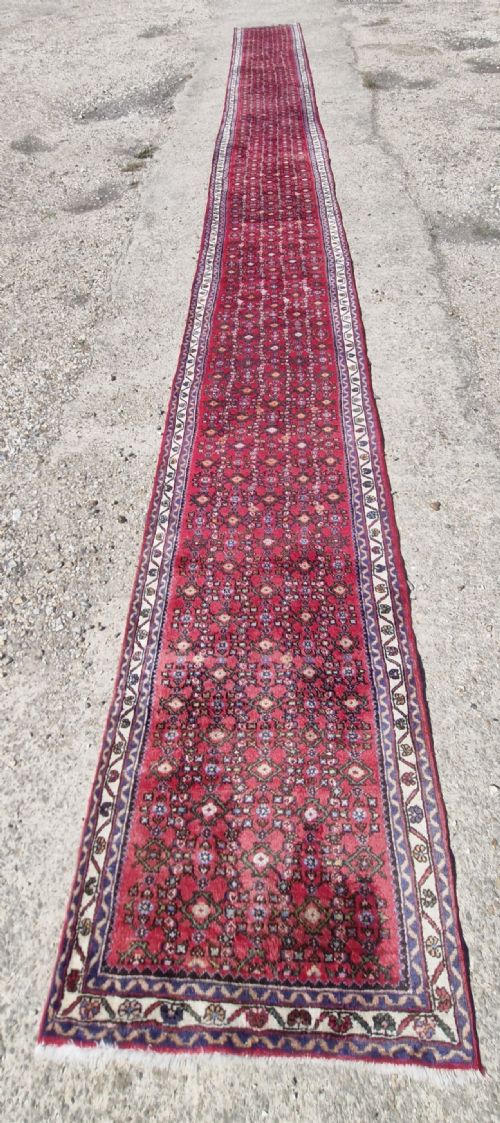
A red wool hall rug brings warmth and linear structure to corridors, hallways and landings in period and modern interiors alike. The examples seen on this page span the nineteenth and twentieth centuries, originating from Persian, Caucasian and Turkish weaving traditions.
The format is predominantly long and narrow, designed specifically to fit high-traffic passage spaces where furniture is absent and the floor requires grounding. Buyers meet various regional styles here, including Heriz, Kurdish, Kazak and Hamadan weaves, each displaying characteristic tribal motifs and geometric medallions.
Materials and Construction
These pieces rely on hand-spun wool for the pile, combined with cotton foundations in many traditional village and tribal workshop examples. Natural dyes impart the rich red tones and contrasting palette seen across the selections.
Weavers knotted the wool by hand onto warps and wefts, creating durable surfaces intended to withstand decades of foot traffic in domestic hallways. The construction methods reflect generations of regional knowledge passed down through Kurdish, Persian and Caucasian weaving communities.
Materials recorded across current inventory consist of wool, cotton, hand-spun wool, and natural dyes used in traditional village workshops.
Assessing Quality and Character
Quality in these runners rests upon the density of the knotting, the stability of the foundation and the clarity of the design work. Finer examples exhibit precise geometric drawing and harmonious ageing of the natural dyes.
The depth of the wool pile and the integrity of the original selvedges also separate standard utility runners from exceptional survivals. Natural colour variation within the wool adds visual depth, marking out pieces with superior visual rhythm.
The Red Wool Hall Rug Glossary
- Runner
- A long, narrow carpet format specifically proportioned for corridors, hallways, and staircases. These pieces measure significantly longer than they are wide.
- Pile
- The vertical or diagonal loops of yarn that form the usable surface of a rug. In these pieces, the pile is traditionally hand-spun wool.
- Selvedge
- The reinforced side edges of a rug that prevent the weave from unravelling. Traditional examples feature sturdy overcast binding in wool.
- Medallion
- A central ornamental design motif placed in the field of the rug. Many tribal and village runners incorporate geometric or hooked medallion patterns.
- Warp
- The vertical foundation threads stretched lengthwise on the loom before knotting begins. Cotton and wool are the primary materials used for these structural elements.
Red Wool Hall Rug: Frequently Asked Questions
Where should I place a long runner?
These pieces suit narrow domestic spaces such as entrance hallways, long corridors, and wide stair landings where linear floor coverage is required.
Their elongated proportions bridge rooms together while protecting high-traffic wooden or tiled floors from daily wear.
How do I care for an old wool rug?
Regular gentle vacuuming without a rotating brush roll keeps dust and grit from settling deep into the wool pile. Professional specialist cleaning should be utilised periodically to protect the natural dyes and fibres.
Placing a breathable underlay beneath the runner prevents slipping and reduces friction between the floor and the wool foundation.
How do I identify a tribal rug?
Tribal runners often display spontaneous geometric motifs, asymmetrical details, and hooked medallions rather than formal court designs. These characteristics reflect the nomadic or village origins of the weavers.
The use of hand-spun wool and regional colour palettes further distinguishes authentic tribal work from later commercial reproductions.
What periods do these runners come from?
The pieces listed here primarily date from the nineteenth and early twentieth centuries, encompassing Victorian era production up to the mid-twentieth century. Each era brings distinct chemical and natural dye palettes alongside traditional regional weaving structures.
Earlier examples often display softer secondary tones resulting from decades of gentle light exposure and natural wear.