


Patinated Bronze Cherub Figure
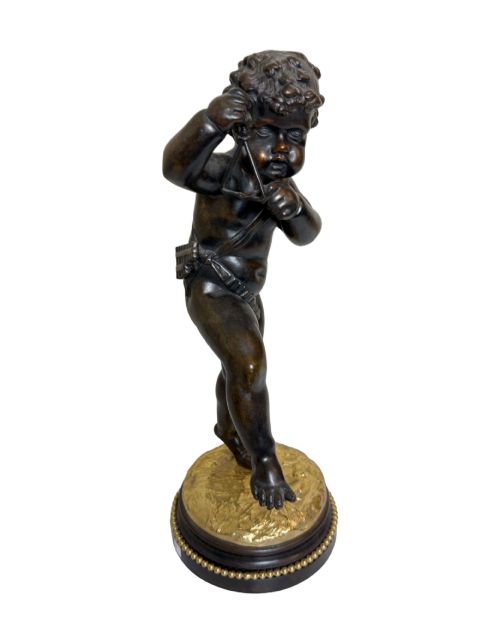
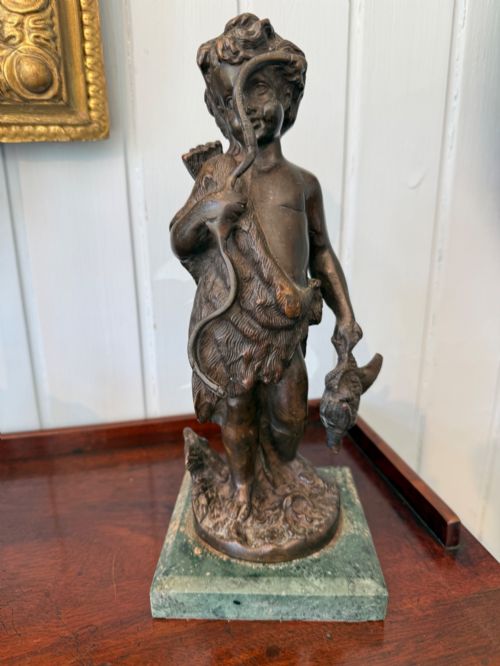
A patinated bronze cherub figure brings nineteenth-century neoclassical charm and classical mythology into a room through cast metal work.
Patinated Bronze Cherub Figure
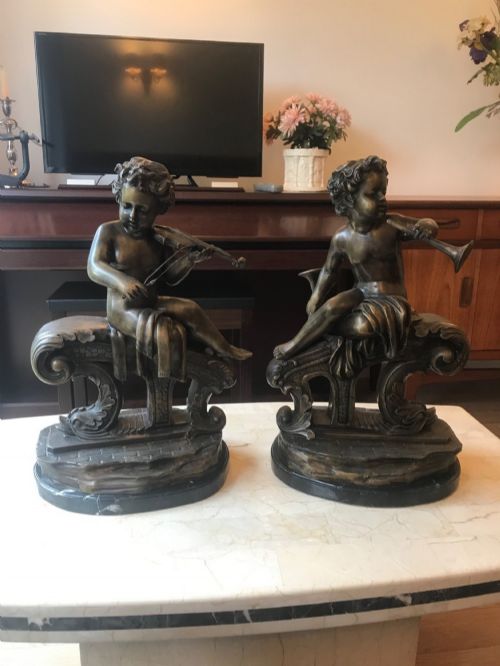
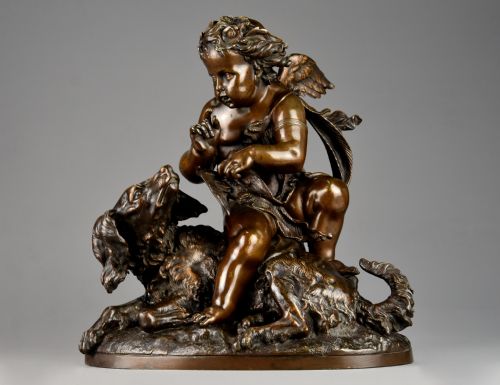
A patinated bronze cherub figure represents winged mythological children, putti, amorini, or cupids cast in metal during the nineteenth century and into the twentieth century. These small sculptures often depict musical figures, hunters, or children with animals, drawing on classical motifs popularised during the French Empire and Victorian periods.
Buyers will most frequently encounter nineteenth-century French examples on this page, often appearing as pairs, candlesticks, bookends, or clock garniture sets. Many pieces incorporate marble bases, ormolu highlights, or wooden plinths alongside the dark metallic surface.
The objects range from modest single figures to large sculptural groups modelled after classical sculptors, reflecting the Grand Tour taste for mythological ornamentation in domestic interiors.
How they were made
These figures are produced using traditional metal-casting techniques, most commonly lost-wax casting, which captures fine details in the hair, wings, and drapery. Molten bronze is poured into a mould, after which the metal receives a chemical or thermal patination treatment to achieve its characteristic dark surface finish.
Makers often combined bronze with contrasting materials such as gilt bronze, ormolu, carved marble, and inlaid wood bases to enhance the decorative impact of the composition.
Listings feature nineteenth-century French and Victorian periods, with materials spanning bronze, patinated bronze, ormolu, marble, and inlaid wood.
What varies in quality
Quality in these bronze figures depends primarily on the crispness of the chasing and the nuance of the surface patination after casting. Finer pieces retain sharp definition in facial expressions, feathers, and fingers without softness from worn moulds.
The integration of supportive materials, such as heavy marble plinths or finely turned wood bases, distinguishes ambitious sculptural groups and garniture sets from simpler standalone figures.
Clodion·Aug. Moreau·Charles Cumberworth·Ferrand·Pigale
The Patinated Bronze Cherub Figure Glossary
- Patinated bronze
- Bronze that has been treated with chemical solutions to produce a darkened or antiqued surface coloration. This finish protects the metal and defines the sculptural contours.
- Putto
- A plump, often winged child figure derived from classical art and frequently seen in Renaissance and nineteenth-century sculpture. These figures embody mischievous or playful mythological themes.
- Ormolu
- Gilt bronze produced by applying a finely ground high-carat gold mercury amalgam to a bronze object. The technique creates a bright golden contrast against dark patinated surfaces.
- Garniture set
- A coordinated set of decorative objects, typically comprising a clock and matching candelabra or vases designed for a mantelpiece. These matched suites dominate formal nineteenth-century interiors.
- Grand Tour
- The nineteenth-century travel tradition where wealthy young Europeans collected classical art, small sculptures, and antiquities. This cultural movement inspired the production of many classical bronze figures.
Patinated Bronze Cherub Figure: Frequently Asked Questions
What is a patinated bronze cherub figure?
A patinated bronze cherub figure is a nineteenth-century metal sculpture depicting a winged mythological child, cupid, or putto with a darkened chemical finish.
These pieces were produced primarily in France and England as decorative items, bookends, clock garniture components, or candlesticks for domestic interiors.
How do I style a bronze putto in my home?
These sculptures suit traditional mantelpieces, bookcases, or side tables where their classical forms and contrasting marble or wood bases add architectural interest.
Pairs often work well flanking a clock garniture set or anchoring a collection of books as heavy decorative bookends.
How do I tell nineteenth century bronzes apart?
Nineteenth-century bronzes can be distinguished by the depth of the casting detail, the quality of the hand-chased surface work, and the nature of the patination.
Earlier nineteenth-century pieces often bear signatures of known sculptors or founders and show crisper anatomical definitions than later commercial castings.
What materials accompany bronze cherub figures?
Many bronze cherub figures are mounted on contrasting bases made from white or coloured marble, inlaid wood, or ormolu.
Some examples also incorporate gilt bronze details, enamel elements, or glass components as part of larger lamp bases and candelabra.