
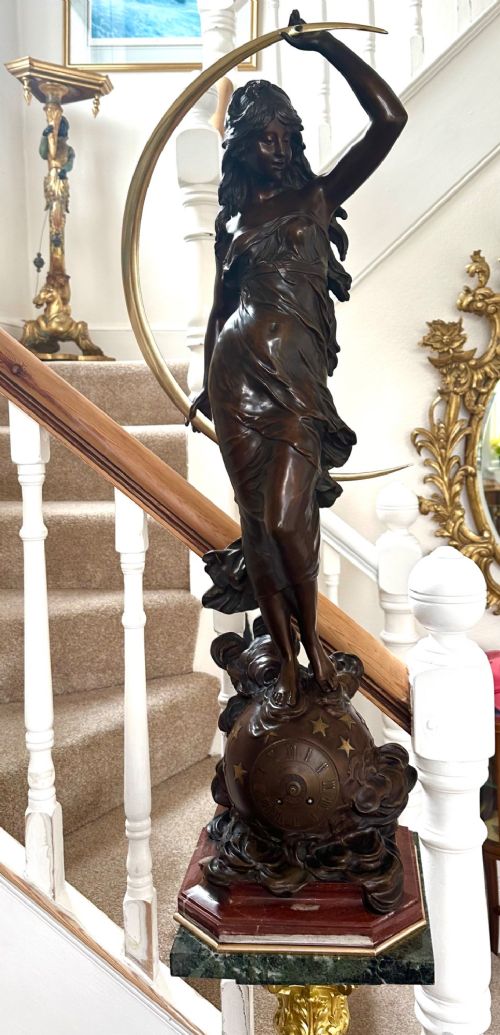


Auguste Moreau Bronze Statue
An auguste moreau bronze statue brings classical figures and mythological subjects into the room with nineteenth-century French foundry work.
Auguste Moreau Bronze Statue
An auguste moreau bronze statue typically presents mythological or allegorical figures such as Selene, Cupid, Eros, Aurora, and nymphs in sculptural form. These pieces emerge from nineteenth-century French traditions, often capturing graceful human figures engaged in gentle movement or repose.
The selection on this page centres primarily on nineteenth-century pieces, spanning the Victorian era and stretching into the early twentieth century. Sculptures range from representations of classical deities to playful studies of youth, reflecting the prolific output associated with the Moreau family workshops.
How they were made
Foundries utilised bronze and patinated bronze to cast these figures, frequently mounting the completed metalwork onto marble bases to provide stability and visual contrast. Surface treatments include dark patina and bronzed finishes that highlight the modelling of the form.
Certain pieces utilise spelter or patinated metal as an alternative medium, applying metallic finishes to achieve the appearance of traditional cast bronze. Signatures and inscriptions are often cast or engraved directly into the metal surface alongside the artist's name.
Listings feature works spanning the nineteenth century up to the 1920s, predominantly utilising bronze, patinated bronze, and marble.
What varies in quality
The refinement of the chiselling and the crispness of the surface detail determine the success of the cast, separating standard production from finer foundry work. Artisans spent considerable time cleaning and finishing the metal after casting to define drapery, hair, and facial expressions.
The quality of the patination and the integration with the marble base contribute significantly to the overall presence of the sculpture. Heavier, more substantial metal casting and careful preservation of the original surface finishes distinguish the upper tier of these works.
Auguste Moreau·Louis Auguste Moreau
The Auguste Moreau Bronze Statue Glossary
- Patina
- The surface coloration and chemical sheen developed on bronze over time or applied deliberately by the foundry. This finish protects the metal and accentuates the sculptural contours.
- Spelter
- A zinc-based alloy commonly utilised as a less expensive alternative to bronze during the nineteenth century. It frequently received a bronzed or painted finish to mimic heavier metal.
- Art Nouveau
- A decorative style prevalent around the turn of the twentieth century characterised by flowing lines and organic motifs. Figures from this period often incorporate naturalistic floral or wind-swept elements.
- Classical
- A style drawing inspiration from the art and mythology of ancient Greece and Rome. Many subjects depict deities, allegorical figures, and heroic narratives.
Auguste Moreau Bronze Statue: Frequently Asked Questions
Are these figures solid bronze?
Many pieces are cast in bronze or patinated bronze, while others utilise spelter with a bronzed finish. Examining the weight and the underside often reveals the nature of the metal.
Foundries used different alloys depending on the intended market and period of production. Inspecting the surface colour helps distinguish true bronze from coated metal alloys.
How do I identify a signed piece?
Signatures typically appear directly on the base or the lower portion of the bronze figure, often reading as Aug. Moreau or Auguste Moreau. These inscriptions were usually cast into the metal during the foundry process.
Familiarity with the standard lettering and placement helps verify the connection to the sculptor. Faint or rubbed signatures still require careful comparison with known examples.
Where should I display my statue?
These sculptures require a stable surface such as a wooden console, desk, or cabinet top where they can be viewed from multiple angles. Placing them away from direct sunlight protects the patina and any marble components.
Providing adequate clearance around the base allows the detailed drapery and posture to be fully appreciated within the room.
How do I clean an antique bronze?
Dusting gently with a soft, dry brush or cloth is generally sufficient to maintain the surface without disturbing the patina. Avoid using chemical polishes or water, which can damage the original finish.
Professional conservation advice is recommended if deeper cleaning becomes necessary due to accumulated grime over decades.