


Bronze Figurine of Cupid
These bronze figurine of cupid pieces are nineteenth-century French and neoclassical decorative sculptures depicting winged figures, offering buyers classic mythological charm.
Bronze Figurine of Cupid
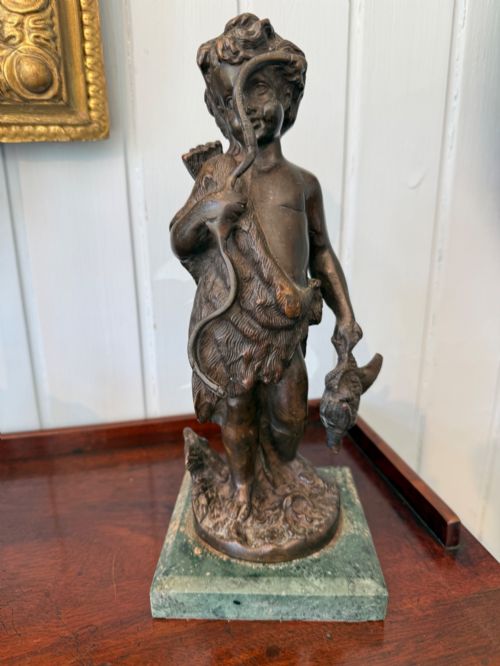
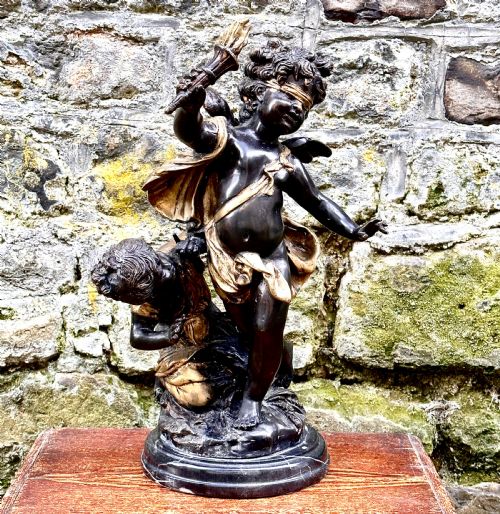
A bronze figurine of cupid presents classical mythological subjects rendered in metal, predominantly emerging from nineteenth-century French workshops. Buyers will encounter various sculptural forms, ranging from single standing figures with bows to more elaborate depictions involving animals or multiple figures on bases.
The objects span several decades within the nineteenth century, encompassing neoclassical and Victorian interpretations of the winged god of love, sometimes referred to as putti or eros. Many examples are mounted on marble or inlaid wood bases, functioning as decorative sculptures.
French classical styling dominates the available range, reflecting the enduring popularity of mythological subjects during that era. Collectors can expect to find works bearing artist signatures alongside unsigned decorative pieces.
Materials and construction
The primary material across these works is bronze, often finished with specific surface treatments such as gilt bronze or patinated bronze. Some examples incorporate contrasting elements like brass or wood, particularly in the construction of supportive bases.
Master founders utilised traditional casting methods to shape the molten metal, capturing fine anatomical details and feathered wings. Finished surfaces then received careful patination or gilding to enhance depth and visual texture.
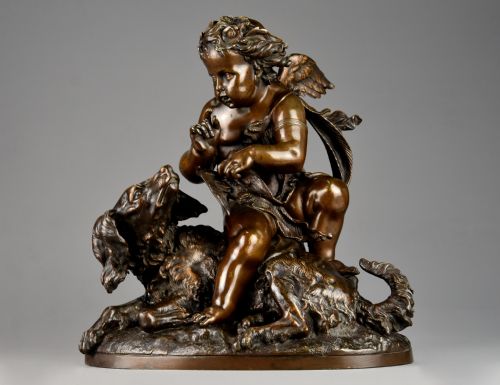
One cheerful nineteenth-century bronze depicts a winged putto fraternising directly with a spaniel dog.
Assessing craftsmanship
Quality in these sculptures rests upon the crispness of the metal casting and the sensitivity of the finishing work. Superior examples display sharply defined facial expressions, intricate feather detail on the wings, and carefully articulated musculature.
The quality of the patination or gilding significantly alters the visual impact of the piece. Finer works demonstrate nuanced colouration and smooth integration with secondary materials like marble or wood bases.
Louis Auguste Moreau·Aug. Moreau·Ferrand·Clodion
The Bronze Figurine of Cupid Glossary
- Patinated Bronze
- Bronze that has been treated with chemical solutions to produce a specific surface colour and tone. This process protects the metal while adding depth to the sculptural details.
- Neoclassical
- An artistic style inspired by the art and culture of classical antiquity, focusing on proportion, symmetry, and mythological themes. It heavily influenced nineteenth-century French sculpture.
- Putto
- A plump, winged child figure frequently depicted in classical and Renaissance art. In these sculptures, they often represent Cupid or Eros.
- Gilt Bronze
- Bronze that has been coated with a thin layer of gold or gold leaf using mercury amalgamation or other traditional methods. This provides a brilliant, durable metallic finish.
- Grand Tour
- A cultural journey of Europe undertaken by wealthy young men in the eighteenth and nineteenth centuries. Souvenirs from these trips often included classical small-scale bronzes.
Bronze Figurine of Cupid: Frequently Asked Questions
How were these bronzes displayed originally?
Nineteenth-century interiors often featured these sculptures on mantelpieces, desks, or specialised display furniture within sitting rooms and libraries.
Their substantial weight and decorative bases allowed them to stand securely as independent works of art.
How do I care for a bronze sculpture?
Maintenance requires gentle dusting with a soft, dry cloth to prevent particulate accumulation on the patinated or gilt surface.
Avoid using liquid cleaners, polishes, or abrasive cloths, as these can permanently damage the historic metal finish.
How can I tell the period of a bronze figure?
Dating relies on stylistic markers such as neoclassical proportions, nineteenth-century casting techniques, and the presence of artist signatures or specific foundry marks.
Secondary materials like inlaid wood or specific types of marble bases also provide strong chronological indicators.