


Dark Bronze Cupid Figure
A dark bronze cupid figure brings the polished weight of nineteenth-century neoclassical casting into a room.
Dark Bronze Cupid Figure
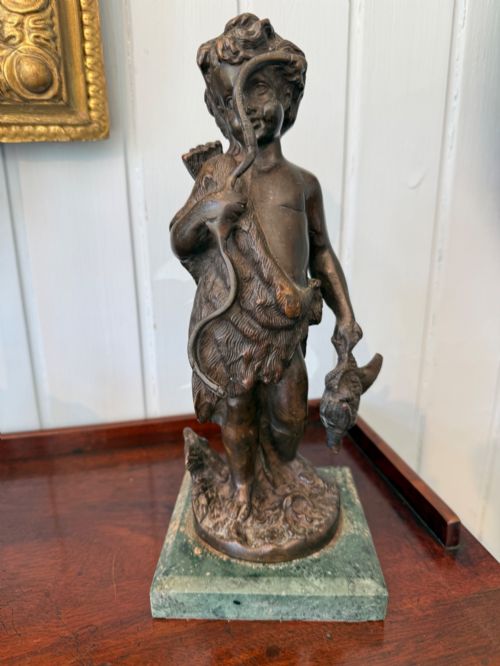
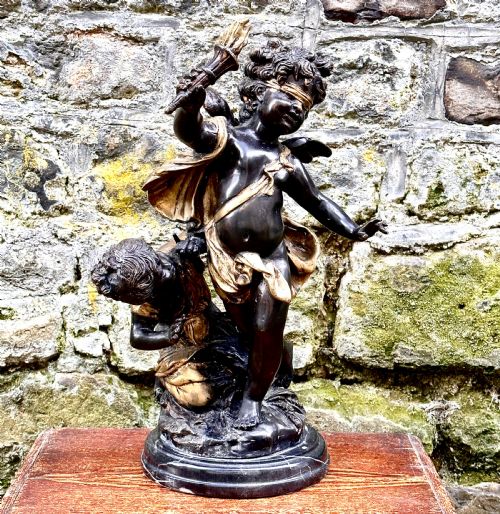
When you search for a dark bronze cupid figure, you are looking at nineteenth-century sculptures and decorative objects cast from bronze and patinated in deep, dark tones. These pieces range from small standing cherubs and winged putti to paired bookends, decorative sculptures, and figures mounted on marble or inlaid wood bases.
The versions most likely to be met on this page originate from nineteenth-century French workshops and Victorian makers working in neoclassical and classical styles. They depict the mythological figure with bows, wings, or in seated poses, capturing the romantic and decorative tastes of the period.
Makers such as Louis Auguste Moreau, Aug. Moreau, Ferrand, and K&O appear across these listings, alongside Grand Tour interpretations attributed to Clodion. Such works reflect both named foundry production and broader nineteenth-century French classical output.
How they were made
These figures rely on traditional metal-casting techniques using bronze, often finished with a dark patination or gilt highlights. The metal captures fine details in the wings, drapery, and facial expressions.
Many sculptures are mounted on heavy bases made from red marble, standard marble, or inlaid wood, providing structural stability and a contrasting texture to the dark bronze metal.
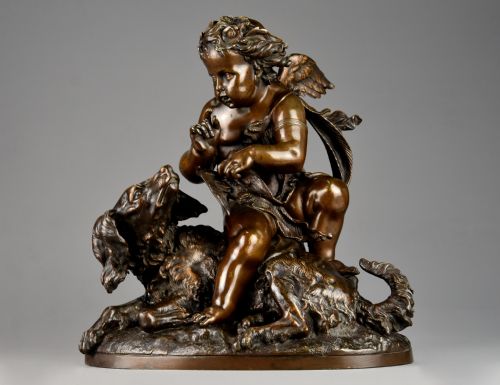
One charming nineteenth-century bronze pairs a winged putto with an attentive spaniel dog.
What varies in quality
The integration of the figure with its base also distinguishes the work. Heavy marble or inlaid wood mounts that fit the bronze precisely indicate superior craftsmanship compared to loose or poorly proportioned assemblies.
Louis Auguste Moreau·Aug. Moreau·Ferrand·K&O·Clodion
The Dark Bronze Cupid Figure Glossary
- Bronze
- An alloy of copper and tin used for casting sculpture. It takes a dark patination well and holds fine detail.
- Patinated bronze
- Metal treated with chemical solutions to produce a dark, aged surface colour. This finish defines the appearance of these nineteenth-century figures.
- Putto
- A plump, often winged male child figure common in classical art. These listings use the term interchangeably with cherub and cupid.
- Neoclassical
- A style drawing inspiration from classical antiquity. It influences the poses and drapery of nineteenth-century French sculptures.
- Grand Tour
- A traditional trip through Europe undertaken by upper-class travellers. Souvenirs from these journeys included small classical bronzes.
Dark Bronze Cupid Figure: Frequently Asked Questions
What is a dark bronze cupid figure?
A dark bronze cupid figure is a nineteenth-century cast metal sculpture depicting a winged mythological child, cherub, or putto. These decorative objects often feature deep patinated finishes and classical poses.
Many examples function as standalone sculptures or decorative bookends mounted on marble or wood bases. They reflect nineteenth-century French and Victorian manufacturing traditions.
How were these bronze figures used?
In the nineteenth century, these bronze figures served as interior ornaments for studies, libraries, and drawing rooms. They reflected an interest in classical mythology and decorative arts.
Some heavier pairs were designed specifically to hold books on a shelf or desk while doubling as sculptural works of art.
How do I identify a nineteenth century bronze?
Identifying a nineteenth-century bronze involves examining the weight of the metal, the quality of the dark patination, and any signatures or foundry marks on the base. Stylistic cues such as neoclassical drapery also point to the period.
Materials like red marble bases and inlaid wood further anchor these pieces to nineteenth-century production methods and Victorian tastes.
What is the difference between a cupid, putto and cherub?
Cupid specifically represents the Roman god of erotic love, typically shown with a bow and arrows. Putti and cherubs refer more broadly to winged infant figures found in classical art.
While the terms are often used interchangeably in antique listings, the visual motifs remain largely consistent across these French and Victorian sculptures.