


French Bronze Cupid Sculpture
A French bronze cupid sculpture brings classical mythology into the room, cast in heavy metal and finished with patination.
French Bronze Cupid Sculpture
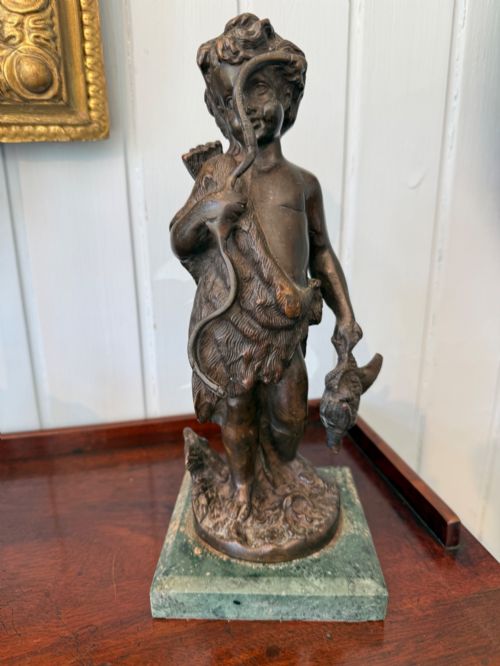
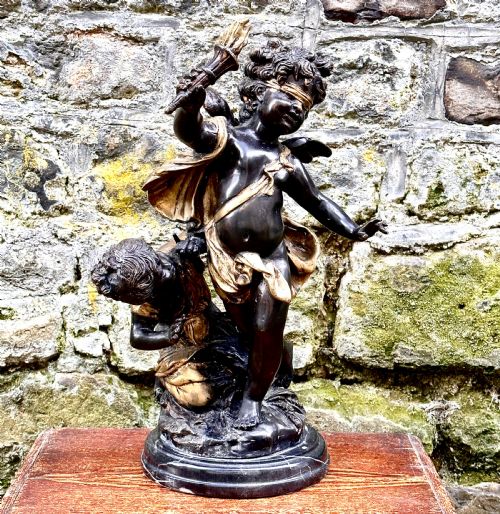
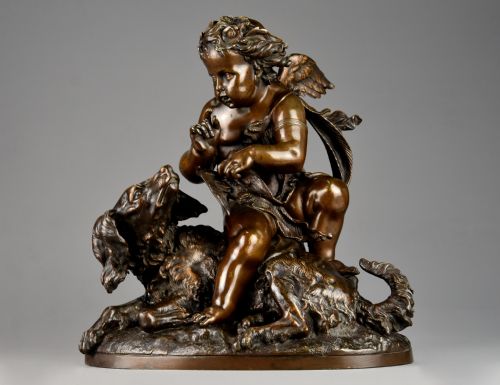
A french bronze cupid sculpture captures mythological figures in cast metal, frequently depicting winged cherubs, putti, or Eros with bows and arrows. These decorative pieces emerge from the nineteenth century, reflecting classical and neoclassical tastes across French ateliers.
Most examples found here date from the nineteenth century, including specific years like 1860, 1880, 1890, and 1900. They appear as single figures or pairs, sometimes mounted on bases of marble, red marble, brass, or inlaid wood.
The forms range from small figures and seated putti to large sculptures created by known makers. They serve primarily as decorative sculpture, drawing on Victorian and nineteenth-century classical styles.
How they were made
Many of the pieces incorporate additional materials for mounting or support, such as solid marble, red marble, brass, and inlaid wood bases. Artisans combine these contrasting textures to anchor the heavy bronze figures securely.
Listings feature nineteenth-century dates ranging from 1860 to 1900, alongside styles described as neoclassical and Victorian.
What varies in quality
The finesse of the casting and the crispness of the chasing separate standard figures from superior works. Finer examples display sharp definition in feathers, hair, and facial expressions.
Signatures by recognised artists or founders add distinction to the piece, as seen in works associated with makers like Moreau, Ferrand, or Clodion. The quality of the secondary materials, such as heavy marble or inlaid wood bases, also influences the overall standing of the sculpture.
Louis Auguste Moreau·Aug. Moreau·Ferrand·Clodion·Vauthier Thiebu
The French Bronze Cupid Sculpture Glossary
- Bronze
- A copper and tin alloy used for casting sculptures. It provides durability and takes a fine patina.
- Patinated bronze
- Metal treated with chemical solutions to produce a specific surface colour and tone. This finish enhances the visual depth of the sculpture.
- Gilt bronze
- Bronze coated with a thin layer of gold or gold-coloured alloy. It adds a bright metallic sheen to the decorative details.
- Putto
- A representation of a human infant, usually winged, found frequently in classical art. These figures often appear holding bows or accompanying animals.
- Neoclassical
- An artistic style drawing inspiration from the classical art and culture of ancient Greece and Rome. It emphasises proportion, order, and mythological subjects.
French Bronze Cupid Sculpture: Frequently Asked Questions
Are these sculptures solid bronze?
Most nineteenth-century figures are cast in bronze, though buyers should examine individual descriptions for specific construction methods.
Some pieces are paired with bases made of marble, red marble, brass, or wood.
How do I identify a signed sculpture?
Signatures by makers such as Moreau, Ferrand, or Clodion typically appear directly on the bronze base or body.
These inscriptions indicate the artist or foundry responsible for the casting.
What is the difference between a cupid and a putto?
Cupid specifically represents the Roman god of erotic love, often shown with a bow and quiver of arrows. Putto refers more broadly to a winged infant figure in classical art.
Both forms appear frequently in nineteenth-century French sculpture.
Where should I display a bronze sculpture?
These decorative works suit stable surfaces like mantelpieces, sideboards, or desks where their weight is supported. Marble and wood bases help protect furniture finishes from the metal.
Keep them away from excessive moisture to preserve the patinated or gilt surface.