
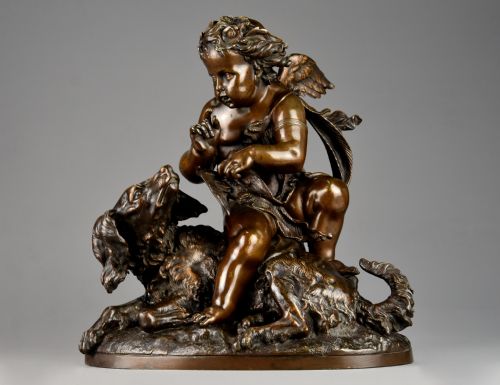


Antique Winged Cupid Sculpture
An antique winged cupid sculpture brings classical mythology into your room, cast in bronze or shaped in soft-paste porcelain.
Antique Winged Cupid Sculpture
When you search for an antique winged cupid sculpture, you are looking at figurative works spanning the eighteenth and nineteenth centuries. These pieces take the form of freestanding decorative sculptures, porcelain figures, and figural groups.
The versions you are most likely to meet on this page originate from French and English workshops. They encompass neoclassical themes, Victorian interpretations, and French Art Nouveau expressions.
Common forms include single figures in patinated or gilt bronze alongside soft-paste porcelain groups. Many portray the mythological figure alongside companion animals, allegorical figures like Father Time, or Psyche.
How they were made
Bronzes are cast using traditional techniques and finished with patination or gilding, often mounted on bases of marble or inlaid wood. These metalworks capture fine anatomical details in the wings, hair, and drapery.
Porcelain examples utilise soft-paste clay compositions shaped into figural groups, then hand-painted and glazed before firing. Terracotta pieces employ modelled clay to achieve tactile warmth and distinct surface textures.
Father Time occasionally visits this category simply to clip a cupid's wings.
What varies in quality
In porcelain figures, quality is measured by the delicacy of the moulding and the preservation of hand-painted details across complex multi-figure compositions. Signed pieces by established sculptors carry distinct artistic authority compared to anonymous foundry productions.
Richard Avrilli·Louis Auguste Moreau·Aug. Moreau·Ferrand
The Antique Winged Cupid Sculpture Glossary
- Putto
- A plump, naked male child, often winged, frequently depicted in classical art and sculpture. They appear regularly in nineteenth-century French metalwork.
- Soft-paste porcelain
- A ceramic material composed of clay and glass frit, fired at lower temperatures than hard-paste porcelain. Eighteenth-century factories utilised this body for intricate figural groups.
- Patinated bronze
- Metal sculpture treated with chemicals or heat to produce a specific surface colour and tone. This treatment protects the metal while enhancing visual depth.
- Terracotta
- Fired unglazed clay possessing a porous, brownish-red earthy appearance. Sculptors often used this material for finished models or direct display pieces.
Antique Winged Cupid Sculpture: Frequently Asked Questions
What materials were used for these sculptures?
Sculptures from this period utilise cast bronze, patinated bronze, gilt bronze, soft-paste porcelain, and terracotta. Many metal pieces also feature bases made from marble or inlaid wood.
These varied materials reflect the distinct traditions of French metal foundries and English porcelain manufactories active during the eighteenth and nineteenth centuries.
How do I identify a nineteenth-century bronze?
Nineteenth-century bronzes generally exhibit careful chasing work, rich patination, and sometimes signatures from known sculptors or foundry stamps. They often depict neoclassical or romantic subjects with high anatomical precision.
Closer inspection of the underside and mounting hardware can also provide clues regarding the manufacturing period and origin.
What is the difference between a putto and a cupid?
While both represent winged male children, a cupid specifically refers to the mythological god of erotic love, often associated with a bow and arrow. A putto is a general decorative motif representing a generic mythological infant.
In many nineteenth-century titles, the terms are used interchangeably by makers and dealers alike.
How should I display a porcelain figure group?
Porcelain figure groups require stable placement away from direct sunlight and heavy foot traffic to prevent accidental damage. Soft-paste porcelain is delicate and benefits from secure shelving.
Keeping them in a controlled indoor environment preserves the hand-painted enamels and glazed surfaces over time.