
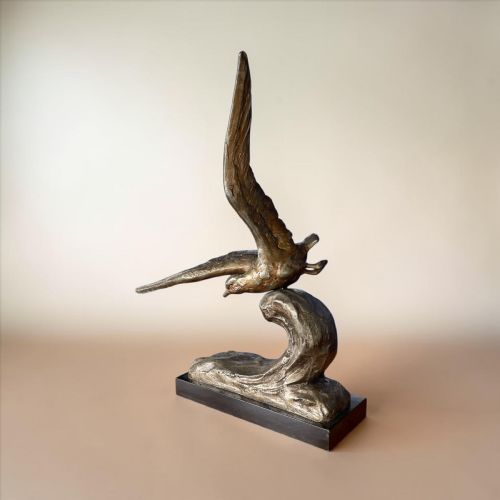


Patinated Bronze Bird Figure
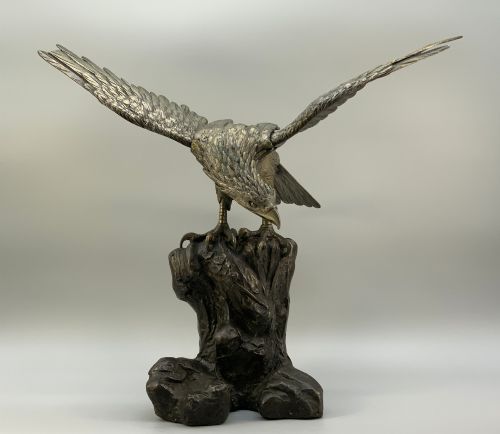
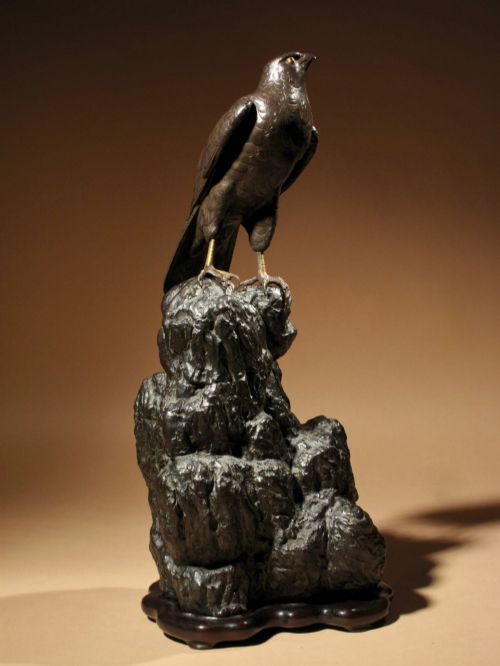
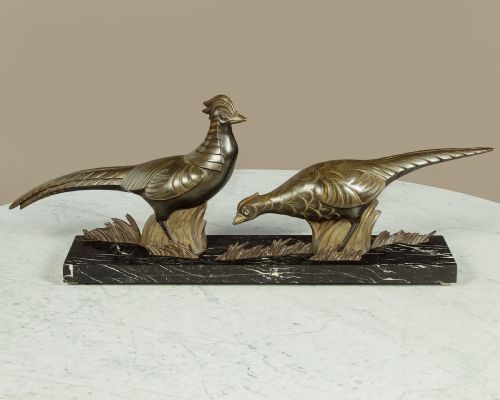
A patinated bronze bird figure brings fierce hawks, quiet pheasants and grand eagles into the room with enduring weight and dark surface texture.
Patinated Bronze Bird Figure
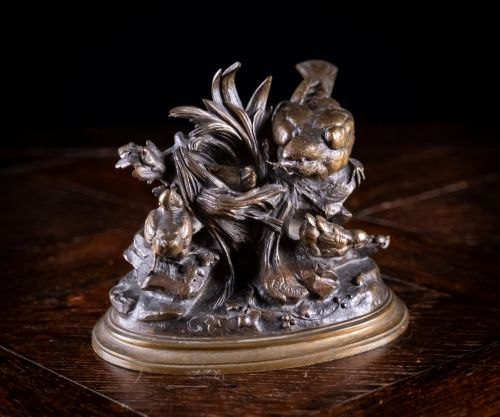
A patinated bronze bird figure is a sculptural work depicting birds such as hawks, eagles, pheasants, geese and herons cast in metal. These pieces emerge from the nineteenth century and the early decades of the twentieth century, carrying the stylistic hallmarks of French Animalier sculpture, Japanese Meiji period okimono, Art Nouveau and Art Deco. Buyers seeking these works encounter everything from small individual sparrows and owls to massive scale eagles and pairs of geese.
The nineteenth century examples on this page lean heavily towards the French Animalier tradition, capturing hawks, eagles and nesting fledgings with anatomical realism. Makers such as Antoine Louis Barye, Christophe Fratin and Ferdinand Pautrot defined this naturalistic approach, often mounting their subjects on marble, stone or wood bases. Alongside these French works, Japanese Meiji period pieces display intricate detail in subjects like eagles and hawks.
Moving into the twentieth century, the aesthetic shifts towards the clean geometry and streamlined forms of Art Deco and Art Nouveau. Sculptures from the 1920s and 1930s present golden pheasants, albatrosses and stylized avian groupings by figures such as Zoldan Kovats, Paul Joris and Antoine Bofill. These twentieth century pieces reflect a modern sensibility while retaining the heavy metal substance and dark patination of earlier generations.
What varies in quality
Quality in these sculptures rests upon the crispness of the casting and the sensitivity of the chasing work done after the metal cooled. Superior pieces retain sharp definition in the feathers, beak and talons without losing the organic flow of the bird's posture. Weaker castings often suffer from softened details where subsequent cleaning or poor secondary tooling has smoothed away the original chisel marks.
The depth and integrity of the patination also distinguish finer examples from standard production pieces. A well-preserved dark patina shows subtle tonal variations that catch the light across the curves of wings and backs, rather than appearing as a flat, uniform paint layer. Additionally, the quality of the supporting marble or stone base contributes to the overall standing of the work.
The listings span from 1860 to 1930, covering 19th Century French Animalier works, Japanese Meiji period bronzes, and 20th Century Art Deco avian sculptures.
Louis Emile Cana·Antoine Louis Barye·Barbedienne·Antoine Bofill·Auguste Moreau·Paul Joris·Christophe Fratin·Ferdinand Pautrot
The Patinated Bronze Bird Figure Glossary
- Animalier
- A nineteenth century artistic movement focused on the realistic portrayal of animals. Sculptors in this tradition studied living subjects closely to render accurate anatomy.
- Patination
- The treatment applied to the surface of bronze to alter its colour and texture. This chemical process creates the dark patinas characteristic of antique metalwork.
- Okimono
- A Japanese decorative ornament intended for display on a shelf or tokonoma. Meiji period examples often include intricately worked bronze birds and wildlife.
- Chasing
- The manual finishing process applied to a bronze casting using hammers and punches. Skilled artisans use this technique to refine feather textures and remove casting flaws.
- Foundry mark
- A stamp or signature cast into the metal by the workshop responsible for pouring the bronze. These marks identify the commercial enterprise that produced the physical object.
Patinated Bronze Bird Figure: Frequently Asked Questions
How do I clean a bronze bird?
Dust the sculpture gently with a soft, dry brush to remove particles settled between the feathers. Avoid using water, soap or metal polishes, which strip away the historic patination.
Applying a very light coat of microcrystalline wax can protect the metal surface from moisture and handling. Buff the wax off completely with a soft cloth to maintain a subdued, natural sheen.
What is an Animalier sculpture?
Animalier sculpture refers to nineteenth century works that portray animals in realistic, dynamic poses. Artists in France and across Europe specialised in capturing the movement and muscle structure of birds and beasts.
These pieces range from small cabinet figures to large scale floor models. They prioritized naturalism over academic idealism, celebrating the raw form of nature.
How can I tell the age of a bronze?
Examine the base, the style of the signature and the quality of the casting technique. Nineteenth century works often display heavier patination and distinct chasing marks compared to later editions.
Reference the materials used for mounting, such as specific types of marble or polished stone. Maker and foundry marks also provide direct clues to the active working years of the workshop.
Where should I display my sculpture?
Place the figure on a sturdy surface away from direct sunlight and damp environments to protect the metal and its patina. Heavy stone or marble bases require stable furniture that can support their weight safely.
Position the piece where side lighting can catch the contours of the wings and body. Good lighting reveals the subtle depths of the dark patina and the fine feather details.