

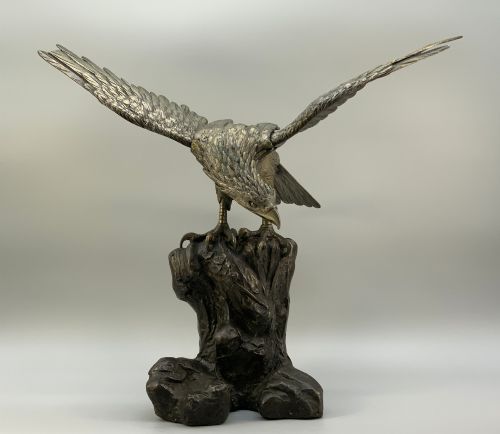
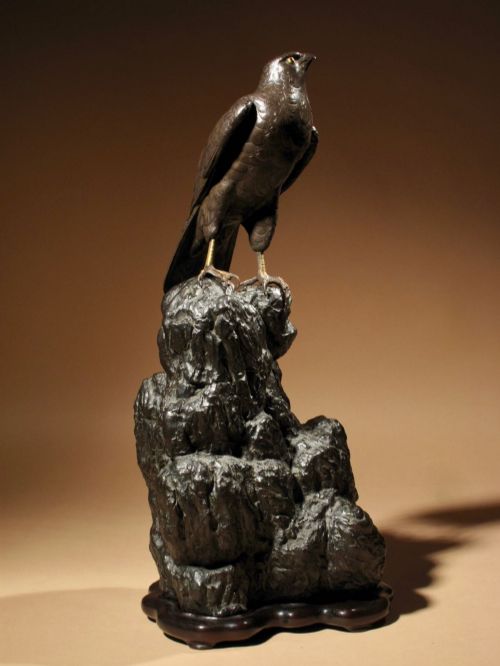


Dark Bronze Eagle Statue
A dark bronze eagle statue brings fierce presence to a room, cast with striking wing detail and formidable talons.
Dark Bronze Eagle Statue
A dark bronze eagle statue captures raptors in flight, perched on rocks, or subduing prey with dramatic realism. These heavy metal sculptures span the nineteenth century, drawing on French Animalier traditions and Japanese Meiji period casting techniques.
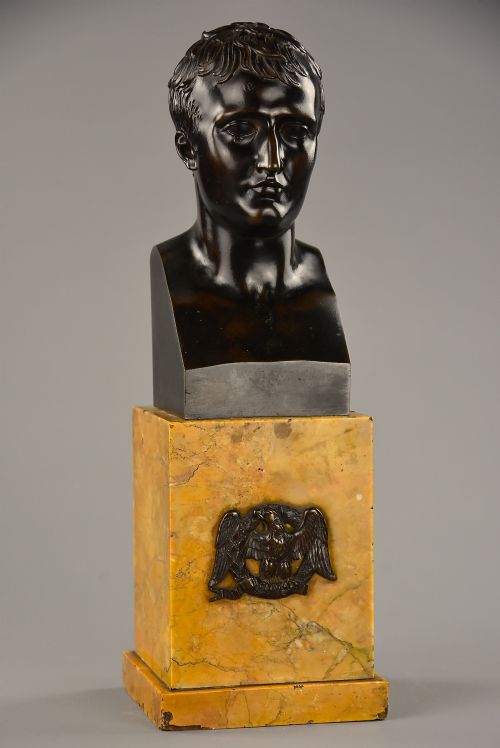
Most examples found here date from the nineteenth century, including Victorian interpretations, French Empire revival works, and Japanese okimono. They appear mounted on natural root wood bases or heavy marble plinths, often signed by renowned European and Asian artists.
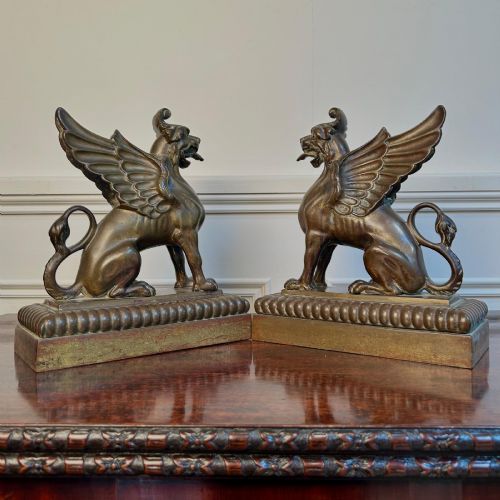
The subjects range from solitary eagles and hawks to mythological griffins and narrative wildlife scenes. Collectors prize these figures for their expressive modelling and deep patination, which highlights every feather and sinew.
How they were made
Foundries utilised traditional lost-wax or sand-casting methods to shape the molten metal into intricate avian forms. Skilled artisans then applied dark patination treatments to the bronze surface, creating rich tonal depth across the plumage.
Many sculptures incorporate mixed media elements, pairing heavy metal castings with carved root wood stands or polished marble bases. Artisans chased the cooled metal by hand, refining the fine lines of feathers, beaks, and talons before mounting.
Dark Bronze Eagle Statue Retail Price Guide 2026
Typical asking prices for dark bronze eagle statue among the pieces listed under this phrase on Sellingantiques today, from the lower quarter to the upper quarter. They describe what is for sale here now, not the wider market.
Some nineteenth-century bronze eagles preferred hunting herons over mice, bringing dramatic aquatic showdowns directly to the Victorian mantelpiece.
What varies in quality
The crispness of the chasing separates standard castings from exceptional works, as superior pieces retain sharp feather definition without softened edges. Artisans who spent hours refining the cold metal produced sculptures with far greater anatomical conviction.
The depth and uniformity of the dark patination also dictate value, alongside the presence of signature marks and foundry stamps. Furthermore, the integration of original supporting elements, such as craggy rock formations or bespoke root wood bases, enhances the sculptural balance.
Antoine Louis Barye·Barbedienne·Gyoko·Christophe Fratin
The Dark Bronze Eagle Statue Glossary
- Animalier
- A nineteenth-century artistic movement dedicated to the realistic portrayal of animals. Sculptors in this tradition focused heavily on anatomical accuracy and dynamic movement.
- Patination
- The chemical or natural coloration applied to the surface of bronze. A dark patina accentuates the sculptural contours and protects the metal from active corrosion.
- Okimono
- A Japanese ornamental statue designed for display in a domestic interior. These decorative objects gained immense popularity during the Meiji period.
- Chasing
- The manual refinement of a cast metal surface using hammers and punches. This finishing process restores crisp detail lost during the initial casting stage.
- Lost-wax casting
- A historic method where a molten metal is poured into a mould created by surrounding a wax model with a refractory material. It allows for extraordinary intricacy in sculptural output.
Dark Bronze Eagle Statue: Frequently Asked Questions
What periods do these statues come from?
These sculptures originate predominantly from the nineteenth century, spanning Victorian Britain, the Meiji period in Japan, and continental Europe. Many reflect the French Animalier school and classical revival movements.
Dates often cluster around the late eighteen-hundreds, aligning with peak European foundry production and Japanese export arts. Specific pieces may carry date markers or reign eras tied to their makers.
How were these bronzes displayed originally?
Makers designed these heavy figures to sit prominently on desks, mantelpieces, and specialised pedestals within grand interiors. Their substantial weight provided stability without requiring permanent wall or floor fixings.
Many incorporated tailored bases of carved root wood or heavy marble to elevate the composition. This presentation allowed viewers to appreciate the dynamic angles of the raptors from multiple vantage points.
Are these sculptures signed?
Certain pieces bear artist signatures, foundry stamps, or artisan seals cast directly into the metal base or body. European bronzes often carry foundry marks from producers like Barbedienne alongside the sculptor's name.
Japanese Meiji period works may feature carved signature panels or seals naming masters such as Gyoko. Unsigned examples remain common, relying purely on stylistic execution and casting quality for attribution.