


Pastoral Needlepoint Panel
A pastoral needlepoint panel brings quiet rural scenes of farming and shepherd life directly into a room through fine historical stitchwork.
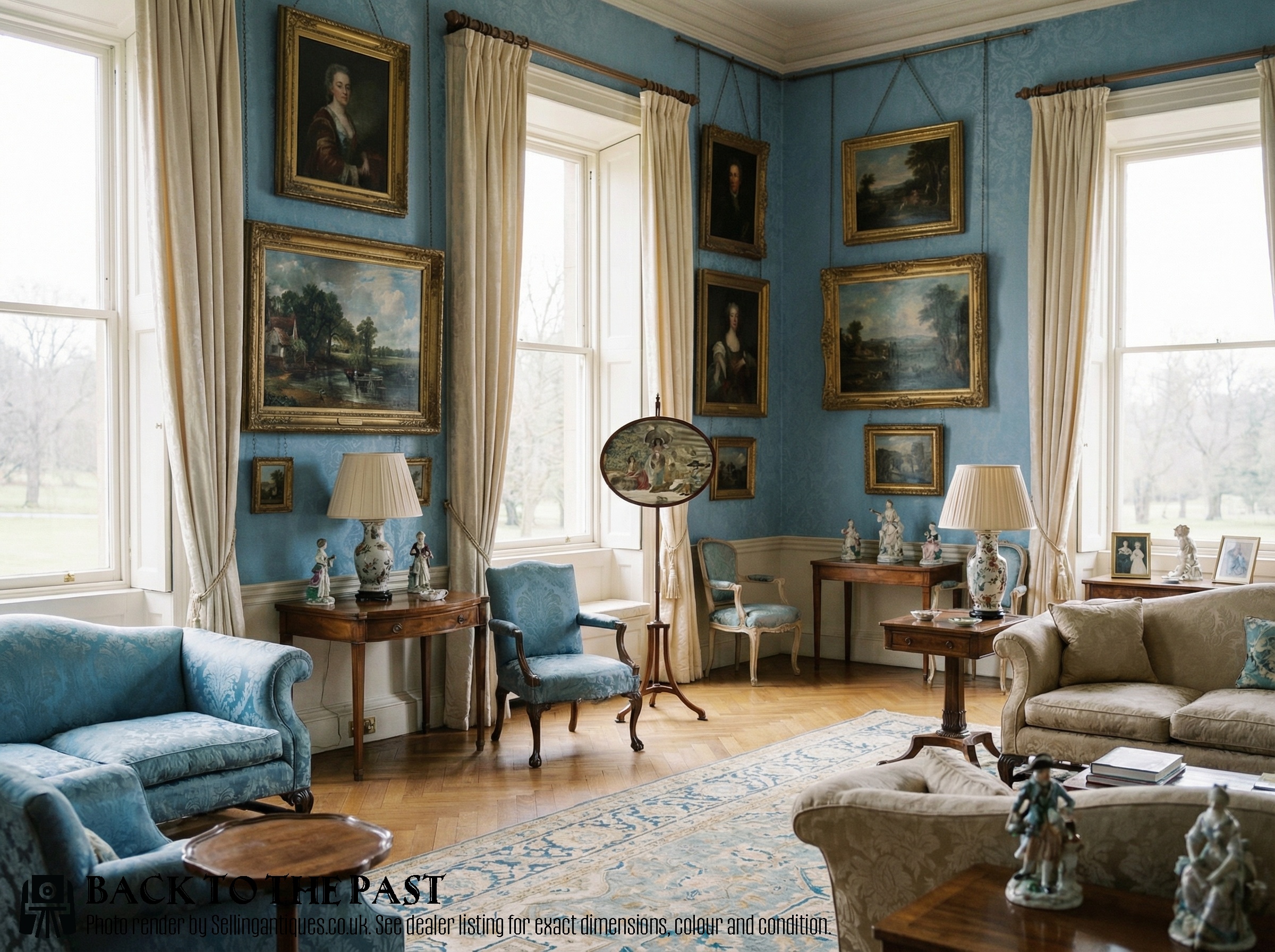
Pastoral Needlepoint Panel
When you search for a pastoral needlepoint panel, you are looking at historical textile art that depicts rural scenes, farming life, and bucolic figures. These pieces capture an idealized countryside, often framed for wall display or set into functional furnishings like fire screens.
The versions you are most likely to meet on this page span the eighteenth and nineteenth centuries, including Georgian and Victorian interpretations. They appear as standalone framed pictures, wall art, and needlework panels mounted in giltwood or wooden frames.
Origins vary across British, French, and continental European traditions, reflecting different regional approaches to embroidery. Works range from early eighteenth-century needlework pictures and circa seventeen-hundred Italian embroidery to mid-Victorian tapestry screens.
How they were made
These panels rely on a foundation of linen or canvas stretched to support the weight of the stitching. Artisans worked wool and silk threads into the fabric to build up dense, textured surfaces and pictorial depth.
Finishing often involved mounting the completed textile into a wooden or giltwood frame to protect the edges and prepare the piece for hanging. Some examples were integrated directly into furniture such as pole screens and fire screens.
Some pastoral panels immortalize eighteenth-century sheep with expressions of mild existential confusion.
What varies in quality
Quality rests primarily in the finesse of the needlework and the complexity of the thread blending. Finer panels show sophisticated control over silk and wool to render expression and landscape detail with clarity.
The framing also influences the character of the piece, with period giltwood surrounds offering a different visual weight compared to simple wooden borders.
The Pastoral Needlepoint Panel Glossary
- Needlepoint
- A type of embroidery stitched on a stiff open-weave canvas where the thread completely covers the ground fabric. It forms the primary technique for the pictorial scenes found in these panels.
- Crewel work
- Embroidery executed using wool yarn on a linen or cotton twill fabric. It allows for varied stitch types and textured relief.
- Giltwood
- Wood that has been treated with a thin layer of gold leaf or gilt. This material frequently appears on the frames housing antique textile panels.
- Pole screen
- A freestanding fireplace screen featuring an adjustable vertical panel mounted on a pole. Many examples utilise needlework or tapestry panels to block radiant heat from the fire.
Pastoral Needlepoint Panel: Frequently Asked Questions
How do I hang a needlepoint panel?
These panels require secure wall fixings suited to the weight of the wooden or giltwood frame. Keep them away from direct sunlight to protect the wool and silk threads from fading.
Ensure the hanging wire and D-rings on the back of the frame are robust and professionally fitted. Professional framing with conservation glass also helps shield the textile from dust and atmospheric moisture.
Are these panels from the eighteenth century?
Many examples date from the eighteenth century, including George III and circa seventeen-hundred pieces. These early works often feature distinct silk and wool pastoral farming subjects.
Nineteenth-century and Victorian pieces also appear frequently on the market. Examining the framing, canvas type, and thread ageing helps clarify the period of production.
What is a fire screen?
A fire screen is a historical furnishing designed to shield a person's face from the intense heat of an open fireplace. They often incorporate adjustable needlework panels that could be raised or lowered on a wooden pole.
Over time, many of these functional items were repurposed purely as decorative wall art or retained as freestanding interior accents.