
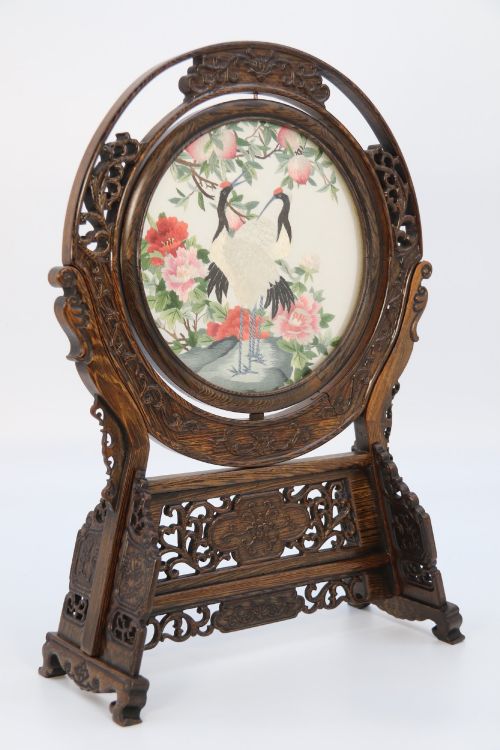




Embroidered Silk Screen
These embroidered silk screen examples combine textile artistry with functional framing, offering collectors intricate needlework mounted in hardwood, mahogany, and rosewood structures.
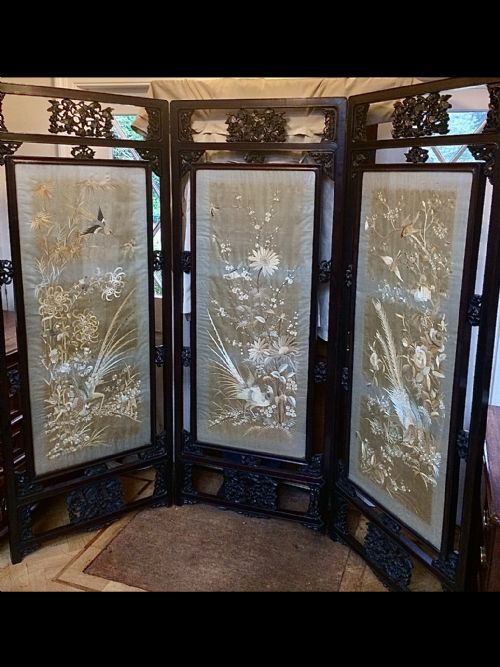
Embroidered Silk Screen
An embroidered silk screen brings together textile artistry and structural framing, appearing across nineteenth-century Victorian and Georgian periods as well as Asian traditions like the Chinese Republic Period, Meiji, and Qing Dynasty. When searching for an embroidered silk screen, buyers encounter diverse formats ranging from large four-fold room dividers and rotating hardwood table displays to adjustable fireplace guards and pole screens.
The pieces listed on this page span domestic English interiors and East Asian workshops, utilising materials such as silk, damask silk, glass, brass, and hardwood. Forms vary significantly from standing room dividers to smaller table screens, each designed to serve both decorative and practical domestic functions.
Materials and construction methods
Makers constructed the structural frames of these pieces using solid timbers like mahogany, rosewood, and general hardwood, often incorporating intricate carving, inlay work, or adjustable poles. These wooden mounts provide the stability required to hold delicate panels upright within domestic environments.
The visual centrepiece relies on fine textile work, featuring silk or silk-cotton embroidery mounted behind glass or supported directly within wooden channels. Artisans combined needlework techniques with durable frames, occasionally pairing silk with wool or damask fabrics to achieve varied surface textures.
Listings combine nineteenth-century Victorian English pole screens with Chinese Qing Dynasty and Japanese Meiji period textile works.
Distinguishing quality across examples
Quality in an embroidered silk screen rests upon the density and precision of the needlework itself, alongside the joinery and carving of the supporting frame. Pieces featuring double-sided stitching or finely detailed pictorial subjects demonstrate superior workshop execution compared to simpler, coarser panels.
The choice of timber and the sophistication of the mounting hardware further differentiate tiers of production. Solid hardwoods with intricate hand-carved stands or complex adjustable mechanisms represent higher standards of craftsmanship than standard utility pieces.
The Embroidered Silk Screen Glossary
- Pole screen
- A standing firescreen featuring an embroidered panel that slides vertically along a central wooden pole to block radiant heat from a fireplace. This form was particularly popular during the Georgian and Victorian eras.
- Table screen
- A smaller decorative screen mounted on an intricately carved stand designed for display on desks, cabinets, or tables. These pieces often feature detailed needlework visible from multiple angles.
- Damask silk
- A reversible figured fabric woven on a loom, frequently utilised as a backing or primary material in textile screens. It adds subtle texture and pattern behind or around the central embroidery.
- Needlework sampler
- A piece of embroidery produced to demonstrate skill in various stitches, occasionally incorporated into nineteenth-century domestic screen guards. These panels showcase traditional stitch repertoires.
Embroidered Silk Screen: Frequently Asked Questions
What is an embroidered silk screen used for?
These pieces served multiple historical functions, ranging from blocking fireplace heat in British drawing rooms to acting as decorative room dividers and table ornaments in Asian interiors. They were designed to manage light, draughts, and privacy while displaying fine textile art.
Today, collectors utilise them primarily as decorative focal points within period or contemporary rooms, placing them against walls or on tabletops to highlight the textile panels.
How do I date a Victorian firescreen?
Dating relies on examining the timber species, framing style, and the specific characteristics of the embroidery techniques used in the panel. Victorian pieces frequently employ mahogany, rosewood, or walnut alongside dense floral or pictorial needlework.
Comparing the hardware joints and the mounting style against documented period examples helps confirm the approximate decade of manufacture.
Are these screens double-sided?
Certain examples, particularly traditional rotating table screens from East Asian workshops, feature hand embroidery visible from both the front and the reverse. This technique requires exceptional skill to conceal thread ends and maintain a clean appearance on both sides.
Other formats, such as pole screens and wall art panels, are typically mounted with a finished front and a plain protective backing material.
How should I care for antique silk embroidery?
Silk textiles require protection from direct sunlight to prevent the natural fibres from fading and degrading over time. Keeping the pieces in stable humidity environments helps preserve the integrity of both the fabric and the wooden frames.
Dusting should be done gently with a soft brush, avoiding any moisture or chemical cleaners that could damage delicate historical threads.