


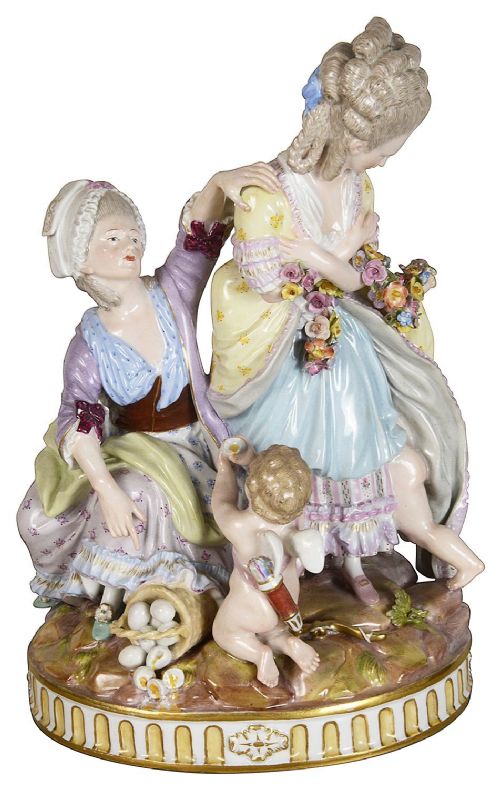


Pastel Porcelain Figurines
These pastel porcelain figurines capture delicate scenes of figures, children and pastoral life in soft enamel hues.
Pastel Porcelain Figurines
When you search for pastel porcelain figurines, you encounter sculptural works that portray human figures, children, and pastoral subjects such as fisher folk, gardeners, and shepherdesses. These pieces emerge predominantly from the nineteenth century, including Victorian examples, alongside earlier eighteenth-century works.
The objects take various forms, functioning as standalone sculptures, decorative figures, pairs, and figural candlesticks mounted on floral bases. French and German factories dominate these listings, alongside English pieces from earlier periods.
You most frequently meet nineteenth-century bisque porcelain and hard-paste porcelain figures rendered in revivalist styles such as Rococo and Victorian Rococo Revival. These domestic ornaments range from small solo characters to large pairs depicting courtly or rustic themes.
How they were made
Makers utilised hard-paste porcelain and bisque porcelain, firing the ceramic bodies to achieve either a glazed finish or the matte, unglazed texture characteristic of bisque. Bisque required careful handling to preserve the crispness of modelled details during the high-temperature kiln process.
Painters applied enamel colours in soft pastel hues by hand, often accentuating garments and floral bases with gold leaf and gilt highlights. Early English and continental factories combined moulded clay bodies with meticulous hand-painting to delineate facial expressions and costume details.
One remarkably specific nineteenth-century group captures the domestic drama of children breaking eggs.
What varies in quality
The refinement of the modelling separates superior sculptural works from simpler commercial output, visible in the natural drape of garments and the expressive detail of hands and faces. Master modellers ensured that fingers, foliage, and accessories maintained crisp definition rather than soft, muddy contours.
The application of paint and gilding dictates the visual success of each piece, distinguishing finely brushed enamel palettes and precise gold leaf accents from heavier, flat decoration. Pairs demonstrate superior quality when both figures maintain matching scale, crisp moulding, and harmonious coloration.
Meissen·Volkstedt·Vion and Baury·Sitzendorf·Bow
The Pastel Porcelain Figurines Glossary
- Bisque porcelain
- Unglazed fired ceramic that presents a matte, marble-like surface texture. This material highlights fine sculptural details without the reflective sheen of a traditional glaze.
- Hard-paste porcelain
- A durable ceramic composition fired at very high temperatures. It combines kaolin and petuntse to create a dense, vitrified body.
- Rococo Revival
- A nineteenth-century design movement that reinterprets eighteenth-century asymmetrical scrollwork and naturalistic motifs. It heavily influences the bases and framing of these figures.
- Gilt
- A thin layer of gold applied to the surface of the porcelain or enamel. It provides decorative highlights on garments and bases.
- Enamel
- Vitreous paint fused to the porcelain surface through firing. It supplies the soft pastel hues seen on costumes and natural elements.
Pastel Porcelain Figurines: Frequently Asked Questions
What subjects appear on these figures?
The subjects draw heavily from pastoral and domestic life, featuring gardeners with baskets, children in gardens, young ladies, gentlemen, and fisher folk. Many pieces depict theatrical or romanticised rural archetypes popular in the eighteenth and nineteenth centuries.
Pairs often show complementary characters, such as a shepherd and shepherdess, designed to sit symmetrically on a mantelpiece or side table.
How should I display pastel figures?
Place these delicate sculptures in enclosed cabinets or stable locations away from heavy foot traffic to protect fragile protruding elements like fingers, flowers, and baskets. Stable shelving prevents accidental tipping, which remains the primary hazard for projecting porcelain details.
Keep them away from direct, harsh sunlight to protect the soft hand-painted pastel enamels from fading over time.
What is the difference between Meissen and Sitzendorf?
Meissen porcelain typically originates from the influential German factory known for pioneering hard-paste European porcelain and refined sculptural modelling. Pieces associated with this tradition often display sophisticated painting and classical composure.
Sitzendorf figures, also German in origin, frequently embrace elaborate Rococo Revival styling with heavily applied floral bases and vibrant pastel palettes characteristic of the later nineteenth century.