


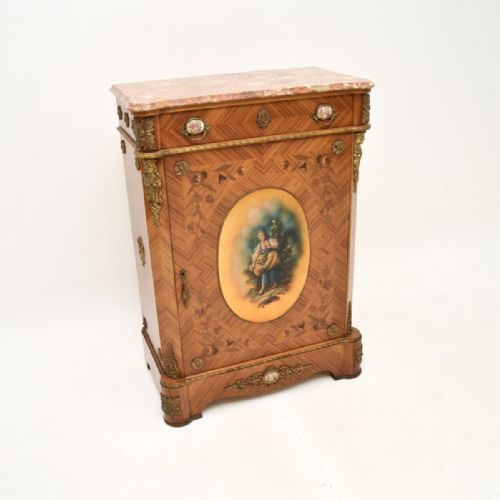
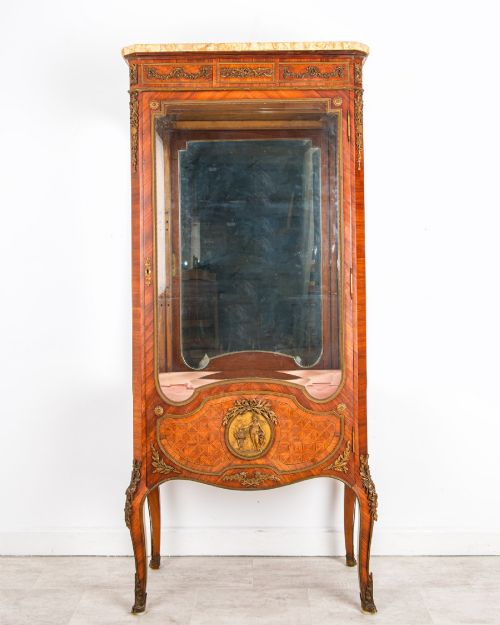
Parquetry Top Cabinet
Parquetry top cabinet designs combine geometric wood surfaces with stone and metal mounts, offering practical storage through French revival styles.
Parquetry Top Cabinet
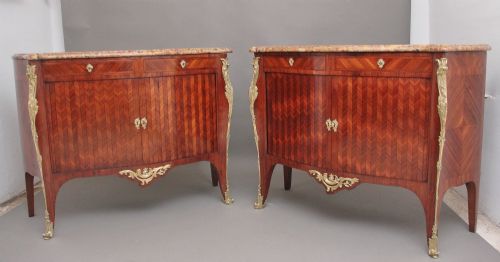
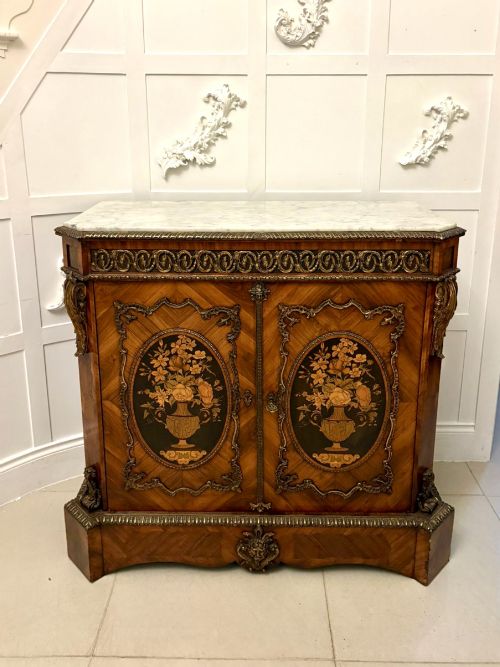
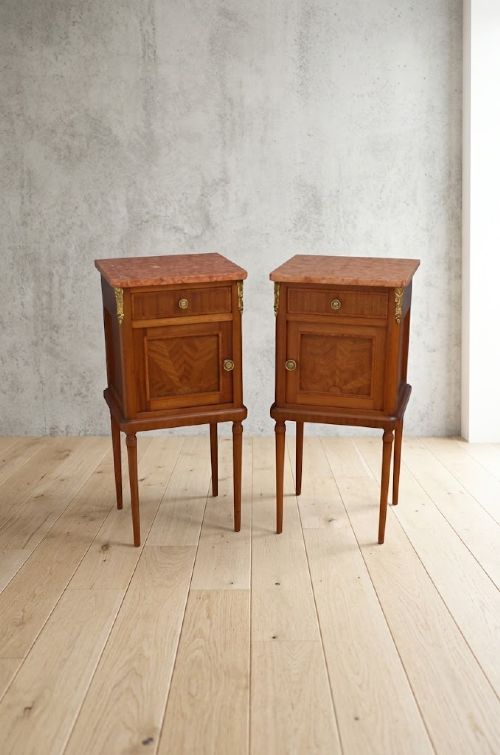
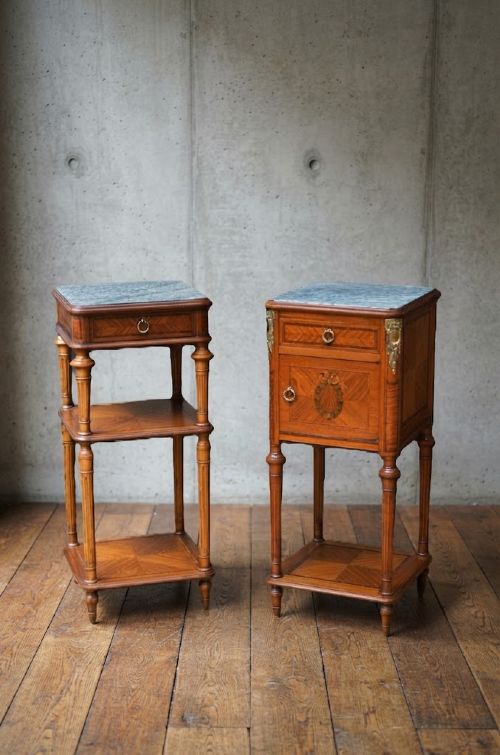
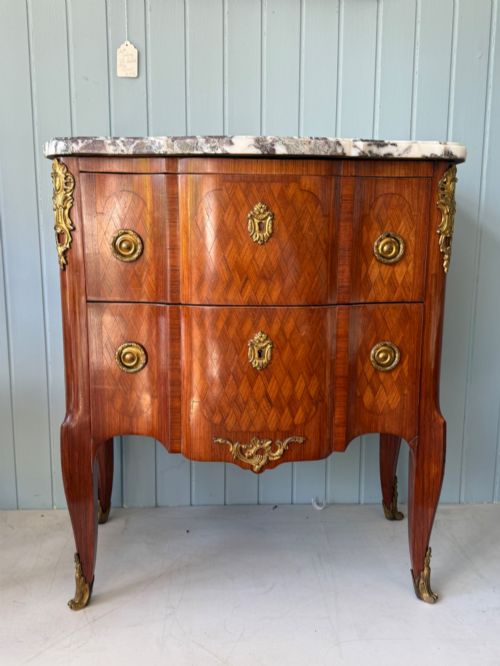
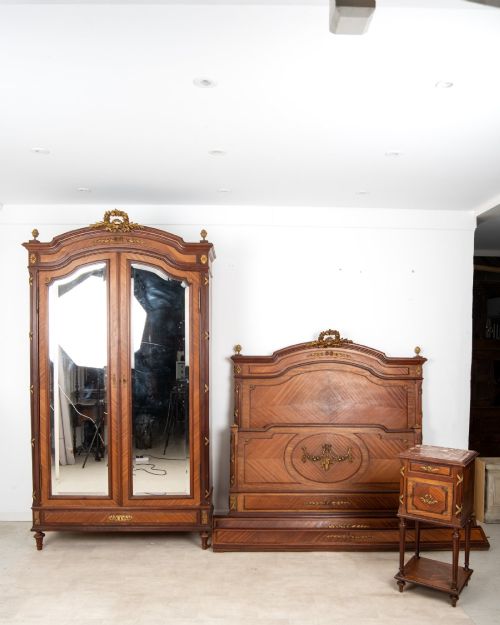
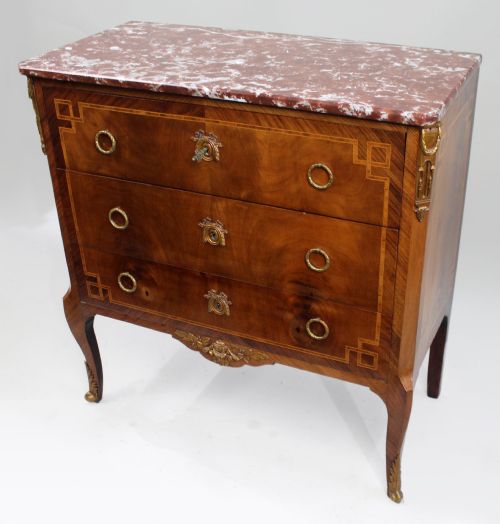
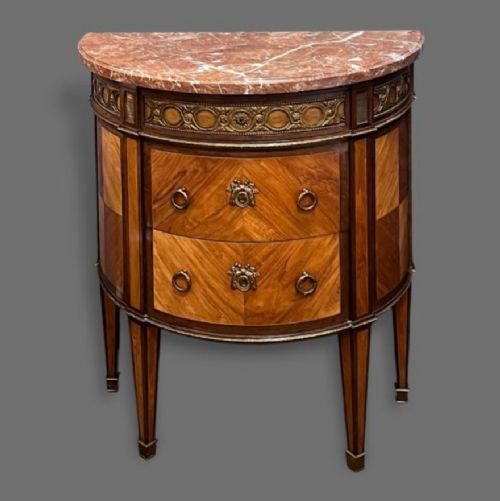
A parquetry top cabinet brings together geometric timber veneers and functional storage forms, spanning commodes, bedside tables, and side cabinets. The search phrase covers pieces predominantly originating from the nineteenth and early twentieth centuries, reflecting French revival designs such as Louis XV and Louis XVI styles.
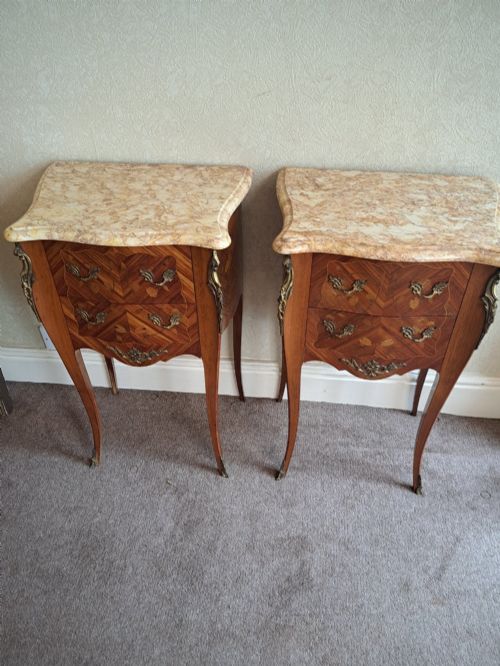
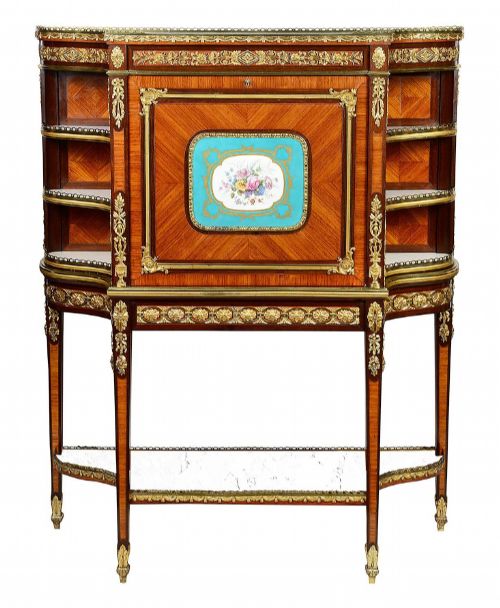
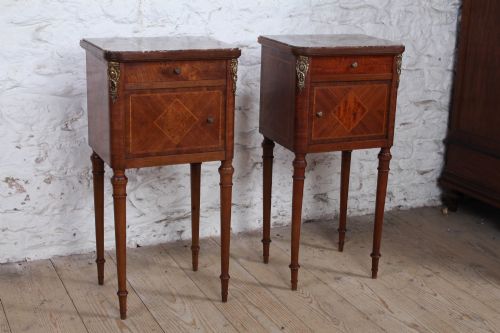
Buyers will encounter various formats on this page, ranging from matched pairs of bedside cabinets to larger credenzas, commodes, and vitrines. Many examples incorporate contrasting timber surfaces paired with stone tops and metal mounts, bridging decorative appeal with domestic utility.
How they were made
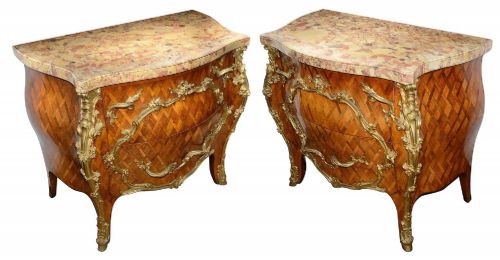
Cabinet makers utilised choice timbers such as kingwood, walnut, satinwood, and fruitwood veneers laid out in precise geometric parquetry patterns. These wooden surfaces frequently met heavy marble slabs on top, varying from white to rouge varieties.
Structural elements received decorative enhancement through cast or gilt bronze and ormolu mounts, which framed corners, drawer pulls, and aprons. Glass panels appeared on display cabinets and vitrines, secured within timber frames.
A surprise Japanese parquetry tabletop cabinet sits among the French revival commodes.
What varies in quality
Quality rests in the precision of the geometric veneer work and the crispness of the cast metal mounts. Superior pieces display seamless grain alignment across complex parquetry patterns and finely chased ormolu details rather than mass-produced castings.
The selection of materials dictates the standing of the piece, with dense exotic hardwoods like kingwood paired with thick, polished marble slabs representing higher execution levels. Construction depth, such as heavy oak carcases beneath fine veneers, separates standard production from superior cabinet work.
Blake, London·Maison Millet, Paris
The Parquetry Top Cabinet Glossary
- Parquetry
- Geometric wood mosaic work formed from small veneer pieces arranged in repeating patterns. This technique decorates tabletops and cabinet doors.
- Ormolu
- Gilded bronze mounts applied to furniture edges and feet. The technique involves mercury gilding on cast bronze.
- Commode
- A low chest of drawers or cabinet standing on legs, common in French interior design. These items frequently feature marble tops.
- Vitrine
- A glass-fronted display cabinet designed for porcelain and small objects. Frames often incorporate detailed timber veneers.
- Secrétaire abattant
- A tall writing cabinet featuring a drop-down fall front that conceals inner compartments. These units typically combine parquetry surfaces with marble tops.
Parquetry Top Cabinet: Frequently Asked Questions
What periods do these cabinets come from?
The inventory spans the nineteenth and early twentieth centuries, encompassing the 1800s up through the 1930s. Many pieces reflect revival aesthetics that drew inspiration from earlier French court furniture.
Craftsmen during this span utilised traditional veneering methods alongside contemporary workshop practices, creating both matched pairs of bedside cabinets and larger freestanding commodes.
How do I identify Louis XV and Louis XVI styles?
Louis XV pieces typically feature curved serpentine lines, cabriole legs, and asymmetrical ornamentation. The overall aesthetic prioritises flowing contours and floral marquetry.
Louis XVI design shifts toward straight lines, symmetrical geometry, and neoclassical restraint. These items often display fluted columns and rectangular parquetry panels beneath marble surfaces.
What maintenance do marble tops require?
Marble surfaces benefit from regular wiping with a soft, damp cloth and neutral soap. Avoid acidic cleaners that etch the polished stone.
Applying a specialist stone wax helps protect the surface from moisture rings and daily wear while preserving the natural grain of the material.
Where were these cabinets used in historical homes?
Bedside cabinets and Chevets found placement in sleeping quarters to hold small personal items. Larger commodes and sideboards served main entertaining rooms.
Vitrine cabinets and display pieces occupied salons and drawing rooms, housing collections of porcelain and decorative objects behind glass panels.