


Parquetry Accent Table
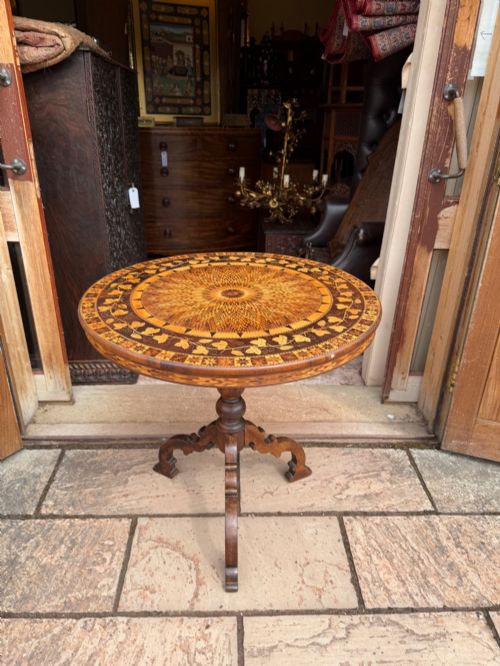
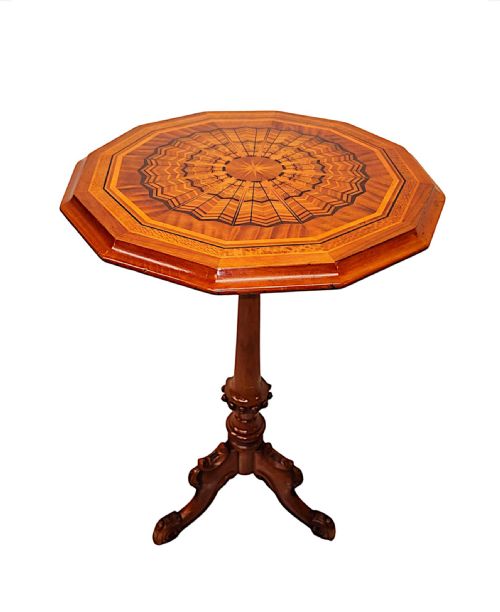
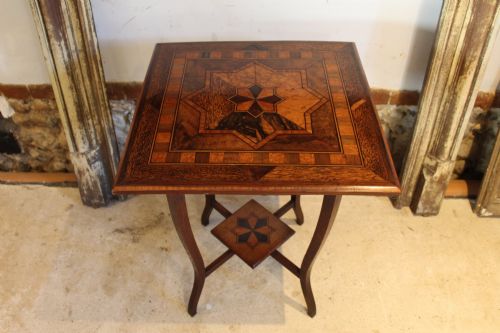
A parquetry accent table brings geometric timber work and surface depth into a room, offering a small surface designed for daily use.
Parquetry Accent Table
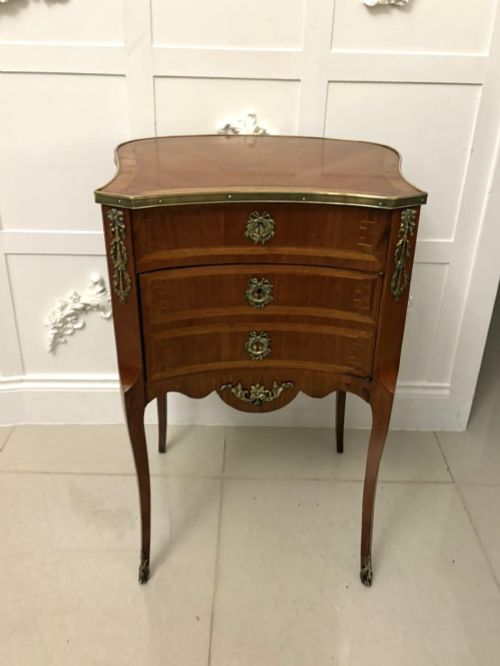
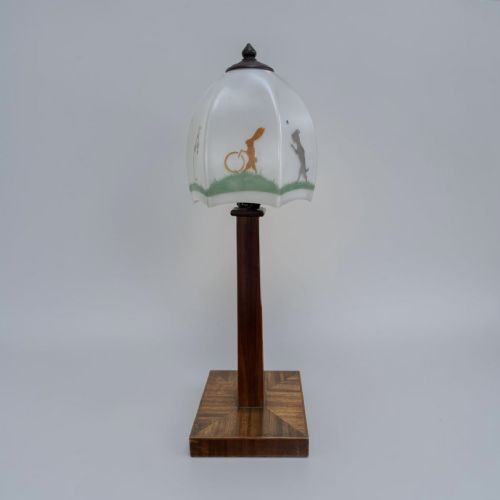
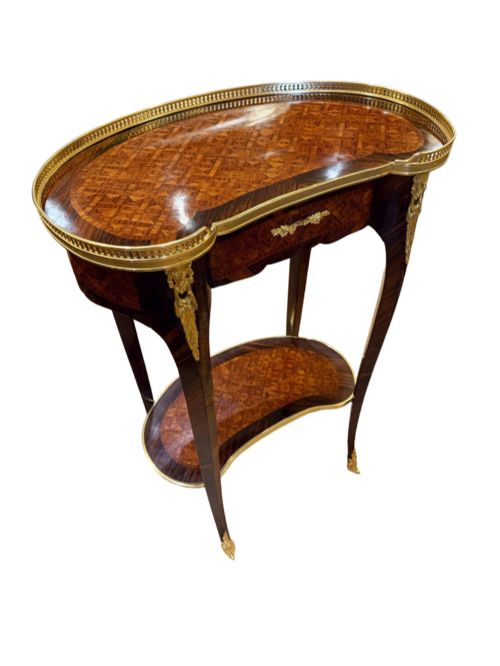
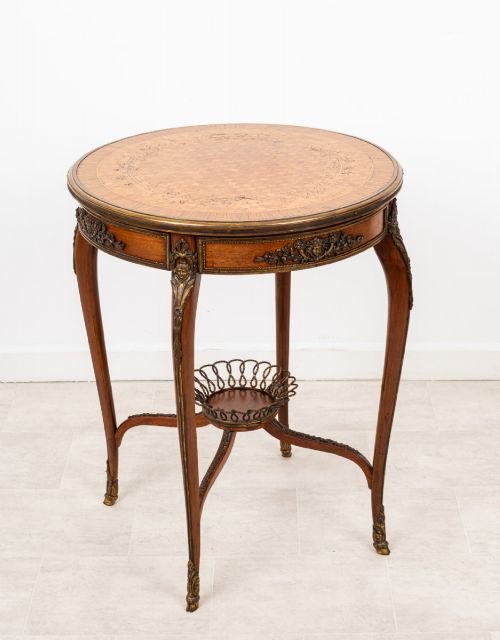
A parquetry accent table combines geometric wood veneers with compact proportions designed to sit beside seating or in small spaces. These pieces appear in forms such as occasional tables, wine tables, and lamp tables.
The selections span periods from the seventeenth century through the Victorian era and into the early twentieth century. French revival styles and specimen wood constructions dominate the available pieces.
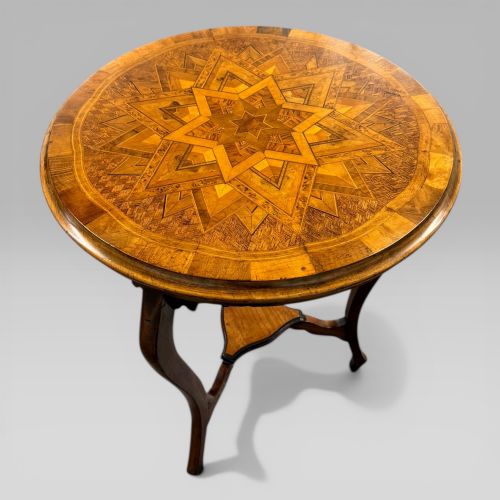
Makers and workshops across Europe and the colonies produced these surfaces using native and exotic timbers arranged in repeating patterns. Buyers encounter everything from kidney-shaped occasional tables to hexagonal specimen wood surfaces.
Materials and construction methods
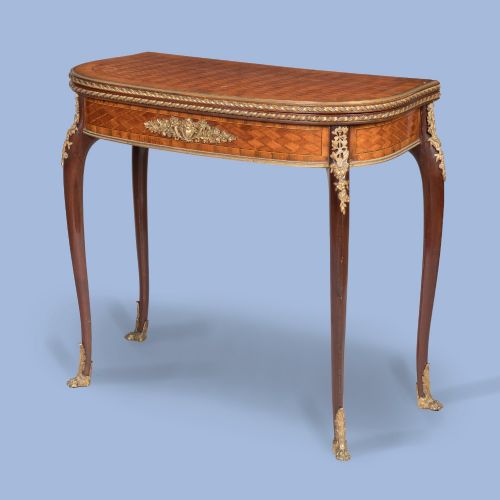
Craftsmen applied thin veneers of kingwood, rosewood, satinwood, and walnut onto firmer foundational timbers like oak or mahogany. These woods were cut into precise geometric tiles to form the characteristic parquetry surface patterns.
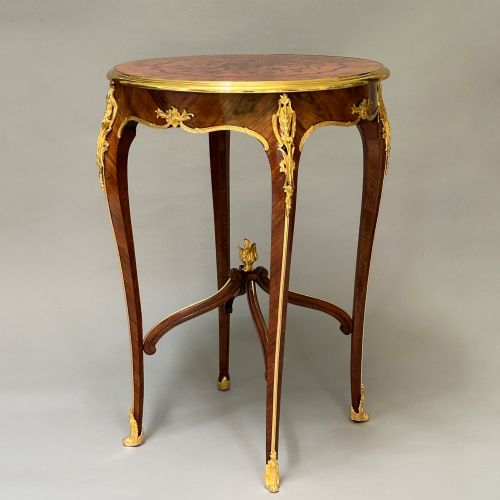
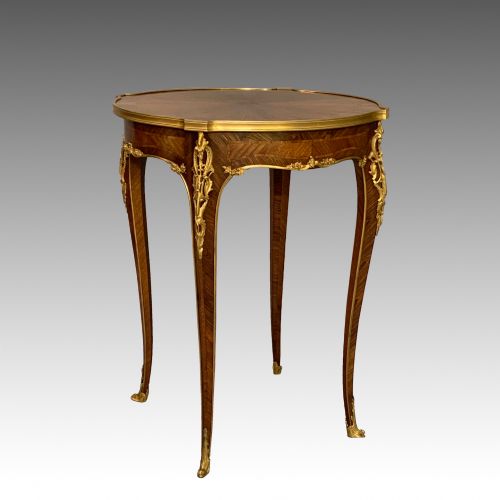
Metal components such as brass mounts, ormolu, and gilt-metal framing were added to edges and legs to accent the timber work. Marble tops also appear on specific circular forms.
Joinery techniques varied from traditional frame and panel construction to pedestal bases and fitted tripod legs supporting the veneered tops.
Some nineteenth-century makers utilised whatever exotic timber was on hand, turning distant flora into sunbursts.
Distinguishing quality in timber and mountings
The precision of the veneer cutting and the tightness of the geometric joins dictate the structural integrity of the surface. Higher standard pieces maintain flush timber joints without gaps or warping across the patterned top.
The choice of secondary woods and the presence of cast ormolu mounts rather than plain brass distinguish workshop output. Rich combinations of contrasting timbers like kingwood and satinwood indicate greater material investment.
Signed works or pieces attributed to known cabinetmakers demonstrate superior execution in both the carcass construction and the complexity of the parquetry layout.
Joseph-Emmanuel Zwiener·Gillows·François Linke·Anton Seuffert·A Hugnet Paris·Collingson & Lock
The Parquetry Accent Table Glossary
- Parquetry
- A geometric mosaic of wood veneers arranged in repeating patterns such as cubes, triangles, or squares. It differs from marquetry by using strict geometric shapes rather than pictorial designs.
- Ormolu
- Gilded bronze mounts applied to the feet, legs, or aprons of tables to provide decorative contrast and protect vulnerable edges. The technique involves applying a gold amalgam to cast bronze.
- Guéridon
- A small French occasional table supported by one or more central columns or pedestals. These tables often feature circular tops of marble or inlaid wood.
- Specimen wood
- Furniture tops constructed from a wide variety of different native and exotic timbers, often arranged to display contrasting natural colours and grain patterns. These pieces frequently originate from specific regions like Sorrento or New Zealand.
Parquetry Accent Table: Frequently Asked Questions
What is a parquetry accent table?
A parquetry accent table is a small occasional, lamp, or side table featuring a geometric wood veneer top. These pieces serve functional roles beside chairs or in hallways while displaying intricate timber patterns.
They appear in various historic styles, particularly French revival designs from the nineteenth century, utilising materials like kingwood, rosewood, and walnut.
How do I care for a veneered table?
Veneered surfaces require protection from direct sunlight, excessive heat, and moisture to prevent the wood from drying or the glue from failing. Regular dusting with a soft, dry cloth maintains the finish without introducing harsh chemicals.
Applying a traditional wax polish occasionally helps nourish the timber and protects the historic surface from minor scuffs.
Are these tables sturdy enough for daily use?
Most occasional and side tables from the Victorian and nineteenth-century periods were built for practical domestic use, holding lamps, books, or drinks. Their structural stability depends on the soundness of the original joinery and the base construction.
Lighter tripod or pedestal forms benefit from placement in low-traffic areas to avoid accidental tipping.
How do I tell parquetry from marquetry?
Parquetry relies strictly on geometric shapes like squares, cubes, and triangles to form repeating abstract patterns across the timber surface. It creates an architectural layout using the natural grain and colour of different woods.
Marquetry, by contrast, uses cut veneers to form pictorial scenes, scrolls, or floral motifs rather than geometric tessellations.