


Parian Marble Porcelain Figure
A parian marble porcelain figure offers the smooth, matt finish of carved marble in unglazed ceramic, bringing nineteenth-century classical subjects straight to the mantelpiece.
Parian Marble Porcelain Figure
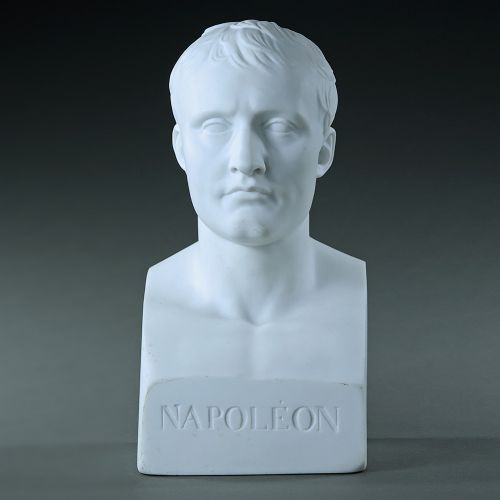
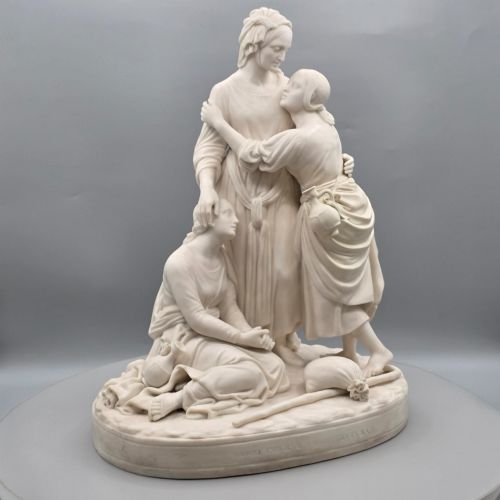
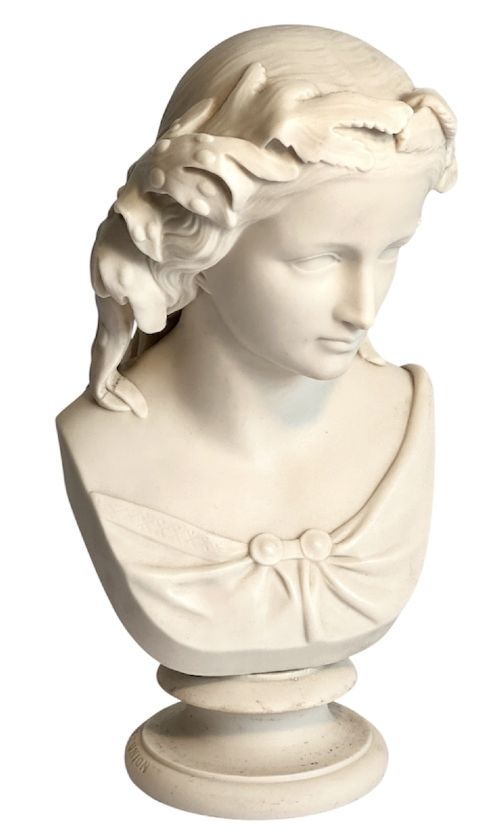
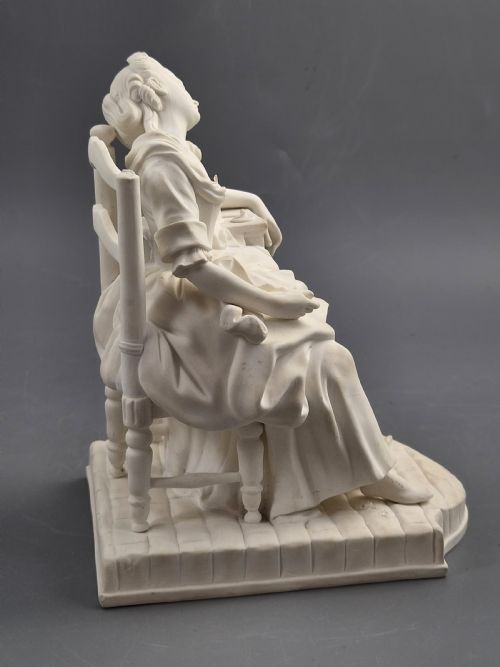
A parian marble porcelain figure represents the nineteenth-century taste for classical and literary subjects rendered in unglazed ceramic. These sculptural pieces take the form of individual statues, portrait busts, and figurative groups depicting figures from literature and history.
The versions most commonly met on this page date from the Victorian period, spanning the mid-nineteenth century up to nineteen hundred. English potteries produced these works to imitate carved marble at a time when neoclassical and Victorian classicism dominated interior decoration.
Makers often drew inspiration from classical mythology, historical narratives, and contemporary sculpture exhibitions. Buyers find everything from single statuettes of girls with baskets to large named groups depicting literary scenes.
Materials and production methods
These pieces utilise parian porcelain, also recorded as bisque or biscuit porcelain, which is an unglazed ceramic body developed in the nineteenth century. The formulation allows the fired material to retain a fine-grained, smooth texture that closely resembles white marble.
Moulds captured intricate details from original sculptures, enabling potteries to produce statues and busts with crisp drapery and facial expressions. Potteries fired the ceramic at high temperatures to achieve this durable, matt finish without the need for traditional glossy glazes.
Nineteenth-century makers thoughtfully gave miniature literary heroes and resting soldiers permanent residence on Victorian mantelpieces.
Assessing quality in nineteenth-century sculpture
The complexity of the subject also defines the tier of the piece. Large figurative groups with multiple characters demand greater technical skill in firing and assembly than single standing figures or simple portrait busts.
Minton·Copeland·Worcester
The Parian Marble Porcelain Figure Glossary
- Parian ware
- An unglazed ceramic material developed in the nineteenth century to imitate carved marble. It fires to a smooth, matt white finish.
- Bisque porcelain
- Unglazed ceramic body fired once or twice to create a porous, matt surface. It is identical to biscuit porcelain.
- Neoclassical
- A style inspired by the art and culture of classical antiquity. It emphasises proportion, classical drapery, and mythological subjects.
- Statuary figure
- A sculptural ceramic piece modelled in the round. These works replicate full-scale marble statues for domestic interiors.
- Bust
- A sculpted representation of a person's head, shoulders, and upper chest. In this material, portrait busts record historical and literary figures.
Parian Marble Porcelain Figure: Frequently Asked Questions
What is parian ware?
Parian ware is a type of unglazed white porcelain developed in Victorian England to imitate carved marble. It allowed manufacturers to produce affordable domestic sculptures with a fine, matt surface texture.
Potteries used this material extensively for busts, statuettes, and groups depicting classical and literary subjects. The name derives from Parian marble quarried on the Greek island of Paros.
How do I clean a parian figure?
Cleaning unglazed ceramic requires care because the porous surface absorbs dust and oils easily. A soft dry brush or a slightly damp cloth usually removes surface grime without damaging the detail.
Avoid using harsh chemical cleaners or soaking the piece in water. Gentle dusting preserves the dry, marble-like finish characteristic of these nineteenth-century sculptures.
Are all white ceramic figures parian?
Not all white ceramic figures are parian ware, though many nineteenth-century examples share a similar appearance. Biscuit and bisque porcelain also present an unglazed surface but often feature different clay compositions and firing temperatures.
Parian porcelain specifically contains a high proportion of feldspar, which melts during firing to give the body its characteristic semi-translucent, marble-like quality. Examining the weight, texture, and marks helps distinguish parian from standard earthenware or bone china.
When were these figures made?
The majority of these figures date from the Victorian era, specifically the mid-to-late nineteenth century. This period saw the height of parian porcelain production in English potteries responding to a demand for classical art in the home.
Production continued into the early twentieth century, though nineteenth-century examples remain the most commonly encountered on the market. Maker marks and registry dates often help narrow down the decade of manufacture.