
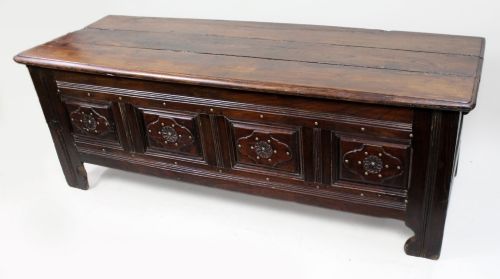
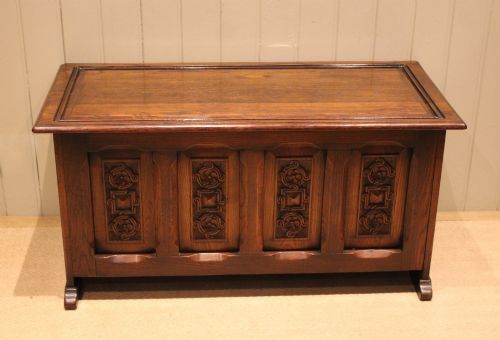
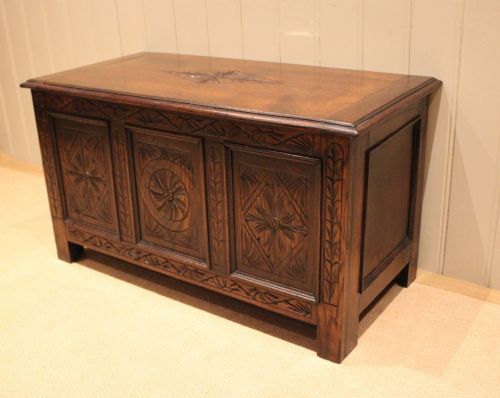
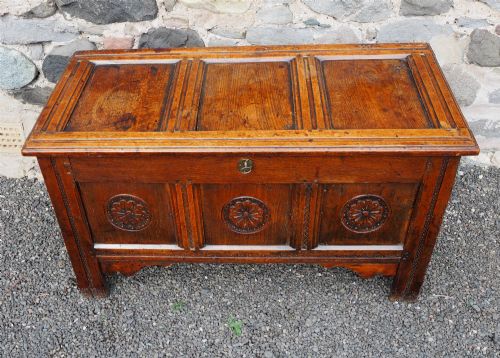
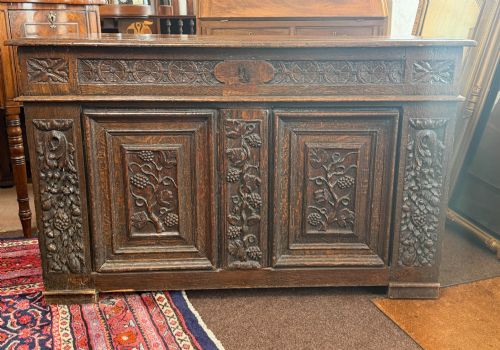
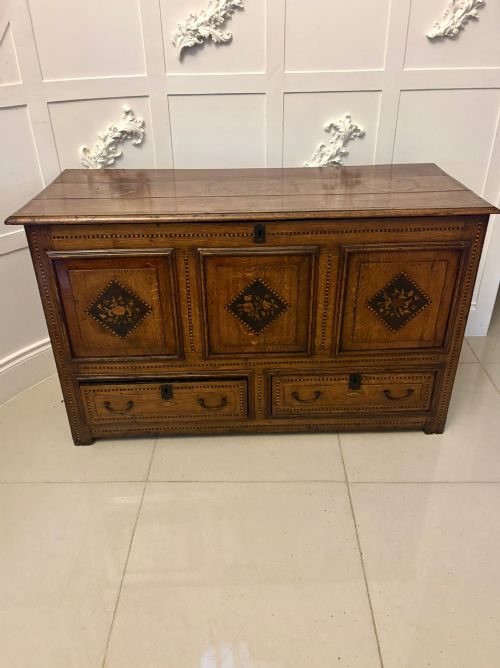
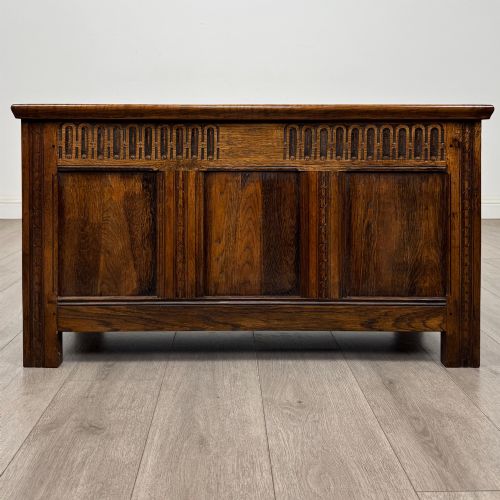


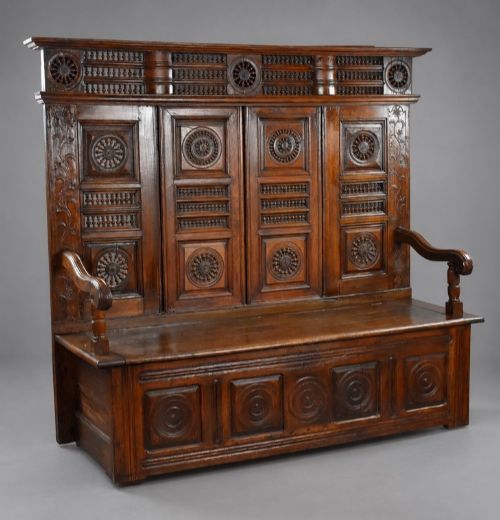
Panelled Oak Storage Coffer
A panelled oak storage coffer brings robust historic utility into a modern interior, offering deep practical storage alongside centuries of tactile character.
Panelled Oak Storage Coffer
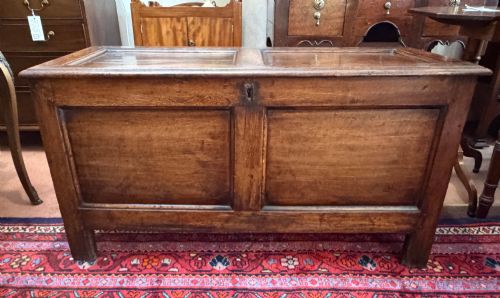
When you search for a panelled oak storage coffer, you encounter sturdy timber receptacles built to house domestic goods across several centuries. The selection spans the sixteenth, seventeenth, and eighteenth centuries, alongside later nineteenth-century pieces and revival works.
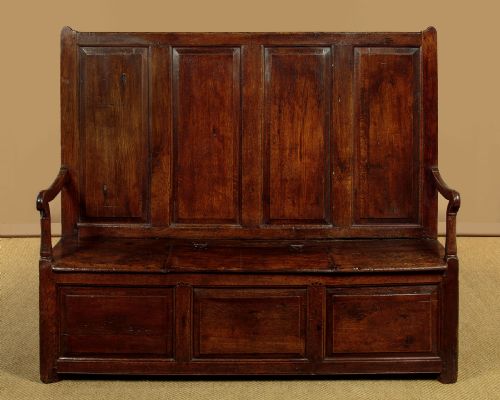
The dominant form on this page is the traditional oak coffer or mule chest, occasionally taking the shape of a box settle or small-proportioned storage box. These items hail from English, Welsh, French, and provincial origins, reflecting diverse regional vernacular designs.
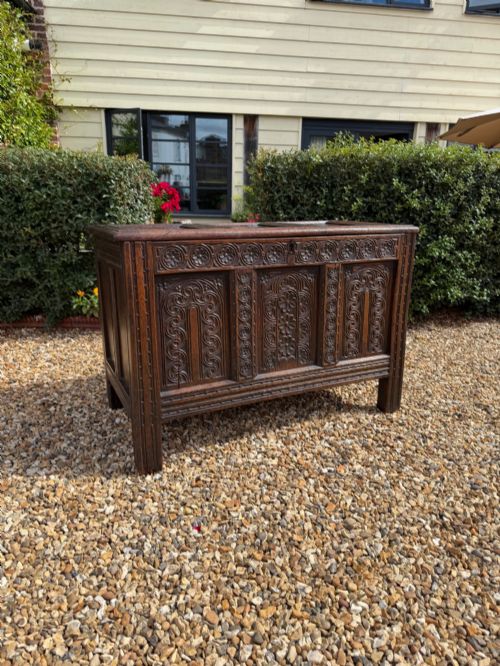
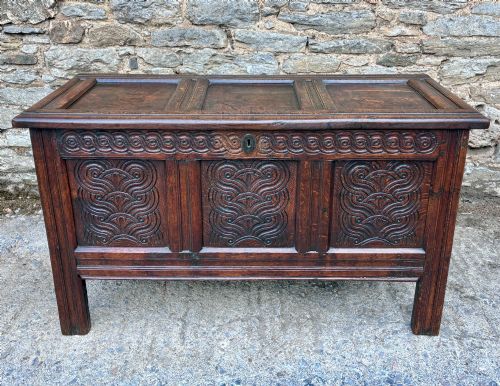
Buyers meet examples ranging from plain seventeenth-century board-and-panel constructions to carved eighteenth-century Georgian specimens featuring marquetry inlay. Pieces vary from large country house trunks down to compact diminutive boxes.
How they were made
Joiners constructed these objects predominantly from solid oak, sometimes combining ash or pine for secondary framing and internal elements. Wood inlay, marquetry inlay, and ebonised wood details appear on select decorative examples.
The primary structural technique relies on frame-and-panel joinery, which accommodates the natural expansion and contraction of timber over decades. Smiths provided functional hardware including iron and brass hinges, locks, and brackets to secure the lids.
Some seventeenth-century coffers retain secret interior compartments once utilised to hide coinage and family documents from unwelcome visitors.
What varies in quality
Quality rests upon the crispness of hand-carved ornamentation and the integrity of the original frame-and-panel construction. Superior examples retain their original timber surfaces, possessing a deep historic patina developed through generations of use.
Proportion and regional character dictate desirability, with small proportions and documented Welsh or French vernacular traits commanding strong attention. Later twentieth-century revival items differ markedly in material depth and surface wear from genuine seventeenth-century originals.
The Panelled Oak Storage Coffer Glossary
- Panelled coffer
- A wooden storage chest constructed with vertical and horizontal framing members enclosing thinner central panels. This method prevents the timber from warping.
- Mule chest
- A storage chest featuring one or more drawers beneath the main internal compartment. It bridges the evolution between a standard coffer and a chest of drawers.
- Coffer bach
- A small Welsh storage chest or box, translated literally as little coffer. These vernacular pieces were often made as marriage gifts.
- Marquetry inlay
- Decorative woodwork where pieces of contrasting veneer are fitted into a wooden panel to form intricate patterns. It appears on select high-status seventeenth-century examples.
- Box settle
- A high-backed wooden bench with a hinged seat that lifts to reveal storage space underneath. Several listed items combine this seating form with coffer construction.
Panelled Oak Storage Coffer: Frequently Asked Questions
What is a panelled oak storage coffer used for?
These pieces served historically to store household textiles, documents, and valuables securely above damp floors. Today, they function as practical living room or bedroom storage units that double as coffee tables or benches.
Their robust construction allows them to endure daily use while concealing modern clutter effectively.
How can I tell a seventeenth-century coffer from a later revival piece?
Seventeenth-century originals display authentic hand-tool marks, pegged frame joinery, and a deep wax patina built over hundreds of years. The timber shrinks and settles unevenly along the grain over time.
Later nineteenth- and twentieth-century revival pieces often exhibit more uniform machine-sawning, standardised fixings, and cleaner internal surfaces without the same depth of wear.
Where were these coffers originally made?
The listings include pieces originating from English workshops, Welsh vernacular makers, and French provincial regions. Each area imparted distinct regional carving motifs and structural proportions to the furniture.
Welsh examples often display specific local framing techniques, whereas French pieces incorporate continental mouldings and panel arrangements.
How do I care for an antique oak coffer?
Keep the timber healthy by applying traditional beeswax periodically to nourish the dry wood. Avoid placing the coffer near direct heat sources or in areas with fluctuating humidity to prevent splitting.
Gentle dusting with a soft cloth preserves the historic surface finish and protects the natural patina.