
Paired Bedside Tables
Paired bedside tables offer symmetry by the mattress, bringing balance and practical surface space to a bedroom through traditional forms.
Paired Bedside Tables
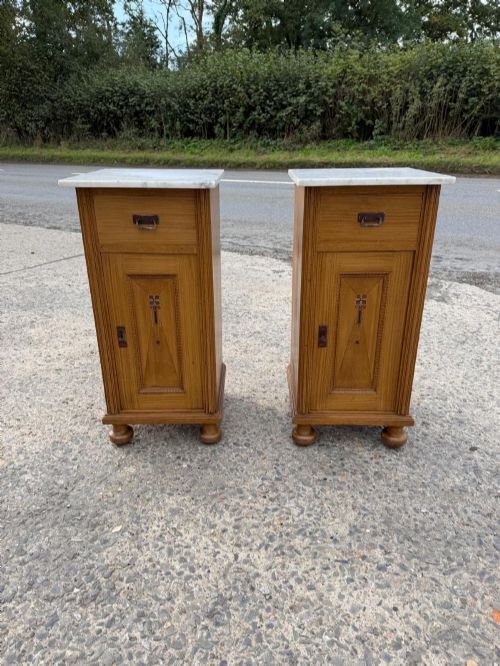
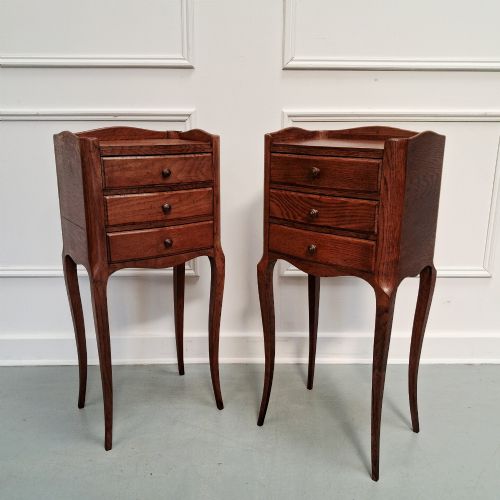
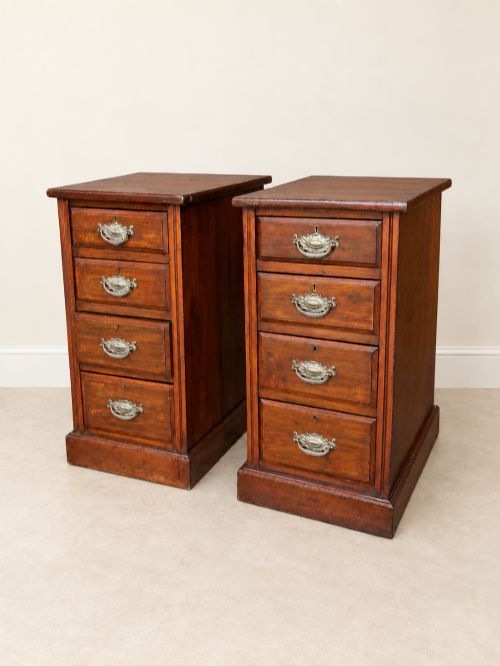
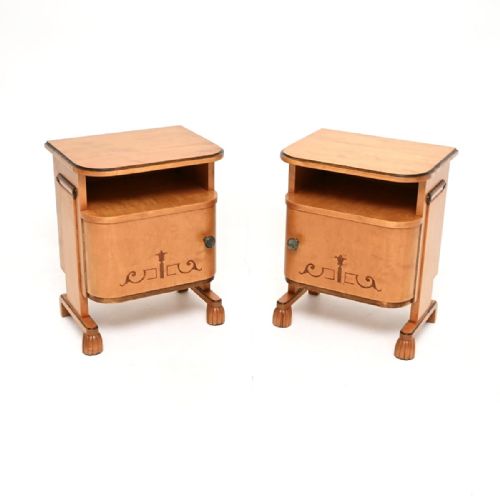
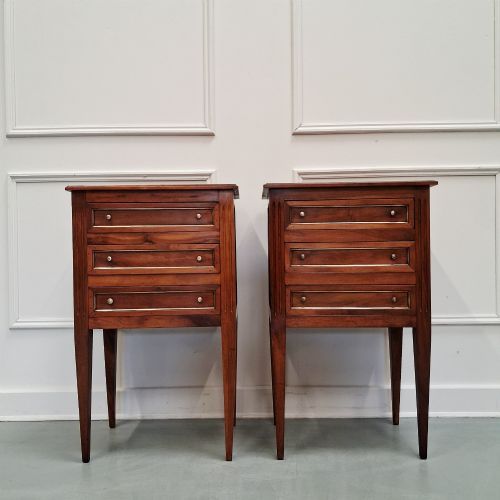
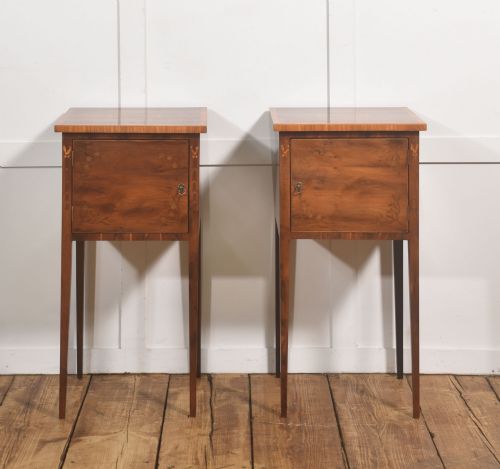
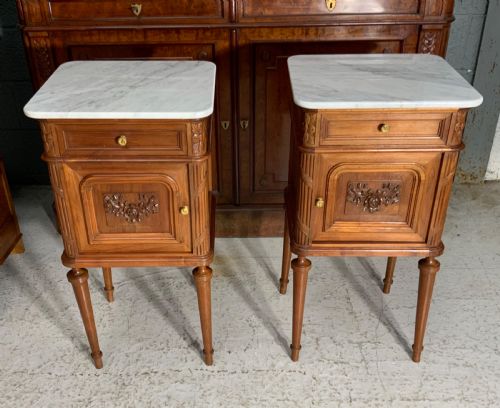
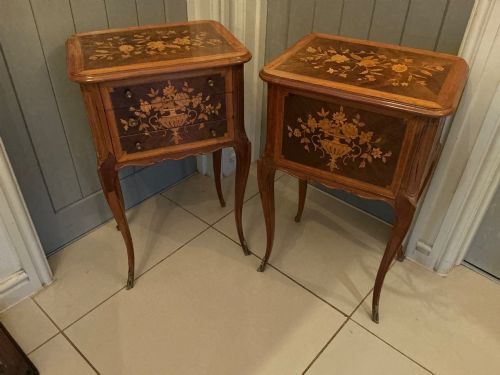
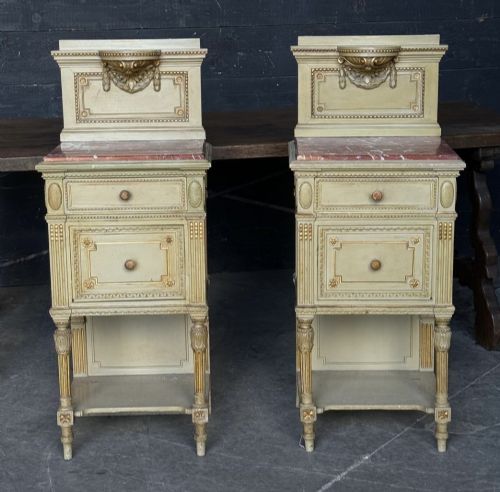
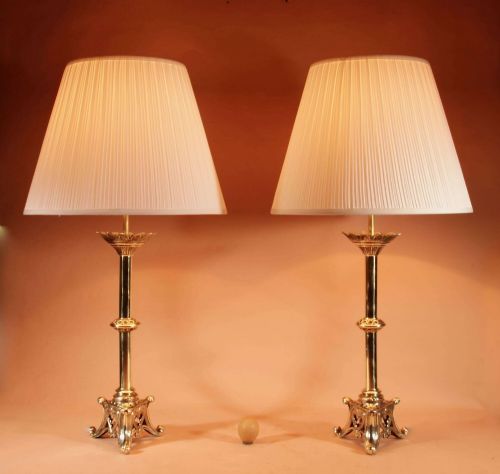
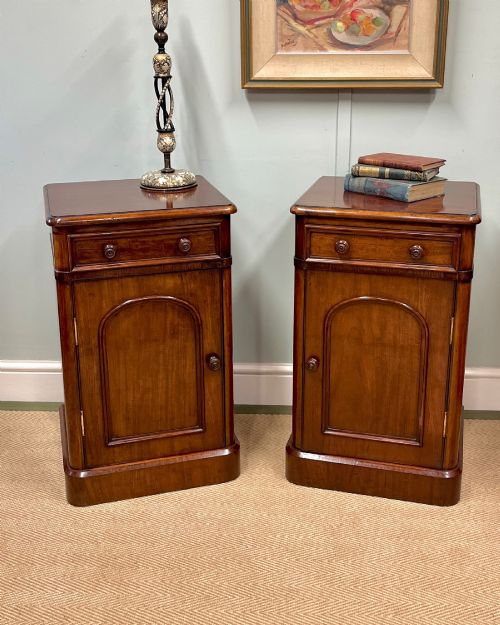
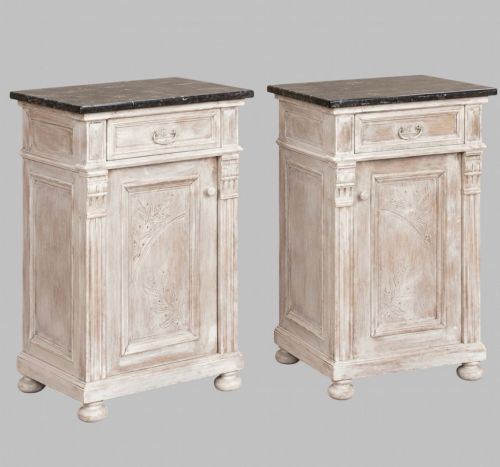
Paired bedside tables comprise matching twin pieces designed to sit beside a bed, taking the form of bedside cabinets, chests of drawers, cupboards, and open side tables. These furnishings appear across various historical periods, with notable representation from the nineteenth century, the Edwardian era, and the nineteen-thirties.
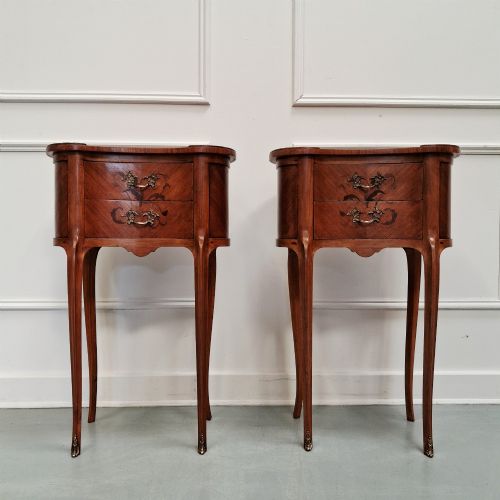
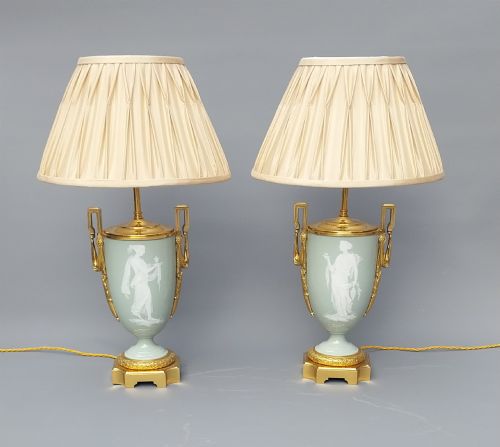
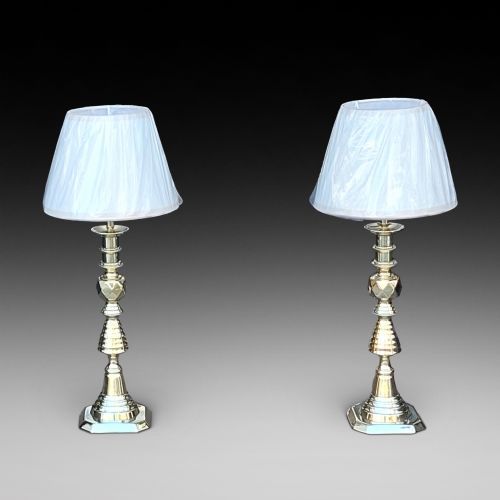
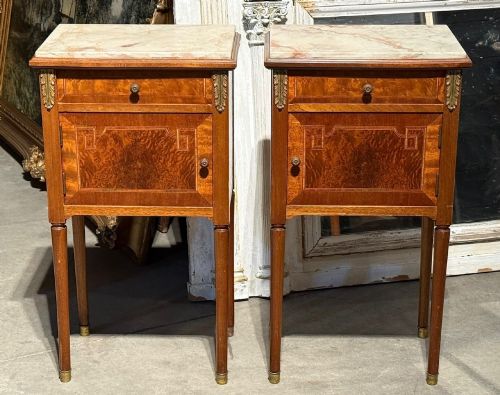
The selection frequently includes continental pieces, particularly French designs incorporating marble tops and marquetry inlay alongside English mahogany and walnut furniture. Alongside low cabinetry, the inventory includes related lamp tables and lighting pairs styled as candlesticks and decorative lamps.
How they were made
Cabinet makers utilised dense hardwoods such as mahogany, walnut, rosewood, and satinwood, frequently employing marquetry to create patterned veneers on the exterior surfaces. Structural stability relied on traditional joinery methods suited to smaller case goods.
Material combinations often incorporate polished marble slabs fitted to the top surfaces of French cabinets, alongside cast brass, gilt bronze, and ormolu mounts used for handles, feet, and decorative trims.
Several pairs include hidden compartments designed long before the digital age for nocturnal essentials.
What varies in quality
Quality rests upon the selection of timber veneers and the precision of the marquetry work, where intricate floral or geometric patterns demonstrate the maker's skill. Finer examples display superior grain matching and harmonious colour across both items in the pair.
The choice of secondary materials dictates the overall grade, seen in the thickness and veining of fitted marble tops, the weight and detail of cast bronze mounts, and the solid construction of drawer linings.
The Paired Bedside Tables Glossary
- Marquetry
- Decorative veneer work arranged in pictorial or geometric patterns using various coloured woods. This technique adorns the surfaces of many Edwardian and continental cabinets.
- Chevet
- A French term for a small bedside table or nightstand. These pieces often feature a small cupboard door and an enclosed compartment.
- Ormolu
- Gilded bronze mounts applied to furniture and lamps. The material adds metallic highlight to nineteenth-century French designs.
- Satin birch
- A pale, highly figured timber utilised in Swedish Art Deco furniture. It provides a distinct blonde surface tone.
Paired Bedside Tables: Frequently Asked Questions
How do I match these with my bed?
Consider the height of your mattress relative to the tabletop surface to ensure comfortable daily reach. Scale matters significantly in smaller rooms where compact proportions prevent visual crowding.
Matching timber tones or painted finishes with existing bedroom furniture helps maintain visual cohesion. Mixing periods can work if the wood species share similar warm undertones.
What is the difference between a cabinet and a chest?
Cabinets typically feature a panelled door enclosing a shelved interior space, whereas chests rely primarily on horizontal drawers for storage. Both formats function effectively for bedside use depending on what items require concealment.
Cabinets with doors often maintain a cleaner facade, while drawer chests allow for segmented organisation of smaller belongings. The choice depends entirely on personal storage habits.
How do I care for marble tops?
Marble surfaces require gentle cleaning with a damp cloth and neutral soap, avoiding acidic substances that can etch the polish. Using coasters prevents liquid rings from forming on porous stone.
Periodic waxing helps protect the surrounding wooden frames without affecting the stone insert. Handle heavy lamps placed on marble with care to avoid chipping the edges.
Are these pieces strictly for the bedroom?
While designed for bedside use, these compact tables adapt well as small side tables in living rooms or studies. Their twin format allows them to flank a fireplace or a sofa.
Their restrained dimensions make them useful in hallways or landings where surface space is limited. The matching nature provides balanced placement in any domestic interior.