

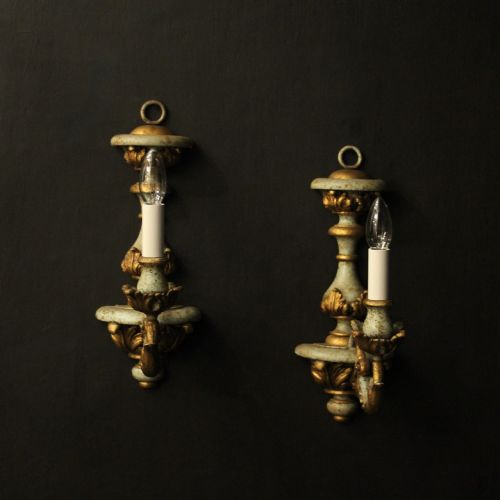
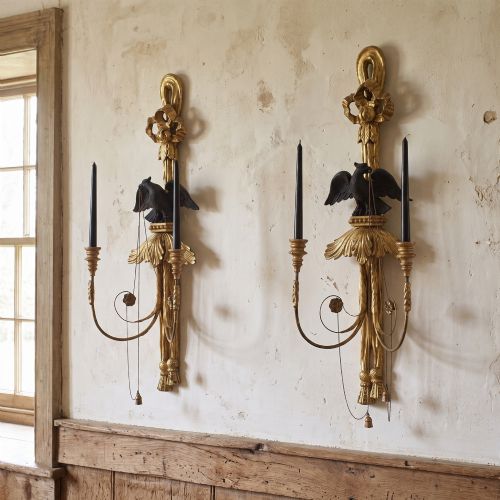


Pair Wooden Wall Appliques
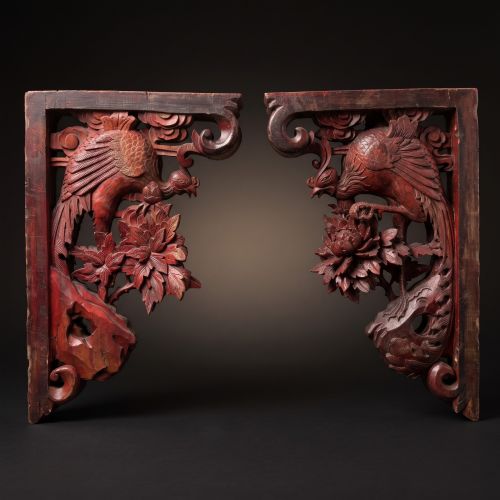
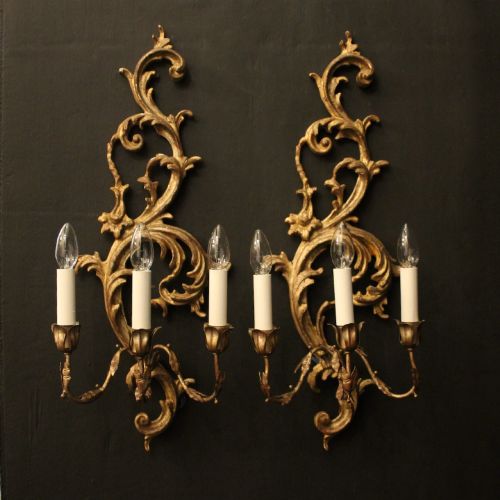
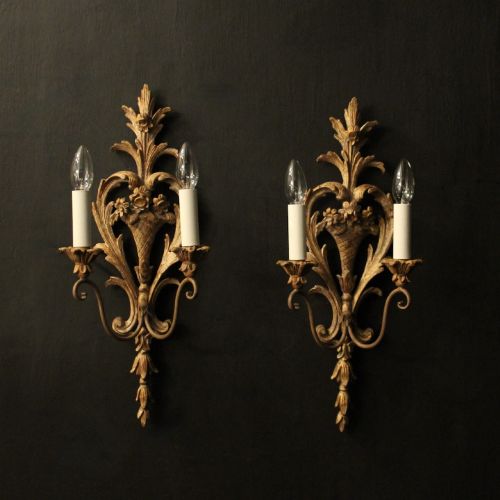
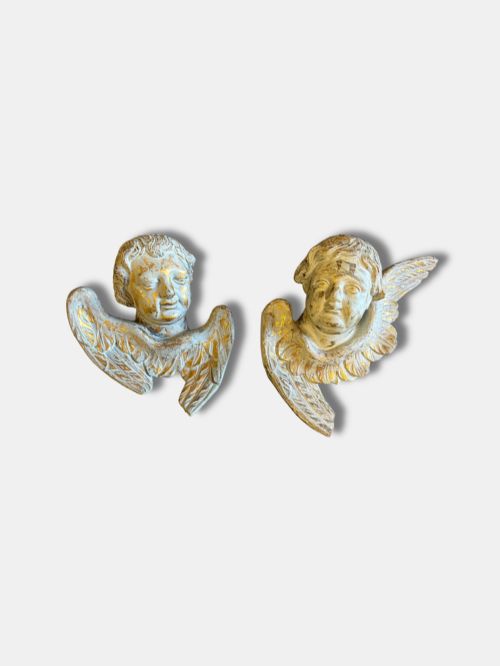
These pair wooden wall appliques bring historic illumination and carved presence to a room, offering matched symmetry for either side of a mirror or mantel.
Pair Wooden Wall Appliques
When you search for pair wooden wall appliques, you encounter matched sets designed to mount directly onto vertical surfaces for lighting or architectural emphasis. The selection spans centuries of decorative craft, from eighteenth-century carvings to twentieth-century provincial revivals.
You are most likely to meet French and Italian examples featuring giltwood finishes and multiple candle arms. These twin and triple arm light fixtures sit alongside decorative wall brackets and carved term figures.
The styles draw heavily on traditional vocabularies like French Rococo, Florentine carving, and George III design. Each matched pair provides balanced visual weight when hung in symmetrical interior schemes.
How they were made
Makers shaped these fixtures primarily from solid timber foundations, utilising woods such as oak, limewood, and pine. Artisans carved the material by hand to achieve intricate acanthus leaves, architectural mouldings, and figurative elements.
Surfaces received applied gesso layers before being finished with gold leaf, silver leaf, or polychrome paint. This preparation created smooth grounds for intricate gilding and decorative colour applications.
Pair Wooden Wall Appliques Retail Price Guide 2026
Typical asking prices for pair wooden wall appliques among the pieces listed under this phrase on Sellingantiques today, from the lower quarter to the upper quarter. They describe what is for sale here now, not the wider market.
The inventory spans eighteenth-century Georgian design through to twentieth-century Florentine and French revival pieces.
What varies in quality
Depth and sharpness of the hand carving separate simpler production from superior artisan work. Crisp undercut details in the wood indicate skilled execution rather than mechanical shaping.
The preservation of original gilding and painted polychrome surfaces influences the visual integrity of each piece. Intact metal leaf and subtle ageing show how well the material has survived.
Thomas Chippendale
The Pair Wooden Wall Appliques Glossary
- Giltwood
- Wood that has been coated with thin gold leaf over a prepared gesso ground. This finish provides a luminous metallic surface that reflects candlelight.
- Gesso
- A plaster-like mixture applied to wooden carvings to create a smooth base for gilding or painting. It allows for sharp crisp details beneath the metal leaf.
- Term
- A pillar or pedestal tapering downward, frequently topped by a bust or carved figure. These architectural elements often serve as decorative wall brackets.
- Polychrome
- Painted in several different colours. This decoration appears frequently on provincial French and Italian wall lights.
Pair Wooden Wall Appliques: Frequently Asked Questions
How do I hang heavy wooden wall appliques?
Secure mounting requires locating wall studs or using heavy-duty fixings rated for the weight of carved timber and giltwood. The bracket or hanging plate on the reverse must bear the load safely.
Ensure the wall construction supports the outward leverage of extended candle arms. Professional installation is advisable for larger antique pieces.
Were these originally wired for electricity?
Most older wall appliques were designed for candles before later being adapted for electric bulbs. Converted pieces retain their original wooden channels or backplates.
Rewiring should be checked by a qualified electrician to ensure modern safety standards. The conversion preserves the decorative carved housing while providing functional light.
Can I mix different styles in a pair?
True matching pairs share identical carving styles, dimensions, and finishes designed to hang together symmetrically. Mixing distinct regional styles disrupts the visual balance.
When placing appliques flanking a mirror or fireplace, matching proportions matter as much as the decorative period. Consistency in finish maintains the historic character.