
Gilt Wood Wall Sconces
Gilt wood wall sconces bring warmth and reflective light to a room, combining carved timber and gold leaf in forms that range from simple brackets to elaborate girandoles.
Gilt Wood Wall Sconces
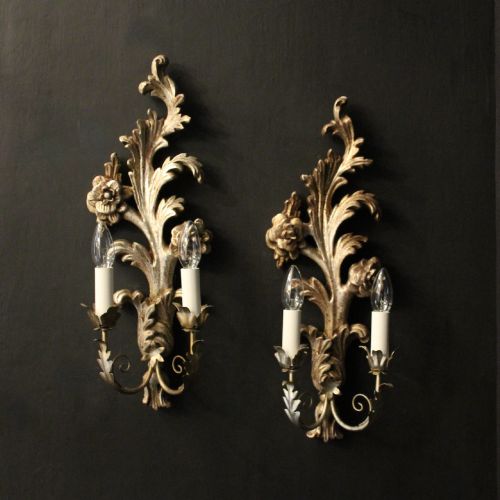
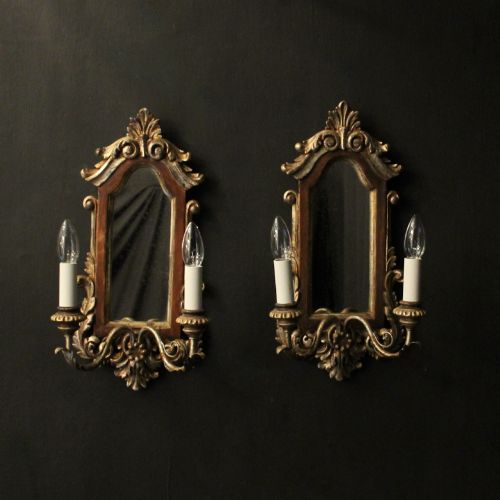
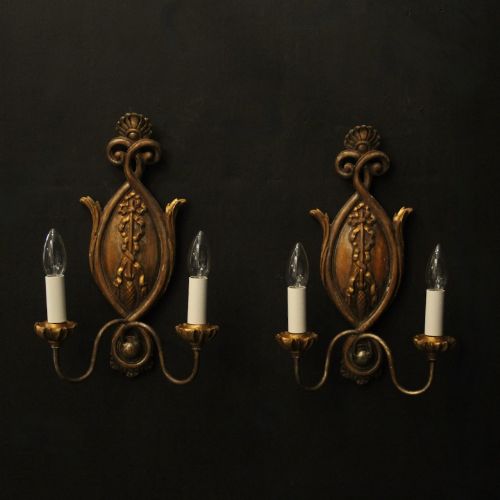
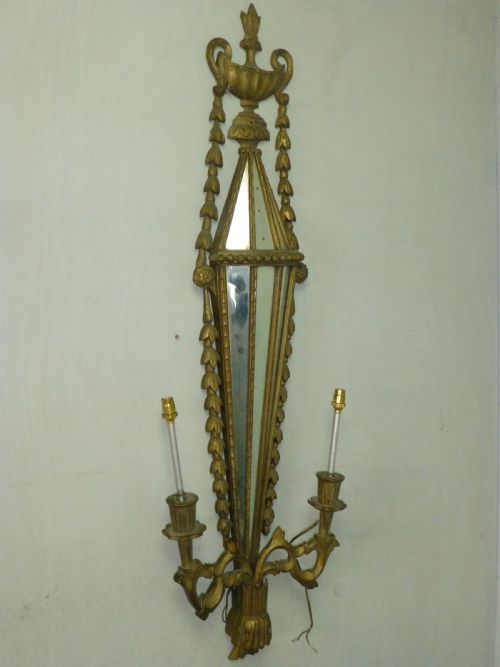
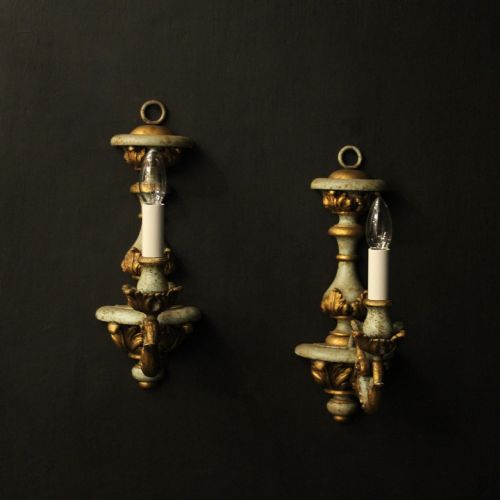
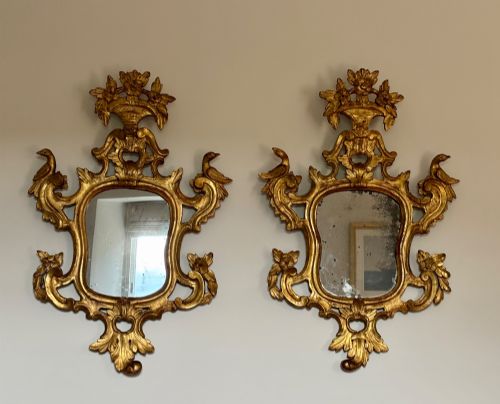
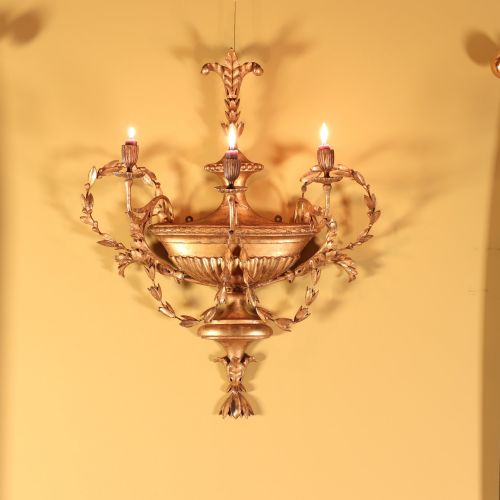
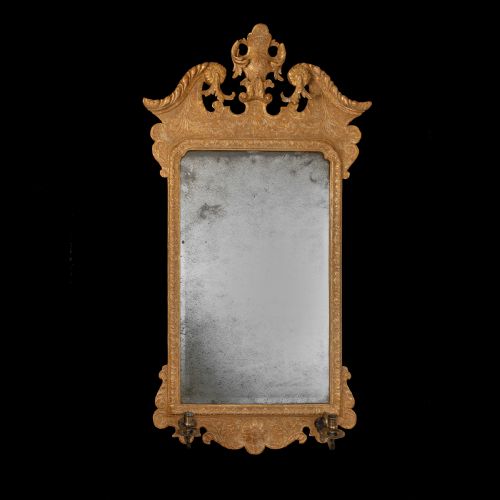
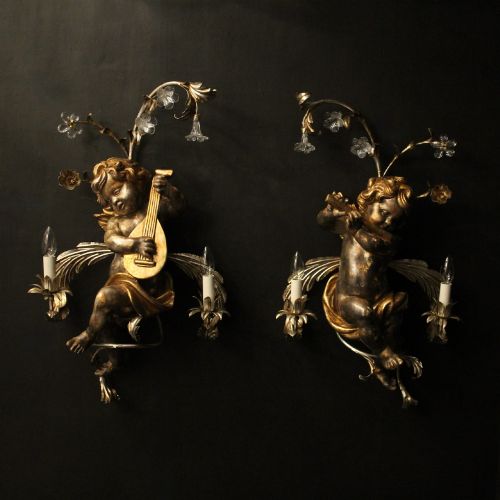
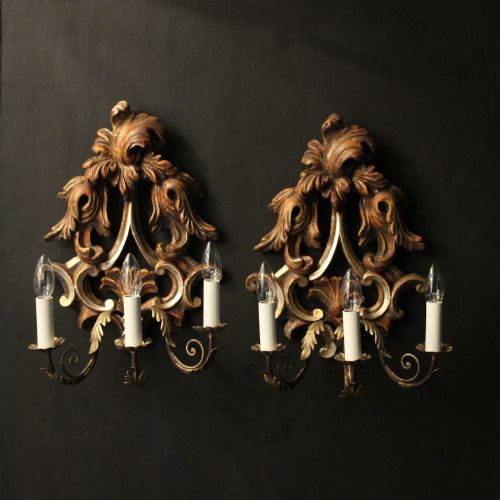
Gilt wood wall sconces encompass candle and electric light fittings, mirrors with candle arms, and carved brackets designed to mount directly onto a wall. The selection centres heavily on matched pairs originating from Italian workshops, particularly Florentine designs, alongside French and English examples.
The periods represented stretch from the eighteenth century through the Victorian era and into the early twentieth century, showing styles such as Rococo, Baroque, Neoclassical, and Florentine. Pieces take forms ranging from twin and triple arm wall lights to convex mirrors and architectural wall brackets.
How they were made
Construction relies primarily on carved wood and gesso, a plaster-like mixture applied to timber to provide a smooth base for decoration. Artisans then applied gold leaf, silver leaf, or gilt paint to the prepared surface, sometimes incorporating polychrome highlights or metal components.
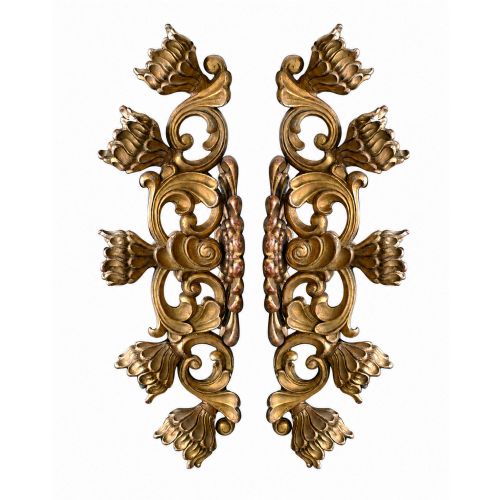
Techniques involve hand-carving the wooden structure before building up intricate ornamentation in gesso, allowing for deep relief work on frames, brackets, and arms. Glass elements such as mirror plates and Murano components integrate into the assembled fixtures.
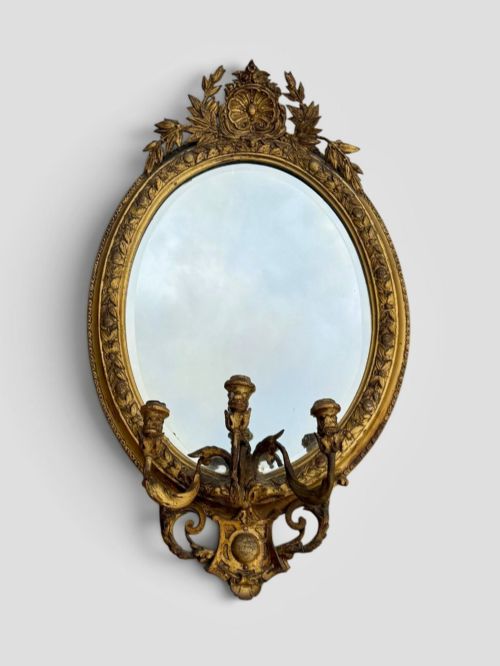
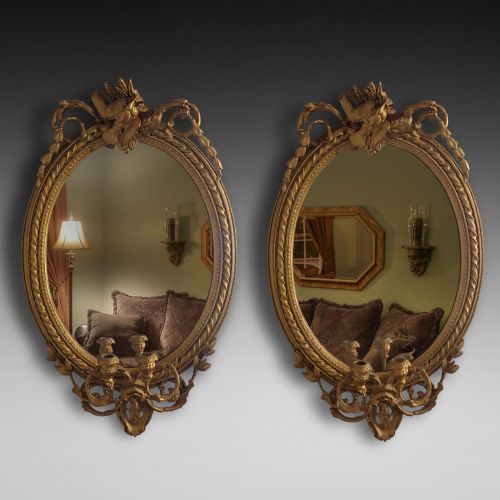
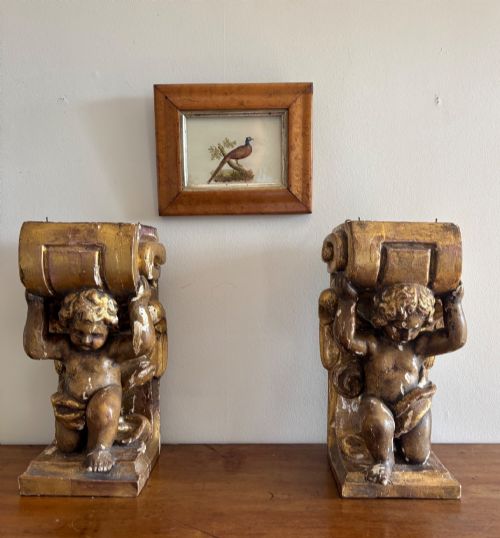
Hand-carved wooden cherubs peek out from nineteenth-century mirror frames, ready to hold up a flickering candle for eternity.
What varies in quality
Quality reveals itself in the depth and precision of the hand-carving within the wood and gesso, separating mass-produced items from finely detailed artisan pieces. Crispness of ornament, particularly on foliage and figurative elements like cherubs, indicates superior craftsmanship.
The condition of the gilding and the originality of the mirror plates or glass components influence the character of each piece. Intact gold leaf surfaces and period appropriate foxed glass plates distinguish higher-grade items from those with heavy later repainting.
Benjamin Goodison
The Gilt Wood Wall Sconces Glossary
- Giltwood
- Wood that has been coated with gold leaf or gold paint. This finish creates the characteristic reflective metallic sheen seen on antique frames and wall lights.
- Gesso
- A mixture of plaster of Paris or chalk with glue, used to coat wood before gilding. It provides a smooth ground that artisans can carve and shape into intricate relief details.
- Girandole
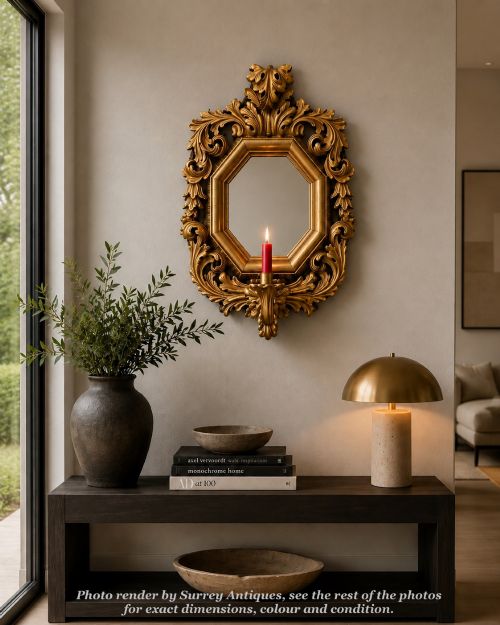
- An ornamental wall mirror with candle holders attached to the frame. The reflective glass multiplies the candlelight within the room.
- Cartouche
- An ornamental tablet or panel resembling a rolled-up piece of paper, often used as a central motif in Rococo frames and sconces.
- Polychrome
- Decorated in multiple colours. This paint technique frequently appears alongside gilding on Italian wall lights and brackets from the early twentieth century.
Gilt Wood Wall Sconces: Frequently Asked Questions
How do I light a room with wall sconces?
Wall sconces provide ambient and accent lighting rather than primary illumination. Position them at eye level or slightly higher to create balanced pools of light along hallway or living room walls.
Many antique sconces have been adapted for electricity while retaining their original candle-arm configurations. Pairing them with low-wattage bulbs preserves the soft glow intended by the original makers.
Are these sconces suitable for modern walls?
These decorative fixtures complement contemporary interiors by adding texture and historic character to plain plaster surfaces. Their carved forms and reflective gilt surfaces act as functional wall art.
Ensure that the wall structure can support the weight of carved timber and gesso fittings. Professional installation is recommended for wired electric models to meet current safety standards.
How can I tell an eighteenth-century piece apart from a later revival?
Eighteenth-century pieces display hand-carved tool marks, aged gesso shrinkage cracks, and worn gilding that reveals the reddish bole underneath. The timber choice and construction joints also offer clues to the period.
Revival pieces from the Victorian era or later often show more uniform machine assistance or heavier plaster applications. Comparing the style motifs with documented examples helps clarify the date of manufacture.
What is the difference between a sconce and a wall bracket?
A wall sconce specifically incorporates a candle holder or light fitting designed to project illumination outward. They frequently feature arms branching from a central backplate.
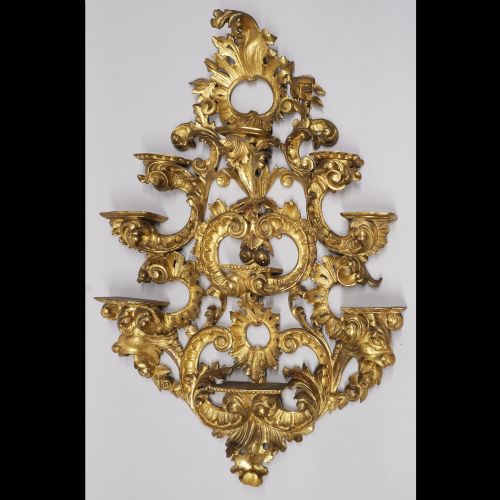
A wall bracket serves as a small ornamental shelf intended to support an object like a vase or bust rather than holding a light source. Some architectural salvage items blur these definitions through later adaptation.