



Carved Acanthus Wall Lights
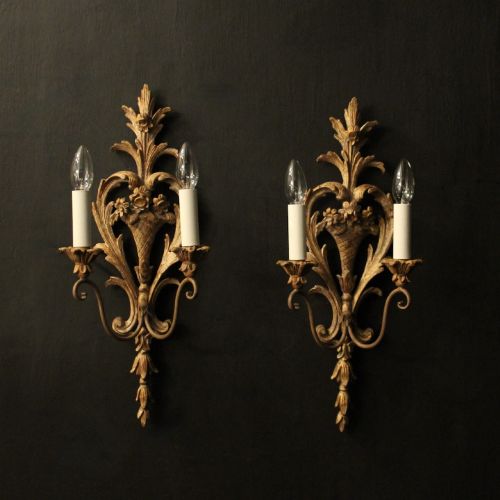
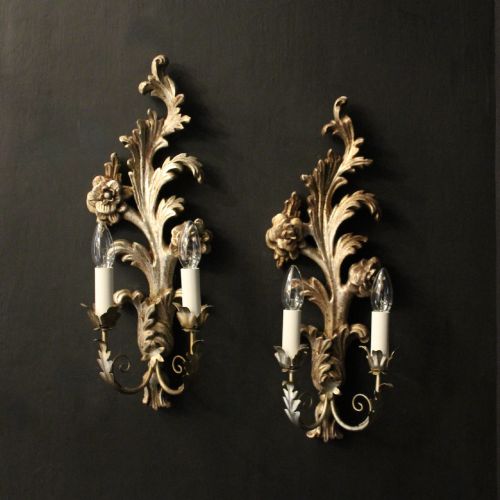
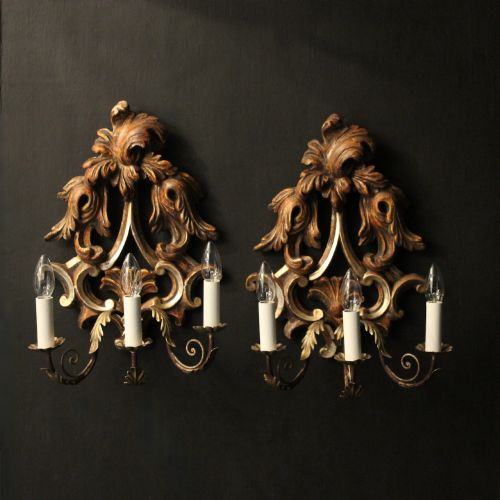
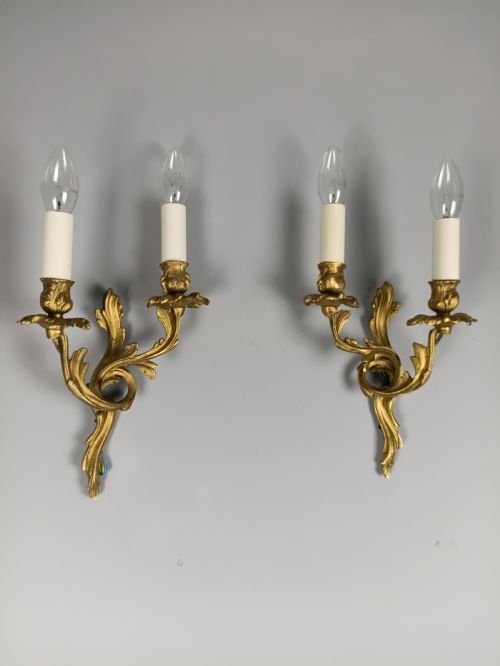
These carved acanthus wall lights bring sculptural Italian and French character to a room through traditional gilded woodwork and bronze.

Carved Acanthus Wall Lights
These carved acanthus wall lights comprise decorative wall-mounted sconces and fixtures rooted primarily in Florentine and French aesthetics. Buyers searching for carved acanthus wall lights will find pieces that draw heavily on historical styles such as Rococo, Neoclassical, and Gothic design.
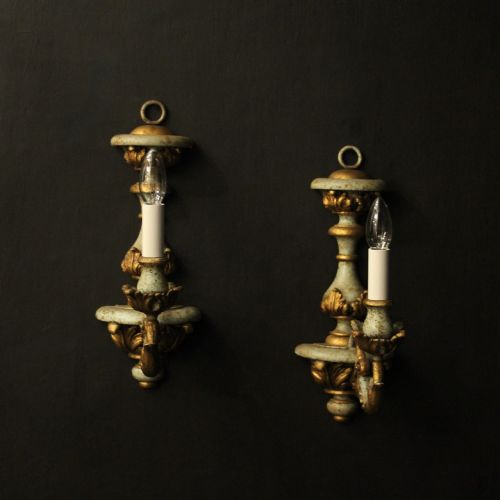
The inventory on this page is dominated by mid-twentieth-century examples from the 1920s and 1930s, alongside older nineteenth-century survivals. Most pieces appear in pairs, taking the form of twin, single, or triple arm candle sconces and electrical wall lights.
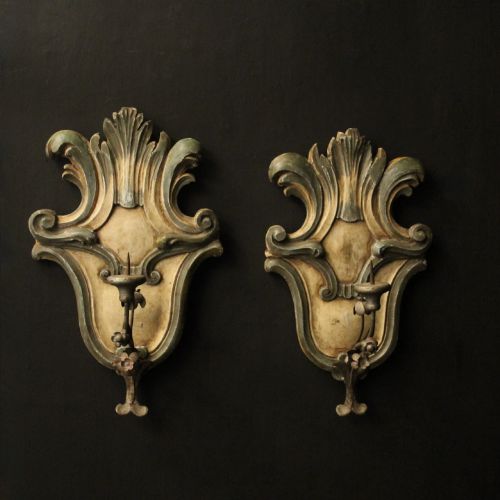
Beyond standard wall lights, the selection extends to related architectural forms including overmantel mirrors with integrated sconces and carved wooden capitals. These objects function primarily as decorative architectural illumination, using organic foliage motifs to soften vertical wall surfaces.
How they were made
Construction relies upon carved wood, gesso, and metal, often finished with layers of gold leaf, silver leaf, or polychrome paint. Artisans shaped the wooden bases by hand before applying plaster or gesso preparations to receive delicate surface tooling.
Gilding techniques involve the application of fine metallic leaf over prepared grounds, sometimes burnished to create contrasting matte and reflective areas. Bronze and brass components are incorporated in French and Italian pieces to form the structural candle arms.
Carved Acanthus Wall Lights Retail Price Guide 2026
Typical asking prices for carved acanthus wall lights among the pieces listed under this phrase on Sellingantiques today, from the lower quarter to the upper quarter. They describe what is for sale here now, not the wider market.
The listings span the nineteenth century through to 1930, uniting traditional carved wood, gesso, and metal across Italian and French origins.
What varies in quality
Quality manifests in the depth and crispness of the hand-carving upon the acanthus leaves and wooden scrolls. Finer examples display undercut foliage and sharply defined veining that retain their three-dimensional presence beneath the gilding.
The integrity of the surface finish further distinguishes the pieces, separating finely laid gold or silver leaf from heavier, less nuanced applications of paint or gesso. Balance in the proportions of the mounting arms relative to the carved backplate also determines visual success.
The Carved Acanthus Wall Lights Glossary
- Acanthus
- A classical ornamental motif derived from the Mediterranean plant of the same name, featuring deeply lobed leaves. This shape forms the primary decorative vocabulary for the carved woodwork seen across these fixtures.
- Giltwood
- Timber that has been coated with a thin layer of gold leaf over a prepared gesso base. It provides a luminous surface that catches candlelight and ambient room illumination.
- Gesso
- A plaster-like mixture applied to wood surfaces as a smooth base for gilding and paint. It allows craftsmen to model crisp secondary details before applying metal leaf.
- Pricket candle sconce
- A lighting fixture featuring a sharp metal spike upon which a candle is impaled, rather than a socket or cup. This format represents an older, traditional method of securing church and domestic tapers.
Carved Acanthus Wall Lights: Frequently Asked Questions
How do I hang heavy giltwood wall lights?
These fixtures require secure fixing directly into wall studs or through the use of appropriate heavy-duty cavity anchors. Given the weight of carved timber and gesso, professional installation ensures the backplate bears the load safely.
Positioning the sconces at eye level or slightly above prevents accidental impacts while maximising the decorative impact of the carved acanthus foliage.
Are these wall lights wired for electricity?
The inventory contains a mix of pieces originally designed for candles and those adapted for modern electrical wiring. Buyers should inspect individual listings to determine whether the fittings retain candle tubes or require electrical conversion.
Any electrical work should be carried out by a qualified professional to ensure compliance with local safety standards and compatibility with historic metal arms.
How do I clean antique gilded sconces?
Maintenance requires gentle dusting with a soft, dry brush to remove particulate matter from the recesses of the acanthus carving. Moisture and commercial chemical cleaners must be avoided entirely to prevent lifting the delicate gold leaf.
Periodic inspection by a conservator helps preserve the underlying gesso and wooden substrate against atmospheric changes.
What is the difference between Florentine and French styles here?
Florentine pieces frequently emphasise rich giltwood surfaces with exuberant Rococo scrolling and deep foliage relief. French examples in this selection often incorporate cast bronze arms alongside gilded or polychrome wooden backplates.
Both traditions utilise the acanthus motif, but French designs tend toward structured Chateau elegance while Italian pieces lean into theatrical, organic carving.