

French Bronze Wall Sconces
French bronze wall sconces bring sculptural illumination and classical design to an interior, bridging interior architecture and decorative art.
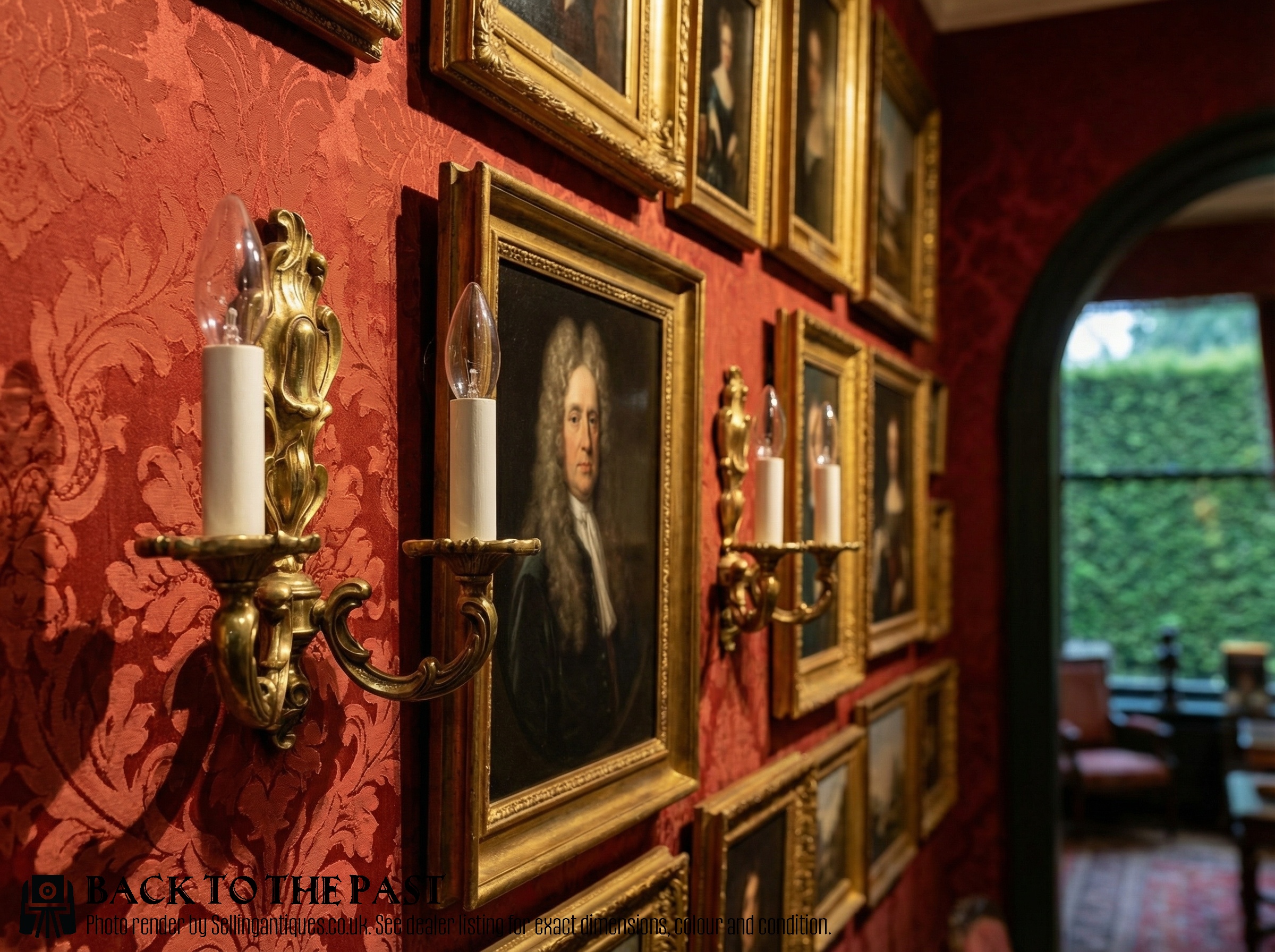
French Bronze Wall Sconces
When searching for french bronze wall sconces, buyers encounter lighting fixtures designed to mount directly onto vertical surfaces, providing ambient candle or electric illumination. The selection spans pieces originating from the eighteenth century through to the early twentieth century, reflecting enduring historical design vocabularies.
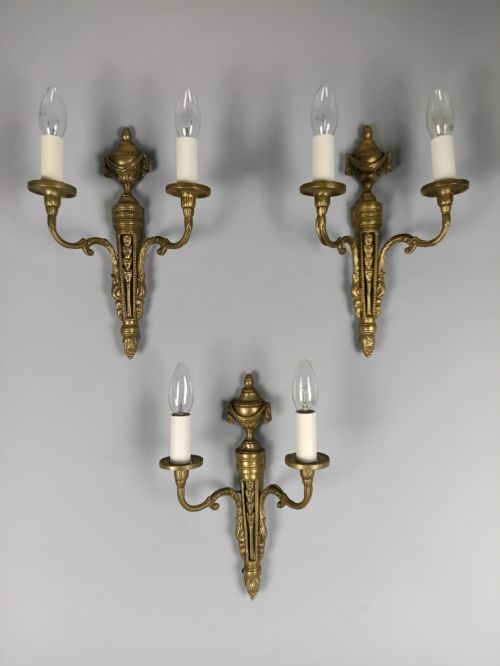
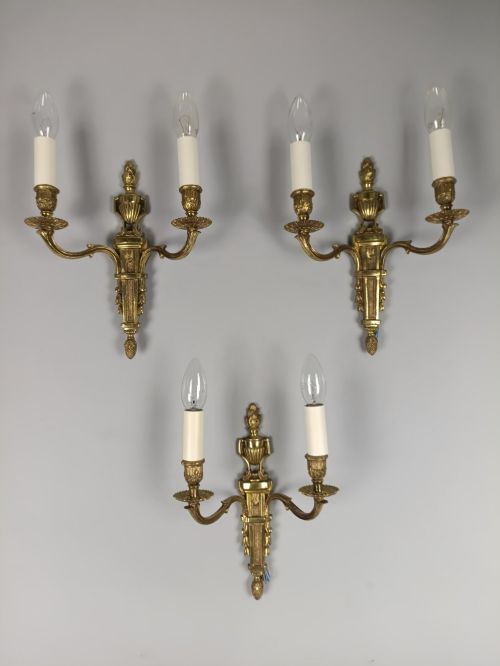
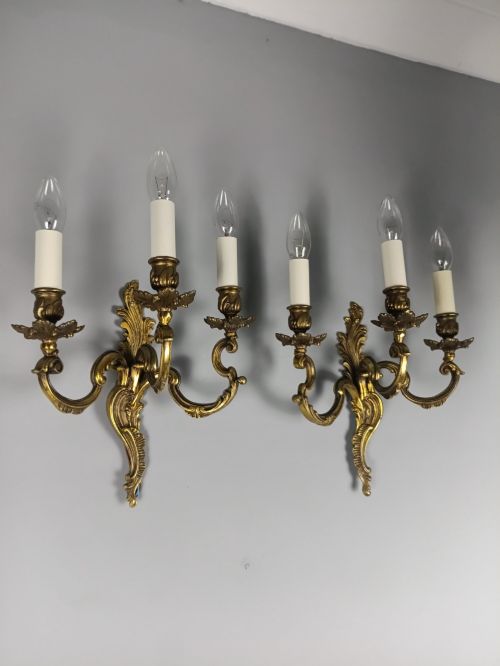
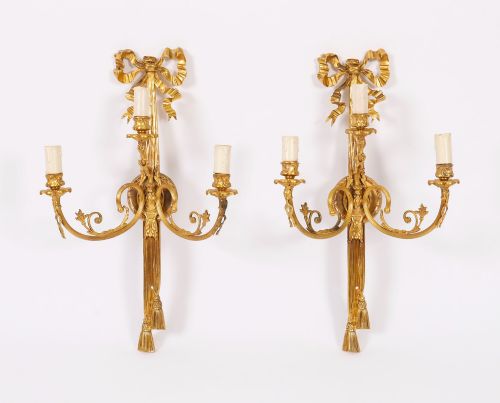
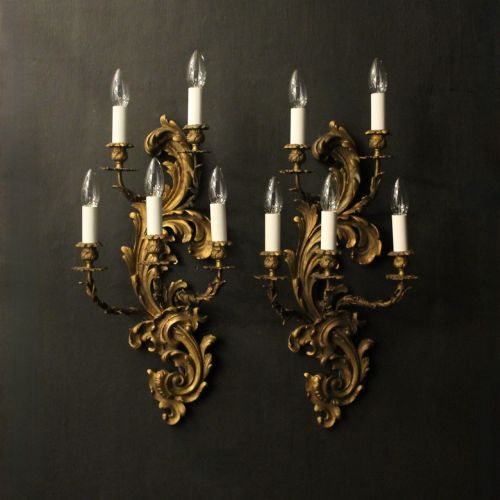
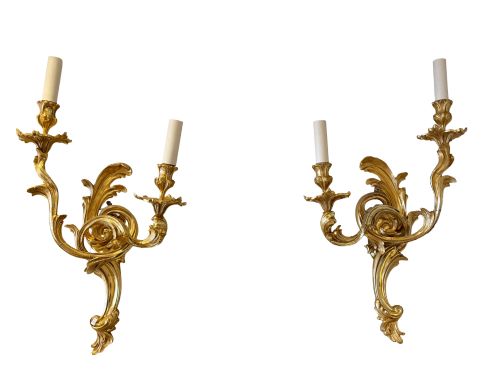
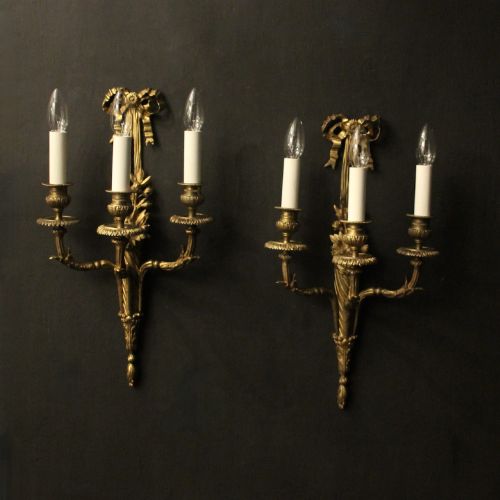
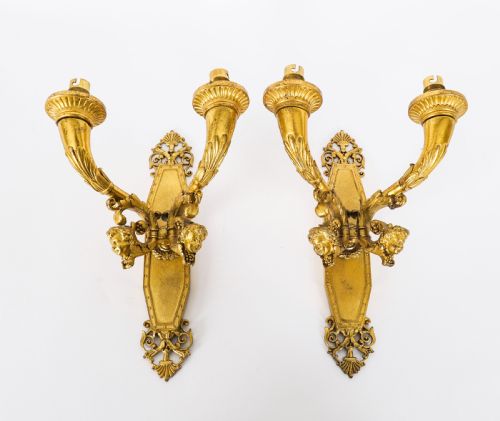
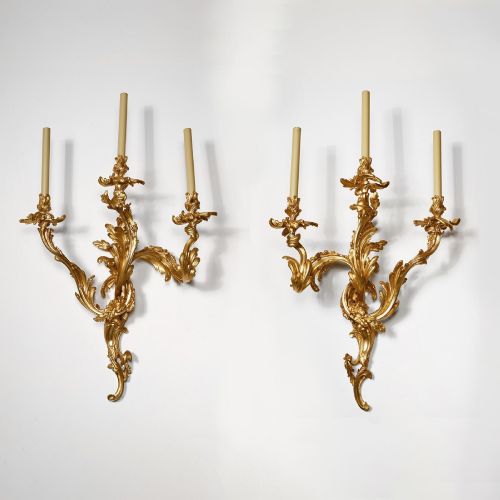
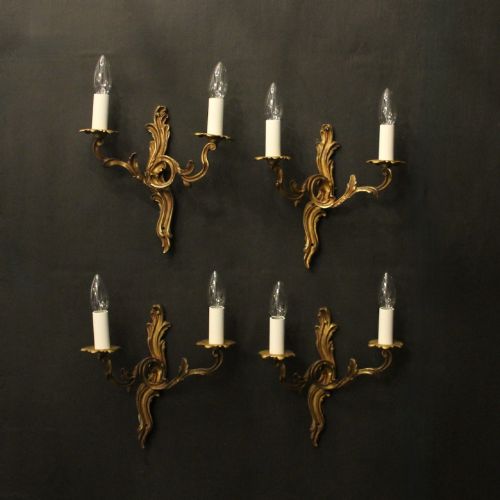
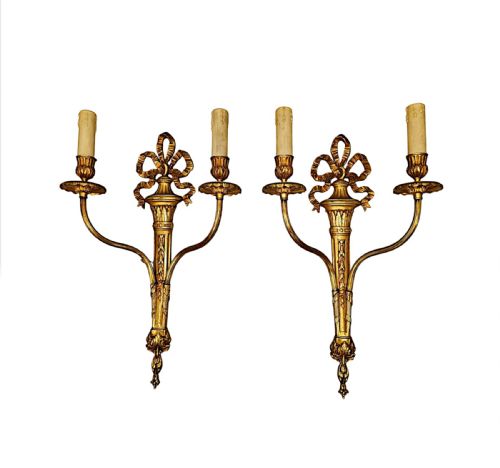
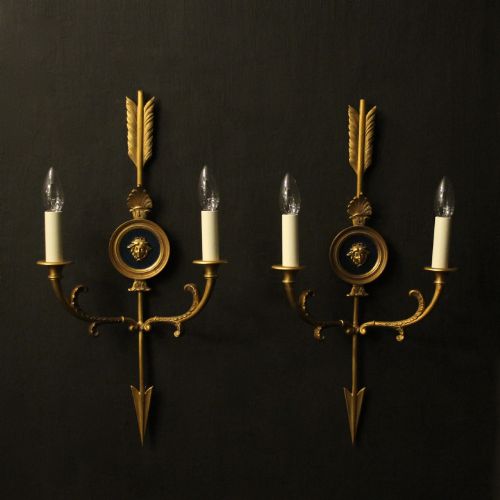
Twin-arm and triple-arm configurations dominate the current listings, alongside single-arm variants and larger sets intended for coordinated installation across a room. These forms frequently incorporate stylistic revivals, particularly Louis XIV, Louis XV, and Empire aesthetics, manifesting in symmetrical or flowing asymmetrical silhouettes.
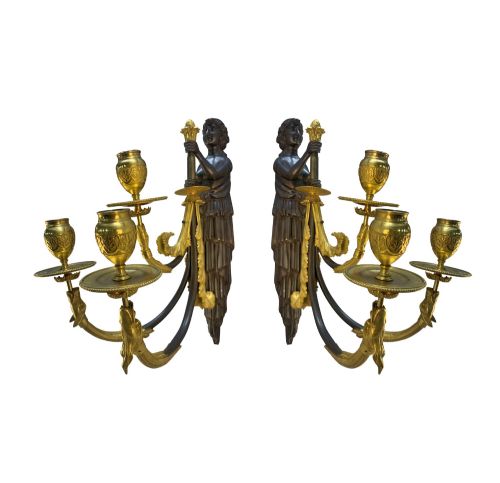
Originating largely from French workshops and ateliers, these wall lights utilise bronze, brass, and ormolu. Buyers are most likely to meet twentieth-century interpretations alongside nineteenth-century examples, often featuring cast vegetal motifs, ribbons, or figural elements.
Materials and Technique
The construction of these fixtures relies heavily upon metal casting, utilising bronze, brass, and ormolu to achieve durable structural frames and intricate decorative details. Molten metal is poured into moulds to create the arms, backplates, and bobeches, which are subsequently chased and finished by hand.
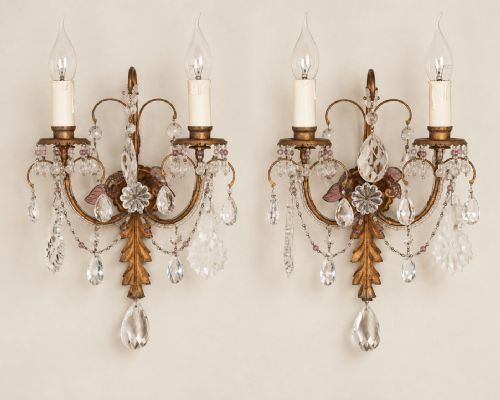
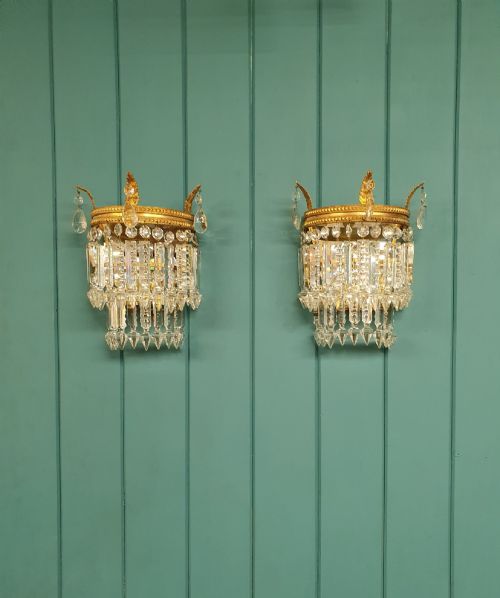
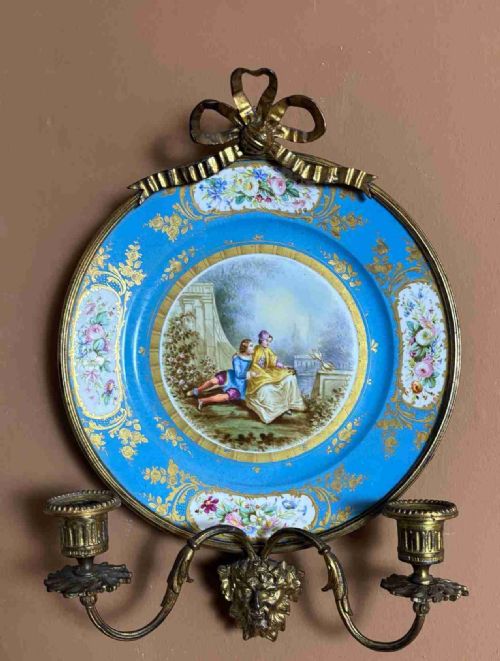
Gilding techniques, including mercurial gilding on historical ormolu and later applied gold leaf or electroplating, provide the characteristic surface sheen. Crystal and glass pendants are occasionally integrated to refract light, while secondary materials such as porcelain flowers or mirror plates add textural variation.
French Bronze Wall Sconces Retail Price Guide 2026
Typical asking prices for french bronze wall sconces among the pieces listed under this phrase on Sellingantiques today, from the lower quarter to the upper quarter. They describe what is for sale here now, not the wider market.
Some sconces incorporate porcelain flowers and tiny metallic ribbons, proving that even heavy bronze can flirt.
Craftsmanship and Detail
The integrity of the surface finish dictates visual success, with surviving original mercury gilding or deep ormolu patination holding greater distinction than flat modern paint or degraded plating. Weight and structural rigidity also distinguish robust castings from lighter, hollowed alternatives.
Casier
The French Bronze Wall Sconces Glossary
- Ormolu
- Finely ground high-carat gold applied to a bronze base using a mercury amalgamation process. This technique creates a durable, warm metallic lustre characteristic of luxury French decorative arts.
- Applique
- A wall-mounted light fixture or sconce designed to hold candles or electric lamps. The term frequently appears interchangeably with wall lights in historical inventories.
- Girandole
- An ornamental branched wall light featuring a mirror or reflective backplate. The reflective surface multiplies the illumination cast by the candles.
- Bobeche
- A small collar or drip pan fitted beneath the candle nozzle to catch melting wax. It protects the arms and wall below from accumulation.
- Chasing
- The manual refinement of a metal casting using small punches and hammers. Artisans use this technique to sharpen surface details and textures.
French Bronze Wall Sconces: Frequently Asked Questions
How were french bronze wall sconces originally used?
These fixtures served primarily to illuminate domestic interiors by holding beeswax or tallow candles along hallways, reception rooms, and bedchambers. Positioned near mirrors or tapestries, their reflective bronze and ormolu surfaces maximised the available light within candlelit spaces.
Over time, many surviving examples were adapted for electricity, allowing them to function as permanent wall lighting while retaining their historical decorative presence.
Can I install antique wall lights with modern electrics?
Many listings indicate that pieces have been rewired or prepared for modern electrical installation. Qualified electricians can integrate standard internal wiring into the historical channels of the bronze arms without compromising the exterior appearance.
Proper mounting requires anchoring directly into wall studs or utilising appropriate cavity fixings to support the substantial weight of cast bronze components.
How do I distinguish Rococo revival styles from Empire designs?
Rococo revival pieces, often associated with Louis XV aesthetics, display asymmetrical C-scrolls, flowing floral motifs, and organic naturalism. The lines curve fluidly without rigid symmetry.
Empire designs draw upon classical Roman and Greek geometry, favouring strict symmetry, military trophies, laurel wreaths, and architectural urns.
What is the difference between ormolu and gilded brass?
Ormolu consists of gold mercury-gilded onto a bronze substrate, producing a deep, warm metallic hue typical of eighteenth and nineteenth-century French luxury goods. Gilded brass generally utilises a base alloy of copper and zinc with modern plating or leaf applied over top, resulting in a brighter, less nuanced surface.