

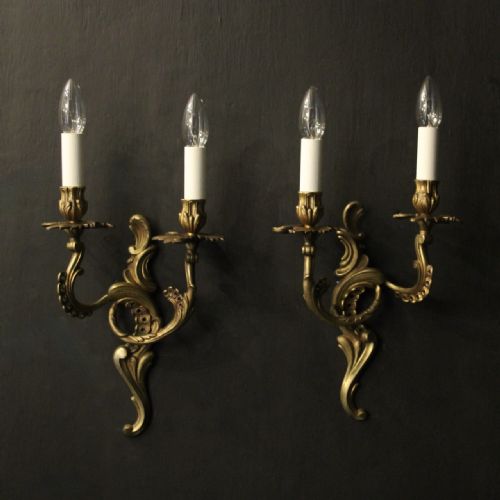


Two Arm Wall Sconces
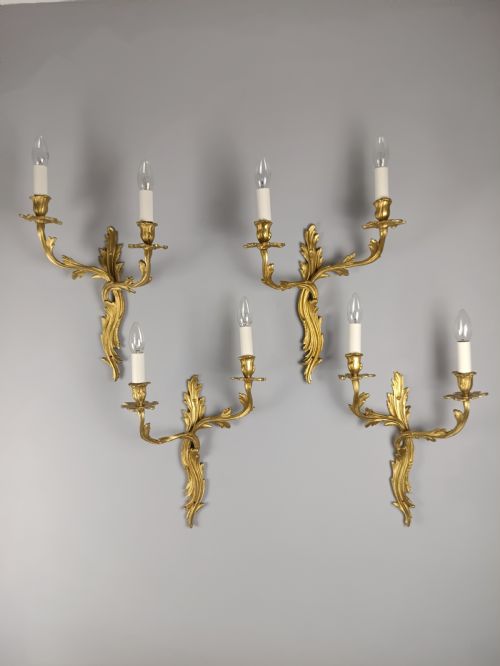
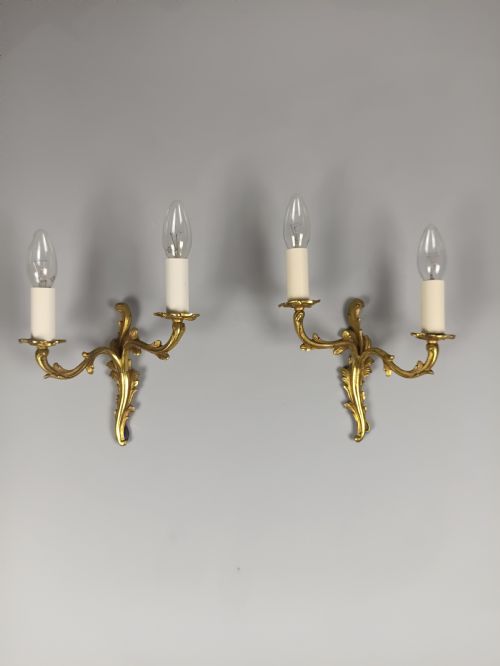
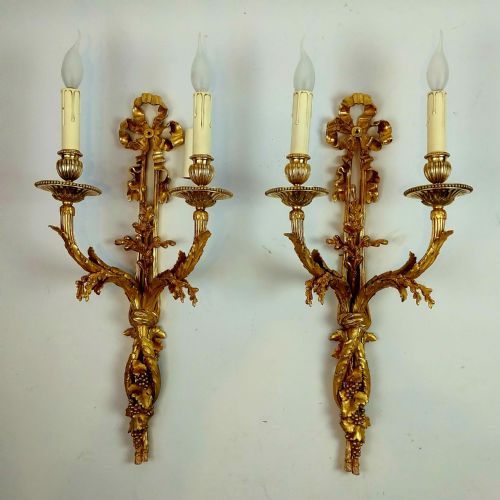
Two arm wall sconces bring layered illumination to a room, offering paired candle or lamp arms mounted directly to the vertical plane.
What Two Arm Wall Sconces Are
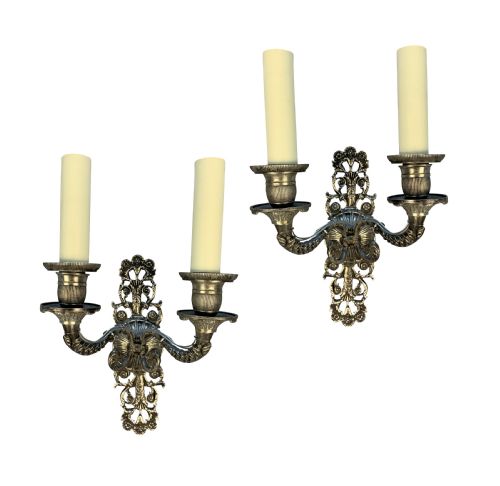
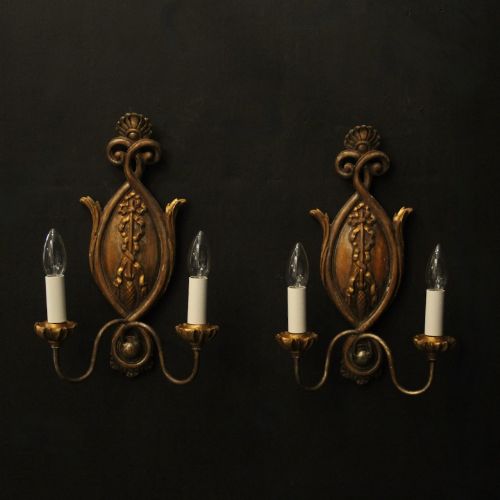
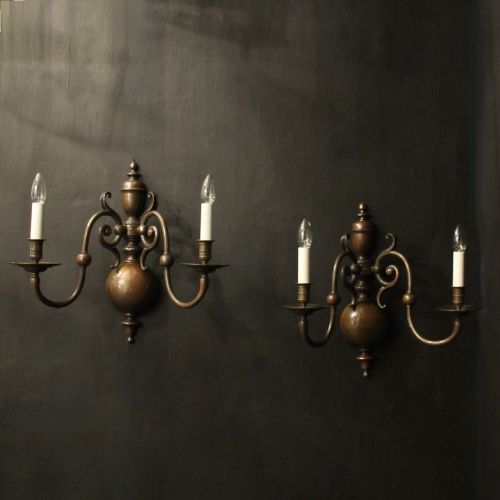
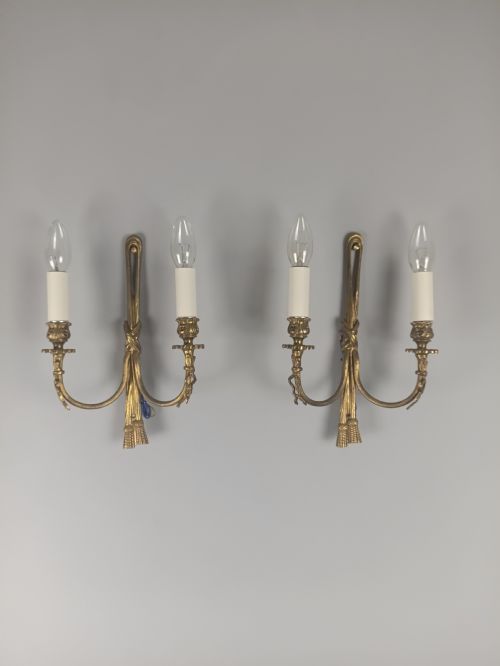
Two arm wall sconces are paired lighting fixtures designed to project warmth and architectural interest across a wall surface. These pieces emerge in styles like French Rococo, Italian Regency, French Chateau, French Rococo Revival, and Napoleon III.
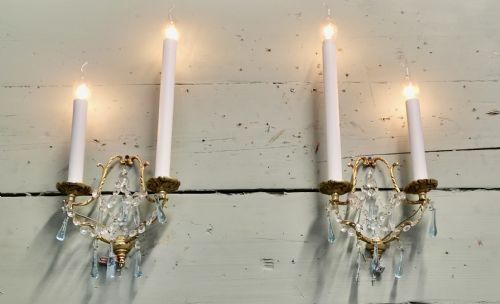
The inventory on this page consists predominantly of French and Italian designs dating from the late nineteenth century through to the 1930s. Buyers encounter wall lights and girandoles featuring dual arms that project outward to hold light sources.
Forms span from compact pairs to large statement fixtures, often supplied as matching pairs to balance a fireplace, mirror, or doorway. Each piece demonstrates the decorative priorities of its period, shifting from ornate revival castings to cleaner proportions.
How They Were Made
Metalworking forms the core of these pieces, utilising cast brass, bronze, gilt brass, gilded bronze, ormolu, and gilded brass. Makers shaped these metals through foundry casting before applying surface gilding or polished finishes.
Glass and crystal elements integrate directly into the metal armature, suspended as drops or shaped into bobeches to catch and refract the light. These components demonstrate the technical skill of period metalworkers and glass cutters working in tandem.
Retail Price Guide 2026
Typical UK retail prices for two arm wall sconces, calculated from the Sellingantiques database of over a million retail prices indexed since 2003. This retail price guide relies exclusively on Sellingantiques data; no external sources or auction records are used, so the figures do not describe the wider market.
Listings span the nineteenth century, 1890, 1920, and 1930, utilising brass, gilt bronze, glass, crystal, ormolu, and gilded brass.
What Varies in Quality
The distinction between ordinary and superior pieces rests on the crispness of the metal chasing and the depth of the casting. Finer sconces exhibit sharp relief in their scrollwork and foliage, whereas lesser examples show softened details from worn moulds.
Material composition and surface finish drive the hierarchy of these objects, particularly in how gilding or patination ages over time. Heavy bronze and fire-gilded ormolu hold their visual weight differently than thin brass washes, creating a richer play of light.
The Two Arm Wall Sconces Glossary
- Ormolu
- Gilded bronze produced through a mercury amalgamation process common in high-end French decorative metalwork. This technique creates a durable, deep golden surface that resists tarnish.
- Bobeche
- A small collar or disc fitted beneath the candle nozzle to catch melting wax. It protects the arms and body of the sconce from drips.
- Girandole
- An ornamental branched wall light or candlestick fitted with cut glass or crystal drops. The hanging prisms multiply the perceived illumination of the flames.
- Chasing
- The manual finishing of a cast metal surface using hammers and punches to refine details. Skilled chasing separates heavy, high-status castings from mass-produced wares.
Frequently Asked Questions
Where should I hang these?
These fixtures suit placement flanking a fireplace, framing a large mirror, or marking either side of a hallway entrance. Their dual arms project enough light to serve as secondary illumination in reception rooms.
Ensure they hang at an appropriate eye level to make the most of their decorative backplates and hanging crystal elements without exposing the bulb fittings.
Are they wired for electricity?
Many period examples arrive adapted for modern electrical wiring, though some retain their original candle fittings. Conversion methods vary depending on past installations.
Buyers should inspect the internal wiring channels and consult a qualified electrician to ensure compatibility with current safety standards before mounting them to the wall.
How do I clean gilt bronze?
Dust these fixtures gently with a soft, dry brush to prevent accumulation in the recesses of the casting. Avoid harsh chemical cleaners that can strip away historic gilt or patinated surfaces.
Preserving the original finish requires patience and minimal intervention, using only mild solutions if absolutely necessary to remove grease or grime.
How do I date a sconce?
Dating relies on stylistic clues, such as the exuberant asymmetry of Rococo revival pieces versus the restrained geometry of later twentieth-century production. Construction marks, screw types, and metal composition also offer hints to the era of manufacture.
Comparing the casting weight and chasing quality against known period examples helps narrow down the decade or century of origin.