

Twin Candle Sconces
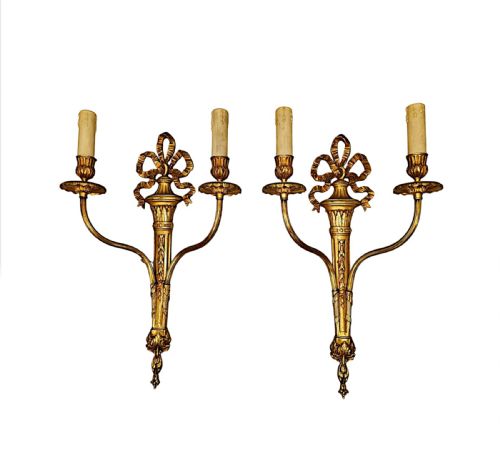
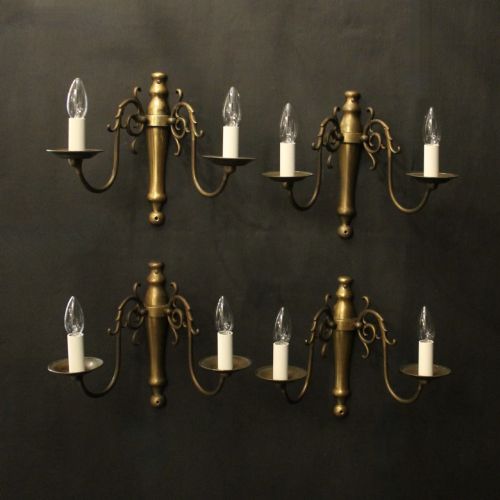
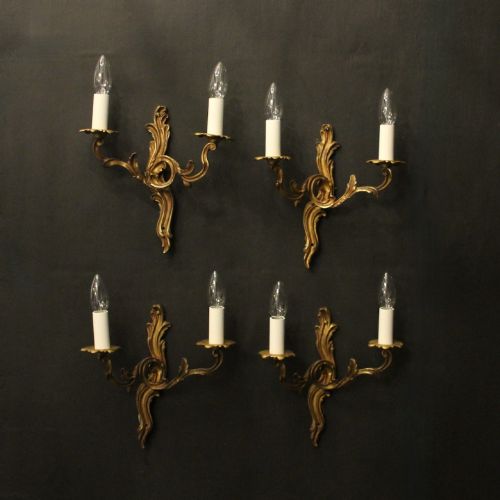
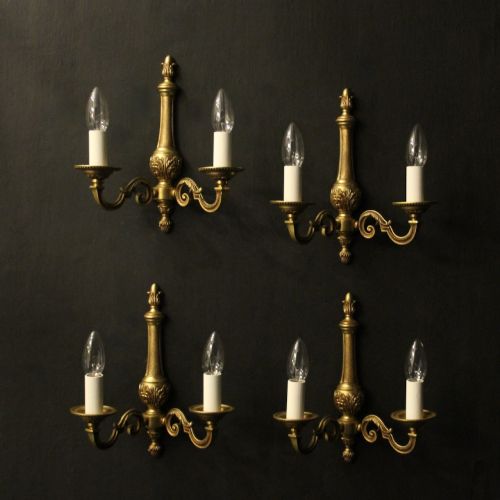
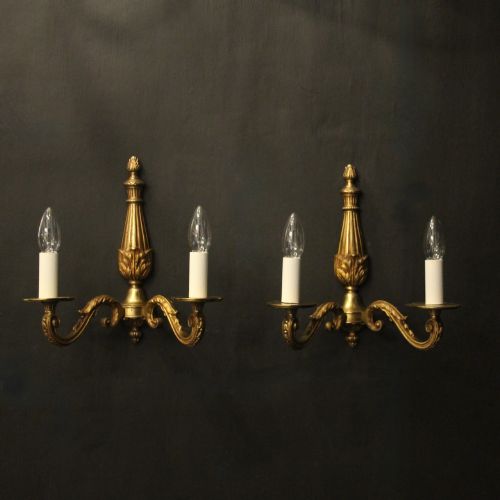
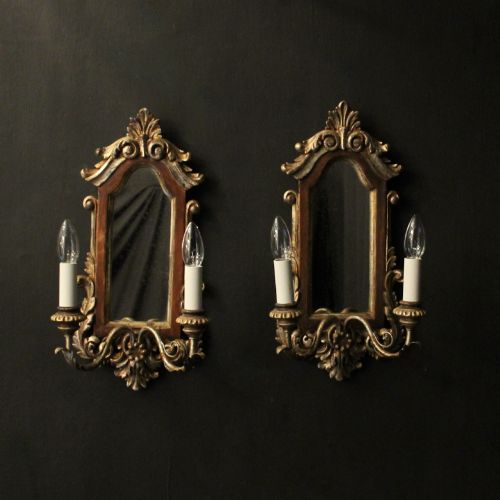
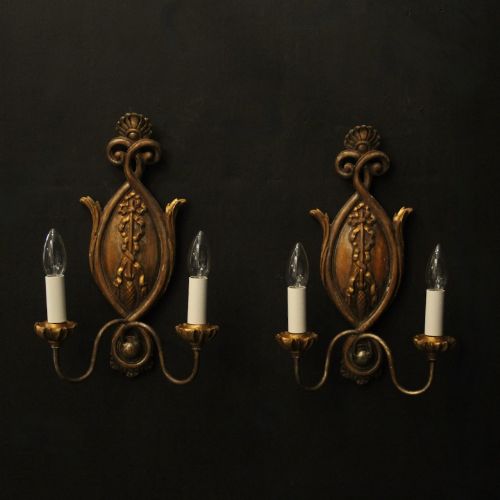
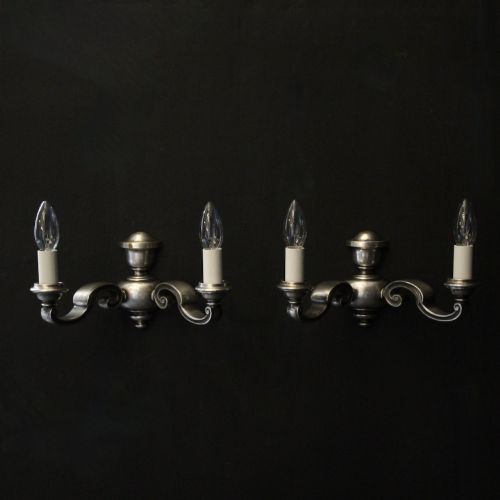
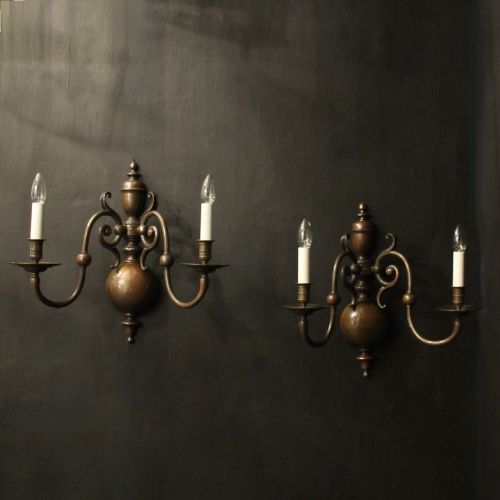
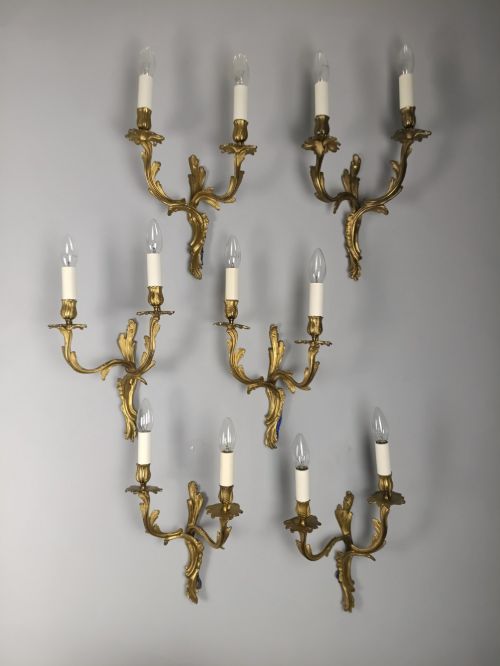
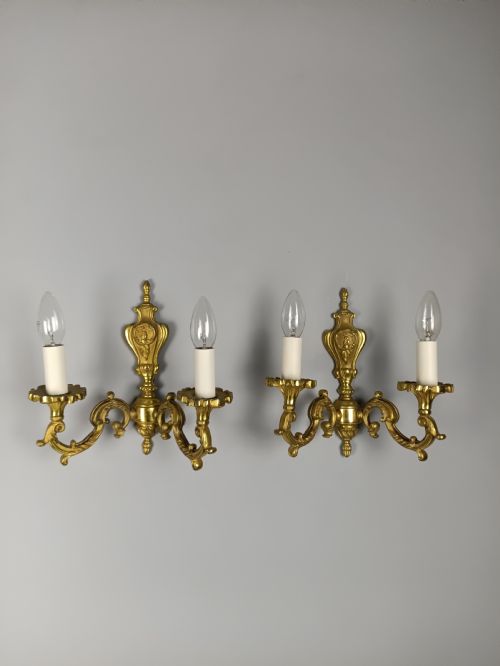
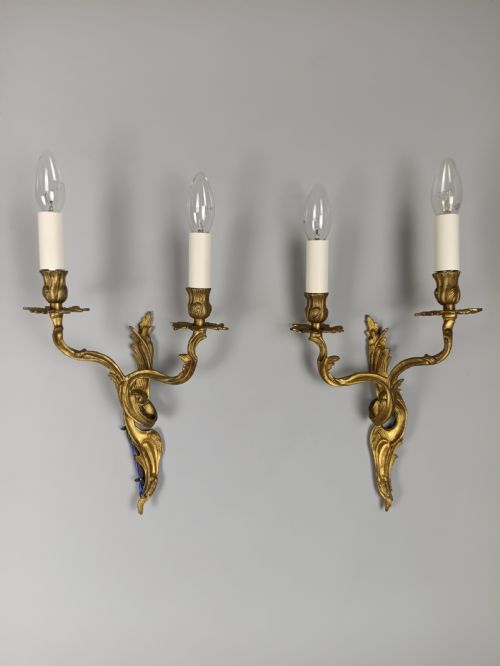
These twin candle sconces bring dual-armed illumination to period interiors through cast metals and gilt surfaces.
Twin Candle Sconces
When searching for twin candle sconces, buyers encounter wall-mounted lighting fixtures designed to hold multiple candles or bulbs across two distinct arms. The selection here leans heavily towards French production from the early twentieth century, alongside English and Italian examples.
Forms span standard wall lights and girandoles to convex half lanterns and cherub-mounted designs. These pieces originate across the nineteenth and twentieth centuries, encompassing Victorian, Edwardian and 1930s periods.
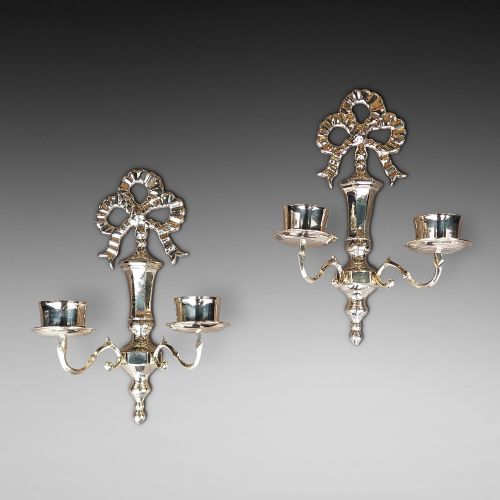
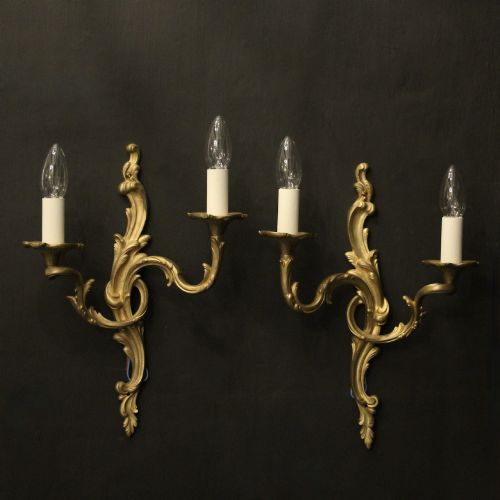
The dominant aesthetic draws upon French Rococo, Neoclassical and Revival styles, frequently featuring twin arms projecting from decorative backplates.
Materials and Construction
The construction relies predominantly on cast metals, with brass, bronze and metal forming the structural core of the fixtures. Many examples receive surface treatments involving gilding, creating gilt bronze, ormolu, gilded brass and silver plating.
Wooden elements appear in specific regional variations, notably Florentine giltwood girandoles. Workshops employed casting and chasing techniques to shape intricate ribbon motifs, cherubs and scrollwork onto the metal backplates and arms.
French Rococo Revival and Neoclassical styles dominate the wall lights and girandoles recorded across these records.
Assessing Quality
Quality rests upon the crispness of the metal casting and the depth of the chased details on the backplate and arms. Superior examples display sharply defined ornamentation, such as delicate ribbon folds or feathered wings on figural mounts, rather than softened contours from worn moulds.
The application of the surface finish dictates visual success, with even layers of gilding or genuine ormolu maintaining their lustre over decades. Heavier gauge metals provide structural rigidity to the twin arms, ensuring the fixture hangs flush against the wall without deflection.
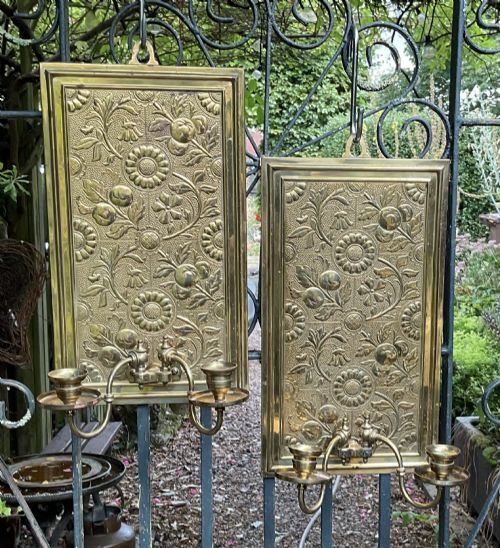
Bruce Talbert·F. & C. Osler
The Twin Candle Sconces Glossary
- Girandole
- A decorative wall-mounted bracket holding candles, frequently incorporating a mirror to reflect the light. These fixtures combine functional illumination with ornamental carved or cast frames.
- Ormolu
- Finely chopped gold applied to a bronze base through a mercury amalgamation process, popular in French decorative arts. This technique produces a rich, deep golden surface finish.
- Adam Revival
- An architectural and decorative style drawing inspiration from eighteenth-century neoclassical designs. Pieces in this idiom employ symmetrical geometry and classical motifs.
- Aesthetic Movement
- A nineteenth-century design ethos prioritising visual and material beauty over narrative content. Objects from this current often exhibit refined craftsmanship and distinct stylistic restraint.
- Convex Half Lantern
- A semi-circular wall light projecting forward from a flat backplate. This form gathers and directs the output of the twin candles or lamps.
Twin Candle Sconces: Frequently Asked Questions
How were twin candle sconces used historically?
These fixtures mounted to walls in pairs or larger sets to flank mirrors, doorways or fireplaces. The dual arms doubled the illumination within a room before the widespread adoption of electricity.
Reflective backplates or silvered surfaces maximised the available light from tallow or wax candles. Later examples often retain or receive conversion for electric lamps while preserving the original twin-arm configuration.
How do I install antique wall sconces?
Installation requires securing the backplate directly to wall studs or utilising appropriate wall anchors to support the weight of the metal framework. Many surviving pieces arrive rewired for modern electrical standards.
Consulting a qualified electrician ensures safe connection to household circuits, particularly when mounting heavy bronze or cast brass fixtures.
How do I distinguish 1920s French sconces from Victorian ones?
French pieces from the 1920s frequently exhibit lighter Rococo or Neoclassical revival motifs with bright gilt brass and slender twin arms. Victorian examples tend to utilise heavier cast bronze or brass with darker patination.
Stylistic cues such as ribbon bows point toward French Edwardian and 1920s production, whereas robust, unadorned brass frames often suggest Victorian or earlier English workshops.
How do I care for gilt bronze finishes?
Maintenance involves gentle dusting with a soft, dry cloth to prevent the accumulation of particles in the recessed chased details. Avoid chemical polishes or abrasive cloths, which strip away thin gilding or ormolu.
Preserving the stable environment of a dry room protects the metal from oxidation and keeps the gilded surfaces intact.