

Gold Mirror Sconces
Gold mirror sconces bring reflected light and carved elegance to a room, uniting functional wall illumination with decorative glass.
Gold Mirror Sconces
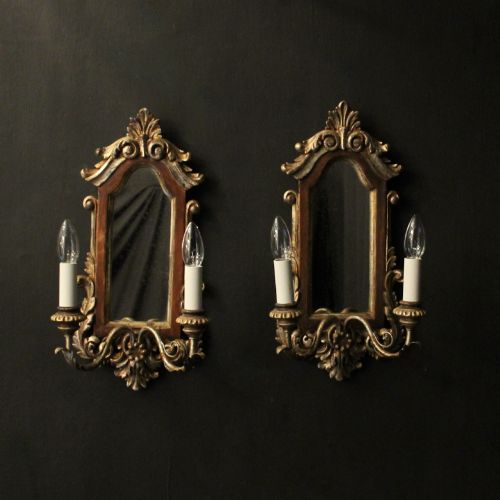
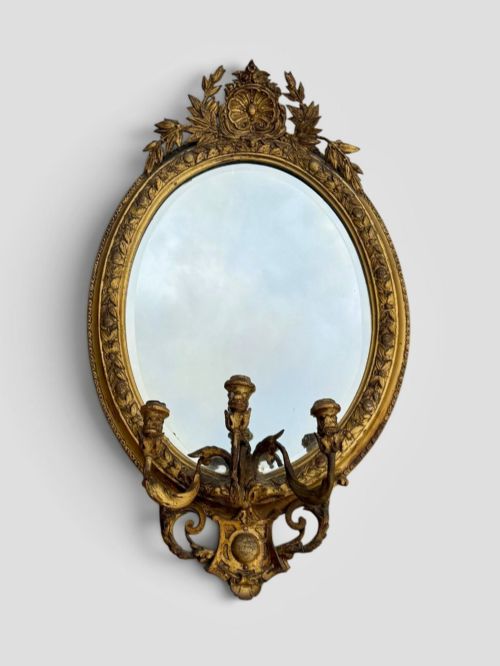
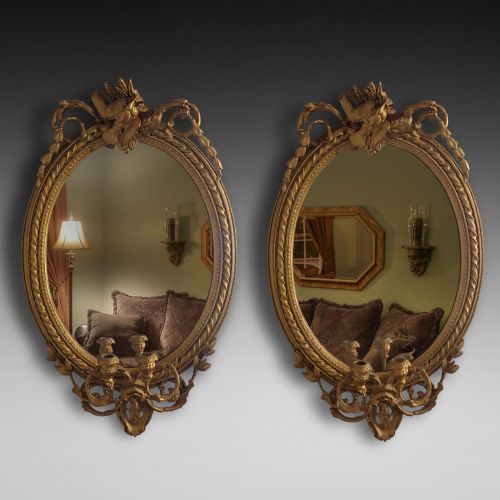
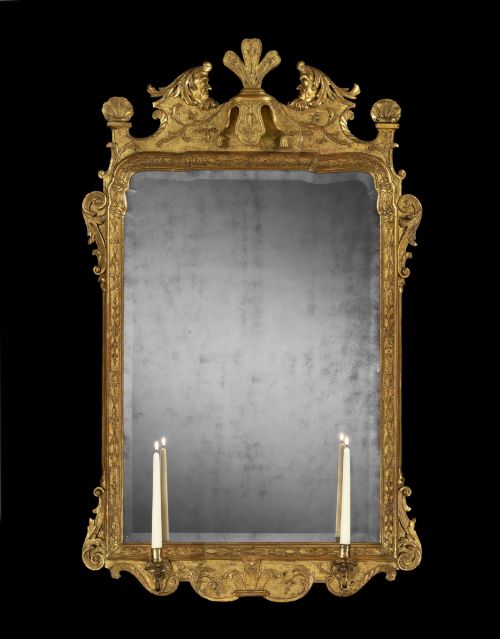
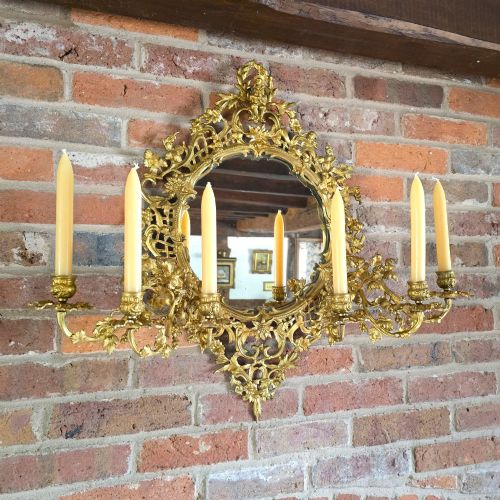
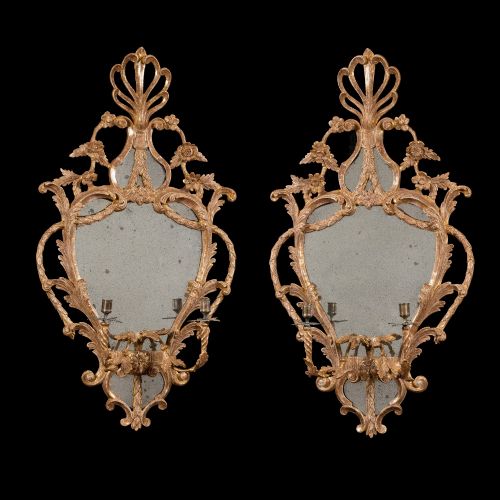
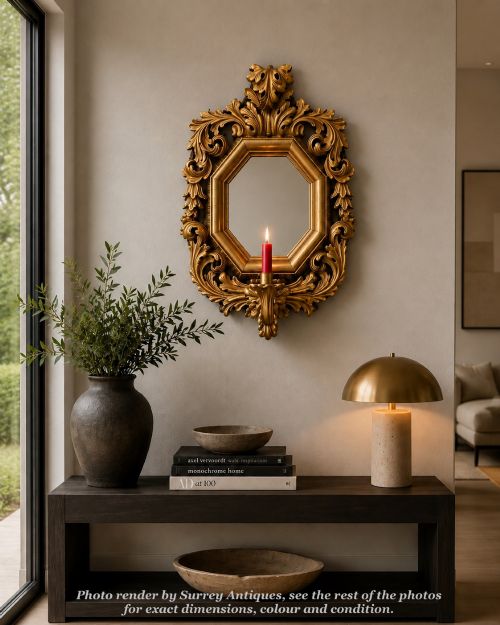
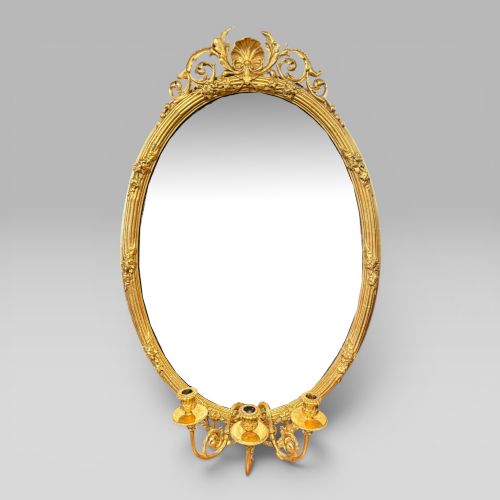
Gold mirror sconces combine reflective glass plates with integrated candle arms or light branches, mounted to illuminate a wall while bouncing ambient light back into the space. You will encounter these pieces shaped as girandoles, cartouche mirrors, and convex wall hangings.
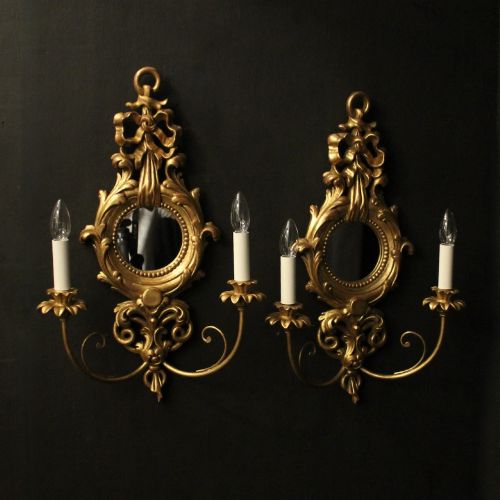
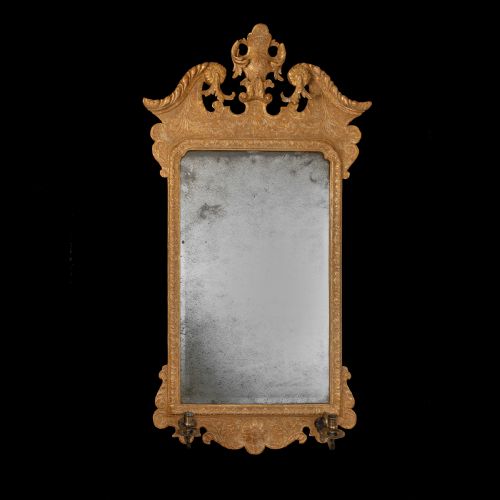
The selection spans centuries of design, drawing heavily on 18th century George styles, Regency convex forms, and ornate Victorian or Edwardian revivals. Examples range from simple brass and metal frames to elaborate carved wooden structures fitted with twin or multiple candle branches.
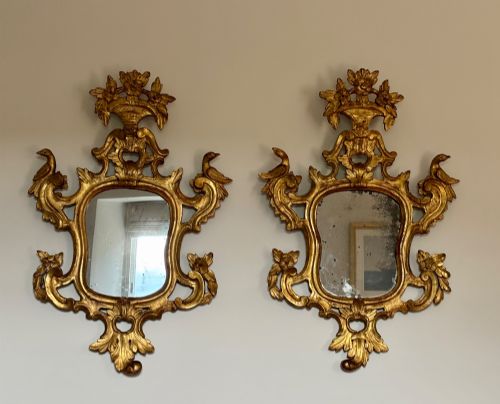
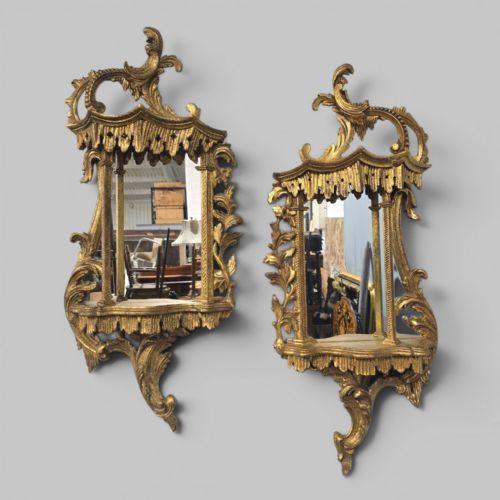
Origin points vary across domestic British workshops, French makers, and Italian centres such as Venice and Florence. Many pieces emerge as pairs, designed to balance either side of a fireplace, mantelpiece, or architectural focal point.
How they were made
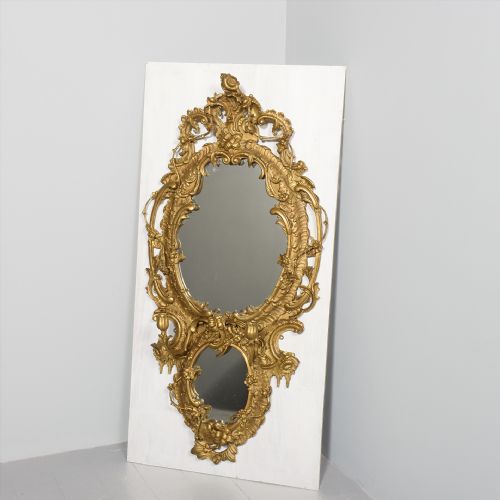
Carvers shaped wooden foundations from timber before applying layers of gesso to build up high-relief scrollwork, acanthus leaves, and floral motifs. Artisans then laid gold leaf or gold paint over the prepared surfaces to achieve a luminous metallic finish.
Makers integrated mirror glass plates, sometimes retaining original foxing or silvering deterioration that reveals the age of the plate. Metal components such as brass, ormolu, and gilt metal formed the structural arms for candle branches and wall brackets.
Listings feature items spanning the 18th century, Regency period, Victorian era, and 1920s revival styles in giltwood, brass, and gesso.
What varies in quality
The depth and crispness of the carved detail define the upper tiers of craftsmanship, where hand-tooled gesso and undercut wood carving show superior definition compared to simpler cast or moulded substitutes. The integrity of the original gilding, whether gold leaf or early paint layers, marks the preservation standard of the surface.
Structural harmony in matching pairs affects desirability, particularly when candle arms, mirror plates, and wooden frames retain their original configuration without later alterations or mismatched replacements.
Benjamin Goodison
The Gold Mirror Sconces Glossary
- Girandole
- A decorative wall mirror featuring attached candle branches or sconces that project light from the glass surface. These fixtures often incorporate ornate carved frames.
- Gesso
- A plaster-like mixture applied to wood frames to create a smooth base for intricate carved details and gilding. It allows for sharp relief work.
- Convex mirror
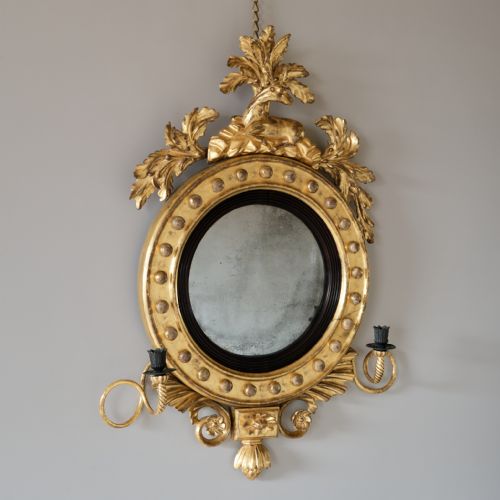
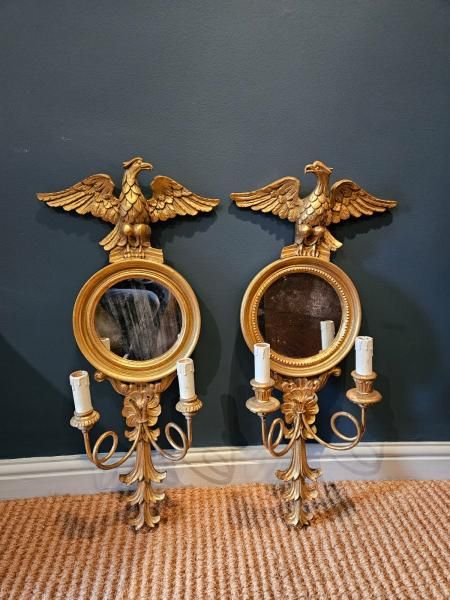
- A round mirror with a curved glass plate that provides a wide-angle, distorted reflection of the room. Regency examples frequently feature eagle crests and candle arms.
- Foxed plate
- Mirror glass displaying dark spots and age-related oxidation within the silvering layer. This characteristic indicates genuine antique age.
- Giltwood
- Timber carved and coated with gold leaf or metallic paint. It forms the primary decorative frame material for these wall fixtures.
Gold Mirror Sconces: Frequently Asked Questions
What is a girandole mirror?
A girandole mirror is a wall-mounted glass plate equipped with one or more candle branches attached directly to the frame. These arms allowed candlelight to multiply as it reflected off the glass.
Craftsmen designed them to serve as both functional lighting fixtures and decorative centerpieces in formal reception rooms.
Where should I hang a wall sconce?
These pieces suit positions that benefit from reflected light and decorative symmetry, such as flanking a fireplace, framing a doorway, or hanging above a side table. Pairs work best when balanced on either side of an architectural feature.
Ensure the wall structure can support the weight of carved wooden frames and glass plates.
How do I identify a Regency convex mirror?
Regency convex mirrors feature circular frames enclosing a curved glass plate that reflects a panoramic view of the interior. They often include ebonised inner ring details, sphere-adorned frames, and occasionally top-mounted eagle crests.
Dating typically points to the early nineteenth century.
Why do some mirror plates look speckled?
Speckled or darkened areas on the glass, known as foxing, occur when the silvering behind the mirror deteriorates over decades. This natural oxidation process confirms the age of the glass plate.
Collectors value original foxed plates for the authentic historic character they impart.