


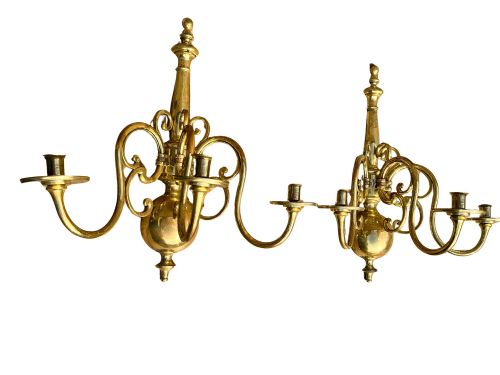


Pair of Wall Girandoles
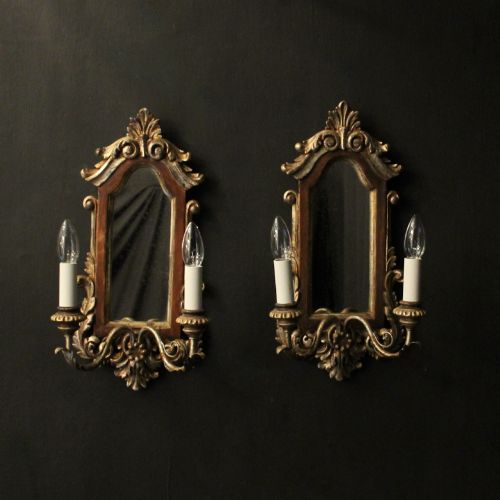
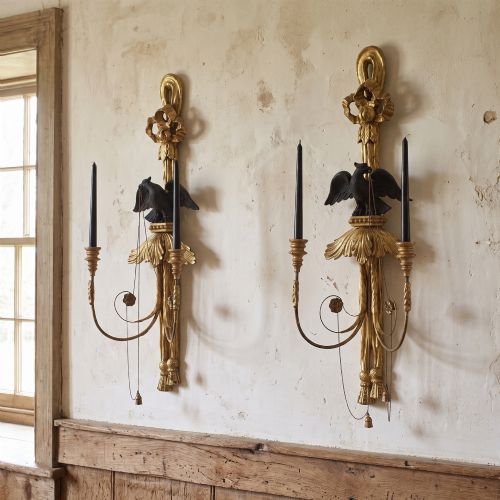
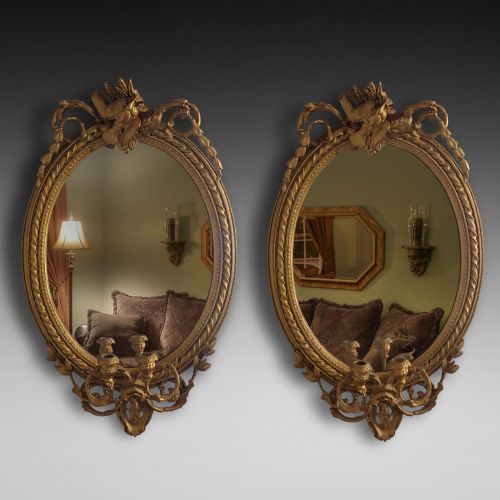
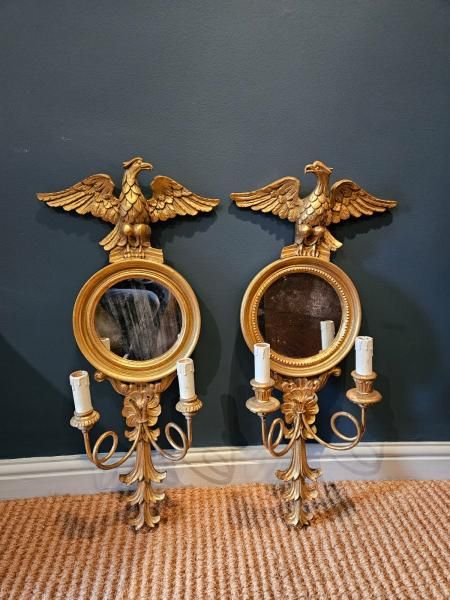
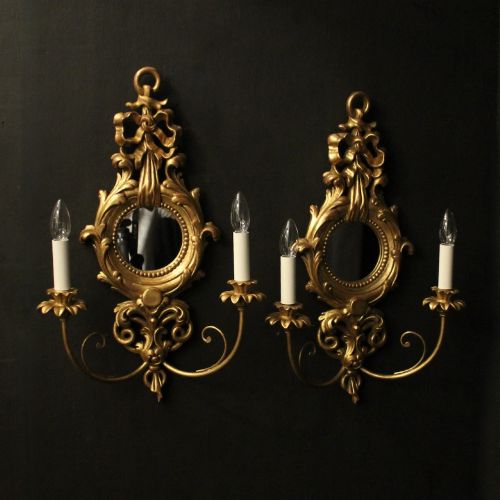
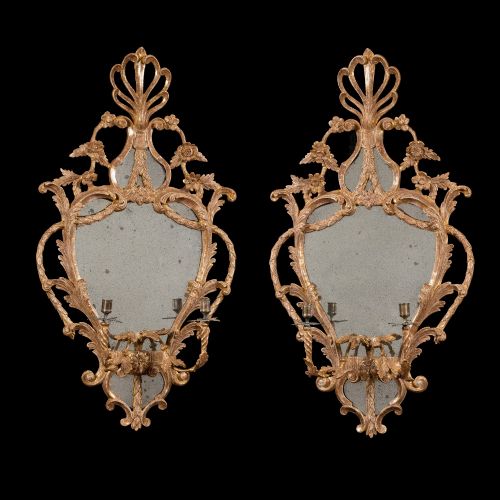
A pair of wall girandoles brings reflected candlelight and carved gilded depth to a room.
Pair of Wall Girandoles
When searching for a pair of wall girandoles, you encounter mirrored wall sconces designed to hold candles and multiply light through glass surfaces. The selection spans the eighteenth century through to the nineteen thirties, encompassing Georgian, Regency, Victorian and Edwardian periods.
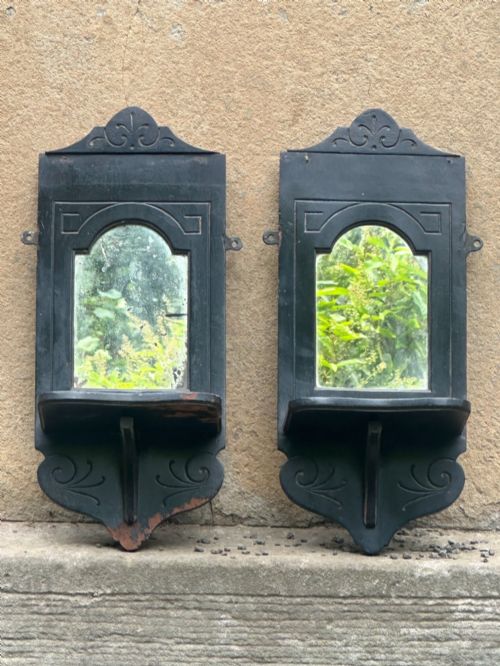
Most examples you meet on this page originate from English, French or Italian workshops. The forms range from small carved wall brackets to large pier mirrors with twin candle arms.
Makers and designers drew on Rococo, Neoclassical and Aesthetic styles, translating historical motifs into domestic lighting. You find giltwood frames alongside cast bronze, brass, toleware and copper structures.
How they were made
Craftsmen built these light fittings using timber frames coated in gesso before applying fine layers of gold leaf. Carved giltwood remains a dominant medium, requiring skilled hands to shape delicate foliage and scrolling forms.
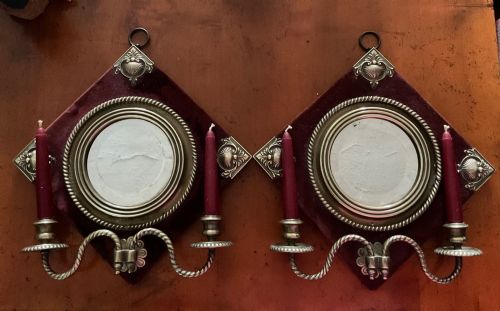
Metal components involved casting brass, bronze, or ormolu into arms and backplates, often paired with crystal drops or etched mirror glass. Toleware and polychrome painted finishes offered alternative decorative surfaces for French and Italian pieces.
Mirror plates were bevelled or flat depending on the period, held securely within rebated frames alongside protruding candle nozzles designed to support wax tapers safely.
Listings feature items from the eighteenth century to the nineteen thirties, utilising giltwood, bronze, brass, and mirrored glass.
What varies in quality
Quality rests upon the depth of the carving and the crispness of the gilding on wooden frames. Hand-carved giltwood with articulate depth sits far above mass-produced or later cast substitutes.
The integrity of the original mirror glass and the matching nature of the candle arms dictate the desirability of a pair. Replacements or mismatched sconces alter the visual balance intended by the maker.
Cottier and Co·E G Paris
The Pair of Wall Girandoles Glossary
- Girandole
- A branched wall light or sconce fitted with a mirror to reflect illumination. These fixtures combine functional candle holders with decorative framing.
- Giltwood
- Timber, usually lime or pine, coated in gesso and covered with thin sheets of gold leaf. It provides a luminous surface that catches low candle flame.
- Gesso
- A plaster mixture applied to wood frames to create a smooth base for gilding or painting. Artisans carved intricate relief details directly into this hardened layer.
- Toleware
- Painted or lacquered metalware originating in France and Britain. It offers durable colour and pattern on wall sconce bodies.
- Pier glass
- A tall mirror designed to hang on the wall between windows. Many incorporate candle branches at the base.
Pair of Wall Girandoles: Frequently Asked Questions
How do I hang a pair of wall girandoles?
These fixtures require secure wall fixings to support the combined weight of wood, glass and metal arms. Professional installation ensures the brackets bear the load safely without shifting.
Position them at eye level or flanking a fireplace, sideboard or doorway to balance the room's symmetry and maximise the reflection of natural or candle light.
Were these designed for real candles?
Original examples held wax candles to illuminate dark hallways and reception rooms before electricity became common. The reflective mirror backplate amplified the small flame.
Many retain their original drip pans and sockets, though modern users often choose low-heat LED candles to protect antique materials from soot and heat damage.
How do I tell an eighteenth-century pair from a later revival?
Eighteenth-century pieces display hand-carving irregularities, older silvering on the mirror plates, and timber shrinkage appropriate to age. Fasteners and joinery methods provide further clues.
Revival pieces from the Victorian era or nineteen-twenties often copy earlier Rococo or Neoclassical styles using machine tooling or standardised cast metal components.
What is the difference between a girandole and a wall sconce?
A wall sconce is a general term for any bracket light mounted to a wall. A girandole specifically includes a mirror as part of the assembly.
The inclusion of the mirror glass sets girandoles apart, serving the dual purpose of artwork and light enhancer.