

Gilded Twin Wall Lights
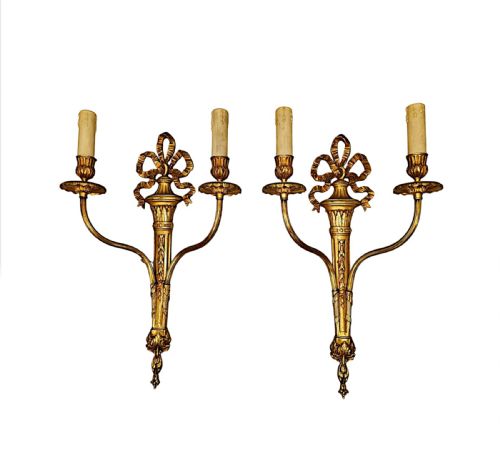
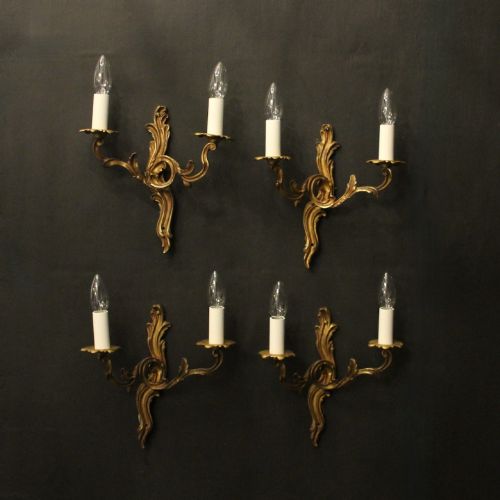
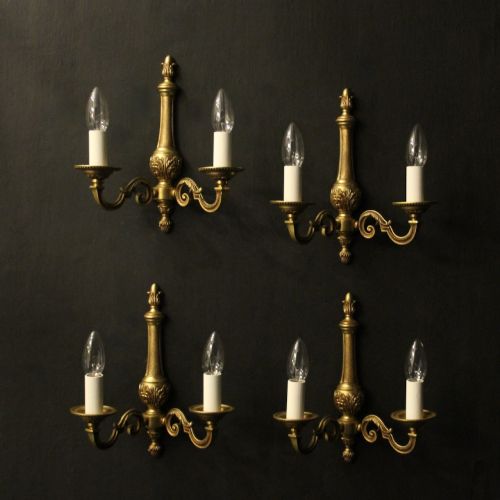
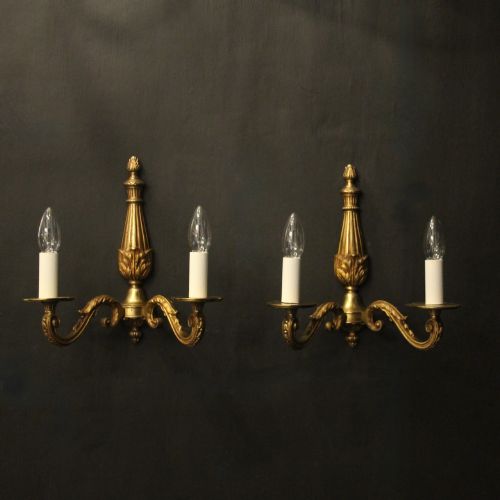
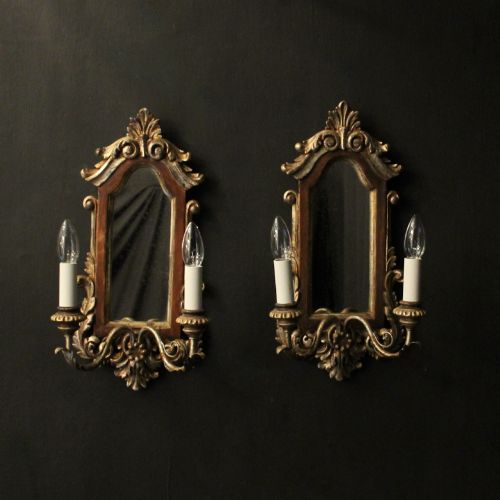
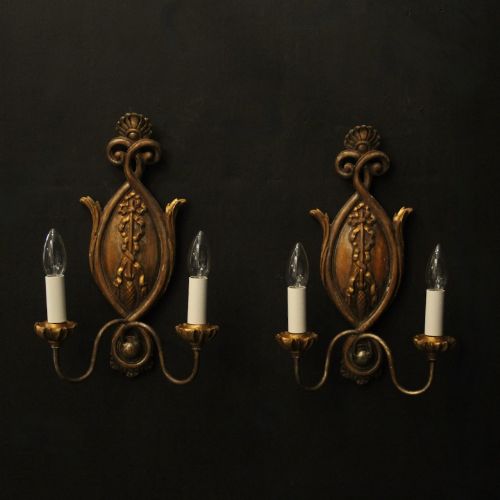
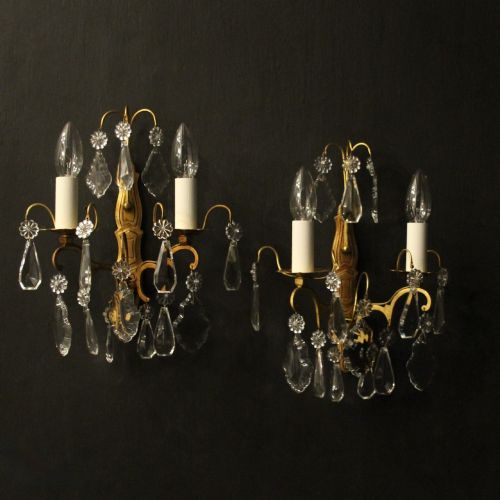
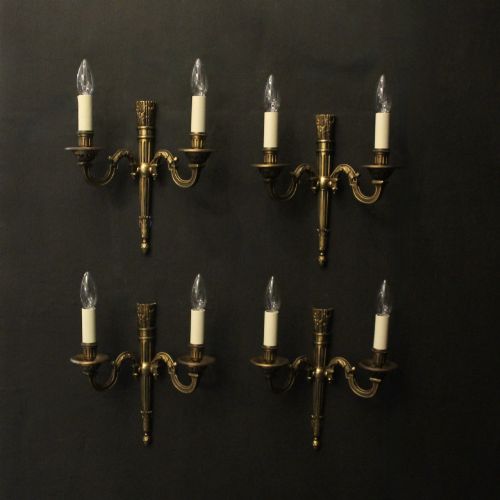
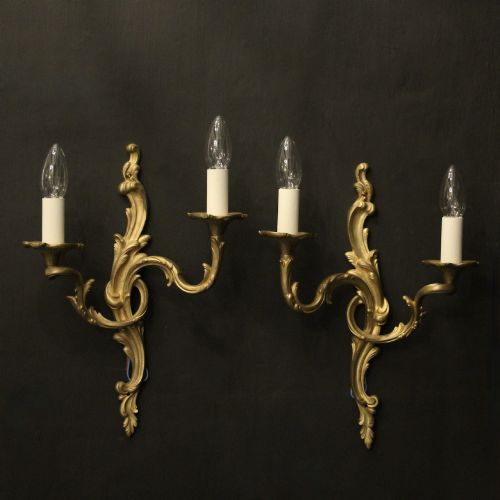
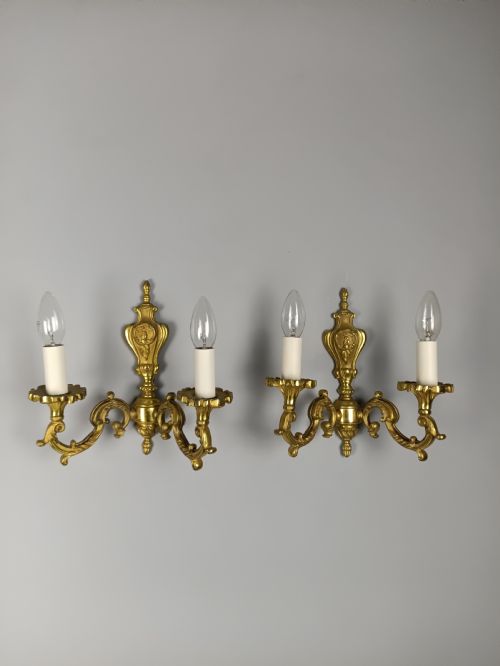
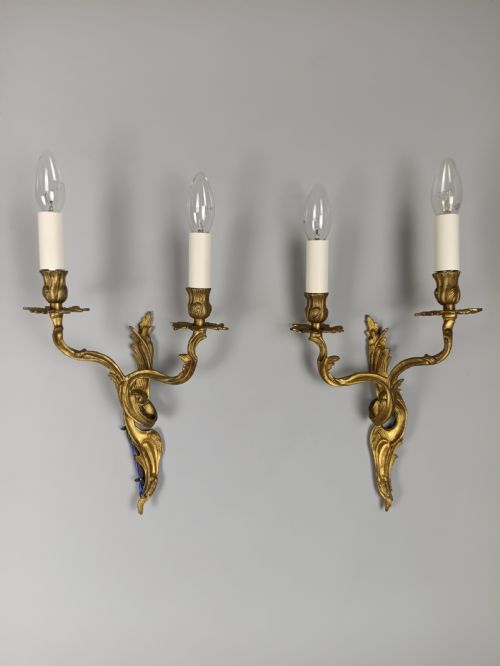
These gilded twin wall lights combine two candle arms with metallic gold finishes to illuminate period interiors.

Gilded Twin Wall Lights
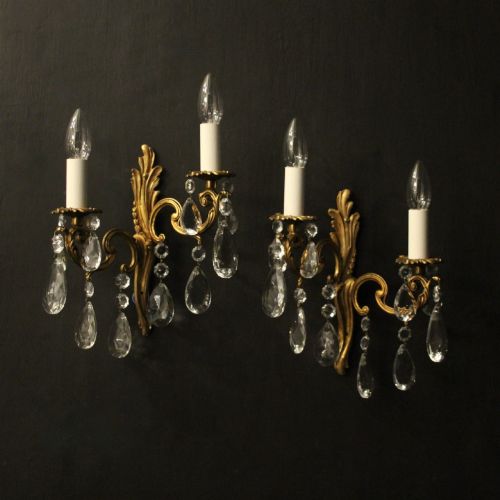
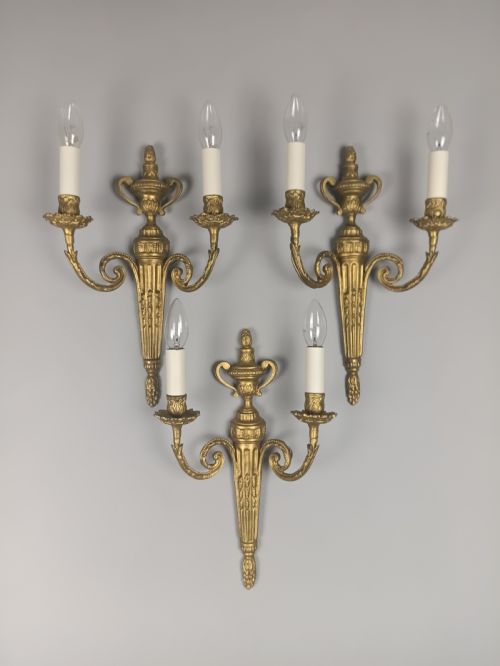
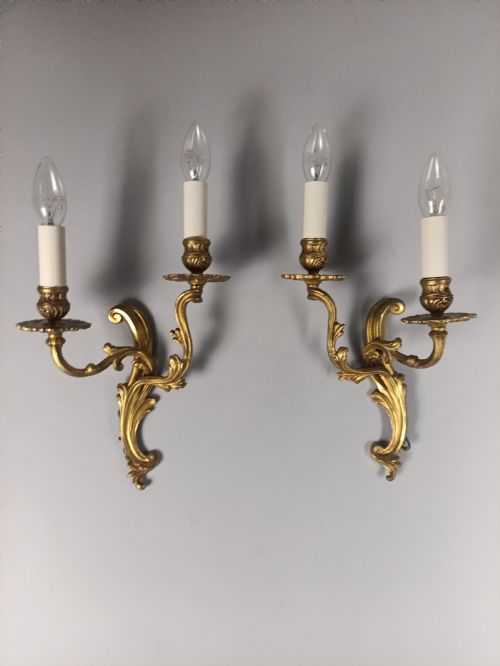
When searching for gilded twin wall lights, buyers encounter ornamental two-branch lighting fixtures designed to mount directly onto vertical surfaces. These pieces frequently emerge from French workshops during the early decades of the twentieth century, adopting styles influenced by Rococo and Neoclassical design.
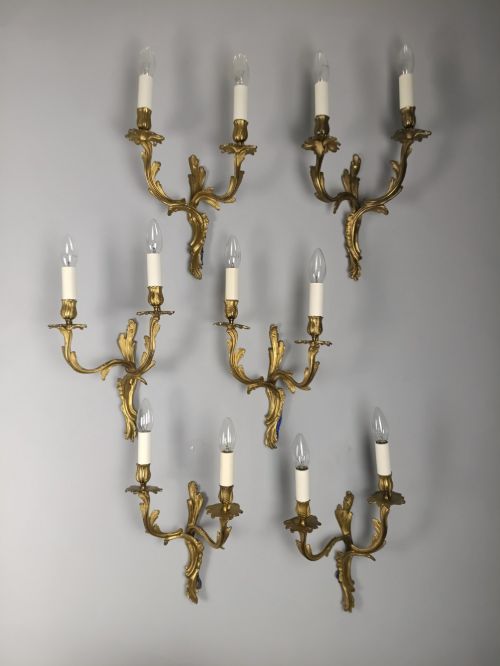
The selection ranges from pairs to larger matched sets incorporating twin candle arms. Common forms include classic wall sconces alongside carved girandoles featuring decorative backplates.
Origin points span from French ateliers to Italian and English makers. Pieces integrate various regional motifs, including ribbon flourishes, cherub figures, and ornate floral casting.
Materials and Construction
Manufacturers utilised metals such as brass, bronze, and gilt metal as the structural base for these fittings. Artisans applied surface gilding or ormolu to achieve a rich golden sheen over the cast metal components.
Alternative examples employ carved giltwood for the backplates, sometimes paired with glass elements, crystal drops, or Murano glass components. Metal structures were cast, chased, and assembled to support two branching arms for candles or electrical fittings.
Several Florentine wall lights feature cheerful carved cherubs clinging tightly to the branches while holding up the candles.
Evaluating Quality and Craftsmanship
Quality rests in the crispness of the casting and the depth of the surface gilding. Finer pieces display sharply defined ornamentation, particularly on rococo scrolls and foliate motifs.
Weight and structural integrity distinguish superior examples from standard production. Solid bronze and heavy brass castings maintain rigidity across the twin arms, whereas lesser items utilise lighter metal stampings.
Maison Baguès
The Gilded Twin Wall Lights Glossary
- Girandole
- A decorative wall-mounted light fixture that incorporates a mirror or reflective backplate behind the candle arms. These pieces direct and amplify the illumination within a room.
- Ormolu
- Finely ground high-carat gold applied to a bronze base using a mercury amalgamation technique. This historic process yields a durable and distinctively rich metallic finish.
- Rococo
- An ornate design style characterised by asymmetrical scrolls, shell motifs, and naturalistic plant forms. This aesthetic heavily influences French decorative arts from the eighteenth century onwards.
- Sconce
- A wall-mounted light fixture designed to hold candles or electric lamps. The supporting backplate attaches securely to the wall surface.
- Giltwood
- Wood that has been coated with a thin layer of gold leaf. This material appears frequently on Florentine wall lights and carved frames.
Gilded Twin Wall Lights: Frequently Asked Questions
How were these wall lights used?
These fixtures functioned primarily to illuminate hallways, drawing rooms, and formal dining spaces by reflecting candle or gas light off nearby surfaces.
Pairs or larger matched sets were typically positioned flanking mirrors, fireplaces, or architectural doorways to create balanced illumination across a room.
Are these lights wired for electricity?
Many surviving examples have been adapted for modern electrical use while retaining their original aesthetic character.
Some pieces retain candle-tubes or sockets suitable for contemporary low-wattage lamps, allowing them to integrate into modern wiring circuits.
How do I date these wall lights?
Dating relies on examining the casting techniques, fastening methods, and stylistic cues present in the metalwork or wood carving. Pieces bearing early twentieth-century French characteristics often reflect revival styles from previous centuries.
Material composition also assists with chronology, as mid-century English items utilise different metals and finishes compared to earlier continental European pieces.
How do I care for gilded finishes?
Gilded surfaces require gentle dusting with a soft, dry cloth to prevent the accumulation of dirt without abrading the delicate gold layer.
Harsh chemical cleaners and liquid polishes must be avoided entirely, as they strip away the historic gilt or ormolu coating from the metal.